

Maddy summaryHR 5057, the Agricultural Emergency Relief Act of 2023, establishes a new program to provide financial assistance to farmers who suffer crop losses due to qualifying disasters like droughts, wildfires, or floods. It requires farmers to apply with proof of loss and calculates payments based on either their previous insurance claims or revenue from typical crop years, with income-based limits (capping payments at $125,000-$900,000 depending on farm income). A key provision mandates that recipients purchase crop insurance or enroll in the Noninsured Crop Disaster Assistance Program for the next two crop years. The bill directly affects eligible farmers (excluding joint ventures or general partnerships) who experience qualified losses, using funding authorized through fiscal year 2028.
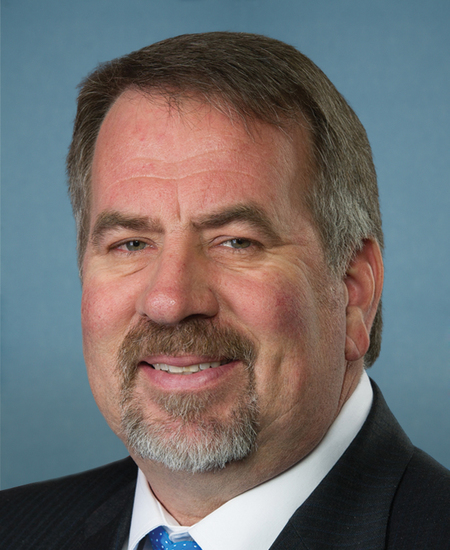
Rep. Doug LaMalfa
Sponsored bills
Maddy summaryHR 4831, the Fair Pay for Federal Firefighters Act, increases pay for wildland firefighters employed by the Forest Service or Department of the Interior during fiscal years 2024-2025. It establishes special pay rates (ranging from 1.5% to 42% above standard General Schedule rates, depending on grade) that replace regular pay for these workers. The bill also creates a new "incident response premium pay" provision, entitling eligible firefighters to 450% of their hourly rate for each day deployed on qualifying wildfires or fire-related incidents, capped at $9,000 annually per employee. This premium pay is excluded from calculations for benefits like leave accruals, overtime, or retirement. The bill directly affects federal wildland firefighters whose duties focus on forest, range, or wildland fires (not structural fires).
Maddy summaryThe Gateway Community and Recreation Enhancement Act (HR 3200) helps communities near federal recreation areas - like national parks and forests - manage tourism impacts. It requires the Interior and Agriculture Secretaries to assess local needs (such as housing shortages and infrastructure demands) and provide financial or technical assistance to businesses (e.g., hotels, campgrounds) to support sustainable visitation. The bill also establishes a unified system for tracking annual visitor numbers, launches a pilot program for real-time visitation data at 20+ recreation sites, and mandates a digital version of national park passes by January 2024. These changes directly affect gateway communities, federal land managers, and tourism businesses, aiming to distribute visitor traffic more evenly and improve data transparency.
Maddy summaryHR 1435, the Preserving Choice in Vehicle Purchases Act, amends the Clean Air Act to restrict states from implementing vehicle emissions rules that limit the sale or use of new gasoline-powered cars. It directly affects states with stricter emissions standards (like California) by adding a new definition that blocks state rules "directly or indirectly" limiting internal combustion engine vehicles as defined in federal regulations as of January 1, 2023. The bill requires the EPA to revoke existing state emissions waivers granted between January 2022 and the bill’s enactment if they don’t comply with this new definition. This creates a concrete federal standard preventing states from advancing policies that could reduce demand for conventional vehicles.
Maddy summaryHR 5455, the Collision Avoidance Systems Act of 2023, allows automakers to install pulsating light systems as rear-end collision avoidance technology on new vehicles. The bill requires the Secretary of Transportation to issue new regulations within 180 days updating Federal Safety Standard 108 to include performance-based rules for these systems. Specifically, it defines a "pulsating light system" as a high-mounted brake light that flashes rapidly (up to 4 times for no more than 1.2 seconds) before switching to steady light, with a 5-second lockout period after braking stops. This directly affects vehicle manufacturers who must comply with the updated safety standards for brake lights.
Maddy summaryThe Life.Gov Act (HR 5406) requires the U.S. Department of Health and Human Services to create a federal website called life.gov within one year of enactment. The website will provide pregnant and postpartum women with locally tailored resources - such as health services, financial assistance, and mental health support - via zip code searches, multilingual access, and user feedback tools. States must submit resource recommendations meeting strict criteria (e.g., no abortion providers, 3+ years of service), and the website cannot list "prohibited entities" (defined as abortion providers or supporters). The Secretary must report to Congress within 180 days on website usage, user feedback, and gaps in resources, using existing HHS funding.
Maddy summaryHR 5508, the "Respect for the Second Amendment Act," prohibits state and local governments from enforcing laws that restrict firearm ownership or use unless those laws align with the U.S. historical tradition of firearm regulation. The bill directly affects state and local laws governing gun possession, carrying, and ownership, requiring courts to block any regulation that fails this historical test. Key mechanisms include allowing the Attorney General or individuals harmed by such laws to sue for injunctions, with prevailing plaintiffs entitled to legal fees. The bill does not preempt stronger state gun rights protections but focuses on challenging state laws deemed inconsistent with the Second Amendment as interpreted by Supreme Court rulings like *Heller* and *Bruen*.
Maddy summaryHR 3152, the "Fight CRIME Act," aims to maintain international restrictions on Iran's missile-related activities by requiring diplomatic efforts to extend these restrictions before they expire in October 2023. The bill mandates annual reports detailing U.S. diplomatic strategies, potential impacts of expiration, and measures to deter missile technology transfers to Iran. It establishes sanctions against foreign individuals or entities that knowingly support Iran's missile or drone programs, including asset freezes and visa restrictions. These sanctions apply regardless of whether UN restrictions remain in effect after their expiration, directly affecting foreign entities involved in these activities.
Maddy summaryHRES 492 is a congressional resolution condemning the Iranian government's systematic persecution of the Baha'i minority, which directly affects Baha'is in Iran facing arrests, property confiscation, and imprisonment. The resolution specifically calls for Iran to immediately release Baha'is detained for their faith, end state-sponsored hate propaganda against them, and reverse discriminatory policies denying equal access to education, employment, and religious freedom. It urges the U.S. President and Secretary of State to demand Iran’s compliance with international human rights treaties and to use existing sanctions authorities (under the 2010 and 2012 Iran sanctions laws) against officials responsible for these abuses. The resolution does not impose new legal requirements but serves as a formal U.S. government statement of condemnation and a call for diplomatic and sanctions action.
Maddy summaryHR 5383, the GIVE MILK Act, amends the Child Nutrition Act to allow WIC participants with young children to choose their preferred milk type (whole, low-fat, or nonfat) instead of receiving a default option. This change directly affects WIC participants caring for children aged 12 months to 4 years, aligning with dietary guidelines for that age group. The key provision requires the Secretary of Agriculture to issue the milk type elected by the participant or their guardian, updating WIC program regulations under Section 17(f) of the Child Nutrition Act. The bill focuses on enabling participant choice based on established nutritional recommendations for childhood development.