

Maddy summaryThe Empowering Parents Act (HR 5327) requires public K-12 schools to obtain parental consent before implementing certain policies or teaching specific content. It prohibits schools from requiring masks, vaccines, or medical screenings for in-person attendance without parental approval, banning instruction on concepts like systemic racism or gender theory, and mandating biological-sex-based facilities (e.g., restrooms, locker rooms). The bill also restricts schools from compelling students to use specific pronouns without parental consent or exposing students to "radical gender theory" or "sexually explicit content." Parents can sue schools for violations within 30 days, seeking injunctions or damages, while schools must protect student privacy under FERPA.
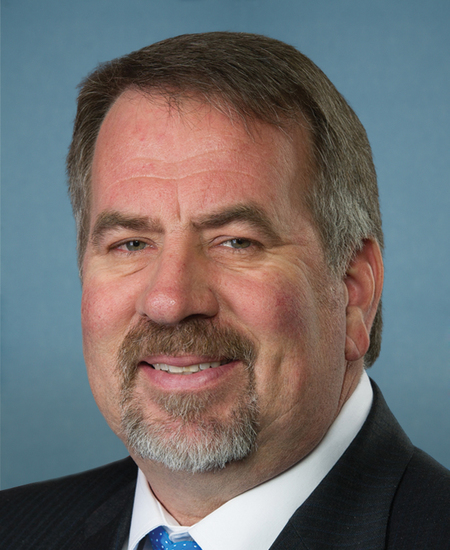
Rep. Doug LaMalfa
Sponsored bills
Defending Students' Civil Rights Act of 2023 This bill prohibits federally funded programs or activities from being premised on certain principles relating to race or sex. Specifically, the bill prohibits the use of federal funds for programs or activities that are premised on principles such as that (1) one race or sex is inherently superior to another, (2) the United States is fundamentally racist or sexist, and (3) an individual bears responsibility for the past actions of others of the same race or sex. The bill includes the use of these principles as a violation of Title VI of the Civil Rights Act of 1964, which prohibits discrimination based on race, color, or national origin in federally funded programs or activities.
Maddy summaryHR 5326, the Empowering Local Curriculum Act, prohibits federally funded schools from being required to teach or promote specific concepts related to race and gender. It explicitly blocks the mandatory teaching of ideas such as the U.S. being "fundamentally racist," individuals being inherently racist based on race, or meritocracy being racist. The bill applies to institutions receiving federal funds under the Higher Education Act (for colleges) and the Elementary and Secondary Education Act (for K-12 schools). It does not ban these topics but prevents federal requirements from mandating their inclusion in curricula.
Defending Veterans' Second Amendment Rights Act This bill prohibits the Department of Veterans Affairs from transmitting personally identifiable information of veterans or their beneficiaries to the national instant criminal background check system utilized by licensed importers or dealers of firearms solely on the basis that a veteran has a service-connected disability.
Maddy summaryThis bill requires the Bureau of Prisons to develop and implement a strategy for scanning all incoming mail at federal prisons to stop fentanyl and other synthetic drugs from entering facilities. It directs the Bureau to evaluate existing scanning technology within 180 days and submit a detailed plan to Congress within 90 days, including how to provide digital copies of mail to inmates within 24 hours and physical copies within 30 days (if safe). The strategy must achieve 100% mail scanning capacity at all federal prisons, prioritize high-security facilities, and include a budget proposal for fiscal years 2024-2026. This directly affects federal prisons, inmates, and Bureau employees by changing mail processing procedures to enhance safety and reduce staffing burdens from manual mail checks.
Rural Hospital Technical Assistance Program Act This bill provides statutory authority for the Rural Hospital Technical Assistance Program within the Department of Agriculture (USDA). Under the bill, USDA must establish and maintain (directly or by grant, contract, or cooperative agreement) a program to help eligible hospital facilities in rural areas with a population of 50,000 inhabitants or less. The program must provide tailored technical assistance and training to hospital facilities to identify development needs for maintaining essential health care services and support action plans for financial, operational, and quality improvement projects to meet these needs. Development needs include (1) constructing, expanding, and modernizing health care facilities; (2) increasing telehealth capabilities; and (3) acquiring or upgrading health care information systems (e.g., electronic health records). The program must also provide technical assistance and training to help hospital facilities to better manage their financial and business strategies and identify, and apply for assistance from, USDA loan and grant programs. In selecting eligible hospital facilities to participate in the program, USDA must give priority to borrowers and grantees of certain USDA rural assistance programs. USDA must also submit an annual report to Congress on the progress and results of the program.
Maddy summaryThis resolution expresses the U.S. House of Representatives' support for designating July 2023 as "American Grown Flower and Foliage Month." It recognizes the economic importance of domestic flower and foliage growers - highlighting their role in supporting jobs, small businesses, and the agricultural industry - and encourages consumers to purchase domestically grown floral products. The resolution does not create new laws or funding but serves as a symbolic endorsement of the domestic floral industry.
Advancing Automation Research and Development in Agriculture Act This bill directs the Department of Agriculture (USDA) to establish within USDA a stand-alone competitive research and extension grant program to increase the competitiveness of specialty crops in the United States through the advancement and acceleration of mechanization and automation. Specialty crops are fruits and vegetables, tree nuts, dried fruits, and horticulture and nursery crops (including floriculture). The bill provides specified funds for FY2024 and each succeeding year to carry out the program. The grant program includes projects that create or improve cost-effective technologies to reduce a specialty crop grower's manual labor requirements and increase the efficiency of crop production, resource management, harvesting, processing, post-harvest technologies, and packaging; increase adoption of mechanization and automation technologies; and accelerate automation and mechanization through prototype development, in-field trial testing, ongoing industry engagement, and rapid commercialization. Entities eligible for the grant program are federal agencies, national laboratories, colleges and universities, research institutions and organizations, private organizations and corporations, state agricultural experiment stations, individuals, and organizations representing specialty crop growers.
Maddy summaryThis bill amends federal funding rules for Title X family planning services. It prohibits the Secretary of Health and Human Services from requiring any State, clinic, or organization receiving Title X funds to provide abortion counseling or referrals as a condition of receiving that funding. The law directly affects all Title X grantees - clinics and providers that receive federal funds for preventive reproductive health services. The key provision ensures that funding eligibility cannot be tied to abortion-related services or referrals.
Maddy summaryHR 5113, the REACH Our Tribes Act, requires the U.S. Department of Agriculture to establish an annual consultation process with Tribal Governments on budget requests and program reauthorizations (like farm bills), including 30 days' notice before meetings and public reports summarizing discussions and responses. It also mandates USDA to publicly report on funding provided to Tribal entities through its programs and improve outreach for underutilized programs. Additionally, the bill creates an interagency task force to streamline application requirements for economic development programs and a public online repository listing all federal economic development programs available to tribes. These provisions directly affect Tribal Governments and Tribal entities (including tribes, tribal organizations, and businesses) by enhancing their input in budget decisions and improving access to federal resources.