

Maddy summaryHR 5664 amends the Water Infrastructure Finance and Innovation Act to improve access to funding for small communities (populations under 25,000) and rural water projects, including those serving tribal communities. The bill lowers the minimum project cost threshold from $5 million to $1 million, creates new technical assistance for small communities to develop project proposals, and clarifies eligibility for rural water projects under various federal laws. It introduces "collaborative project delivery methods" like design-build and construction management at-risk, and requires a study on these methods' implementation. The bill extends annual funding through 2027 with $68 million for EPA and $15 million for the Army Corps of Engineers.
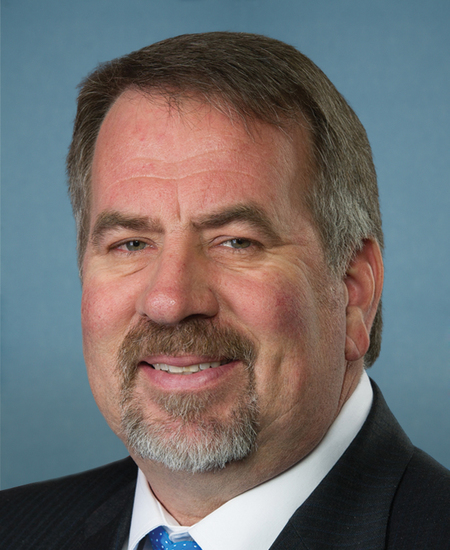
Rep. Doug LaMalfa
Sponsored bills
Maddy summaryHRES 684 is a symbolic congressional resolution passed by the U.S. House of Representatives on September 14, 2023, condemning New Mexico Governor Michelle Lujan Grisham's emergency order that temporarily suspended open and concealed carry firearm rights for 30 days. The resolution asserts the order violated the Second Amendment, citing Supreme Court precedents (Heller, McDonald, Bruen) and noting a federal judge had already blocked the order's firearm restrictions. It does not change any laws or impose legal consequences - it is solely a formal expression of disapproval from Congress. The resolution directly addresses the Governor's actions but has no effect on New Mexico's laws or citizens' rights.
Maddy summaryThis bill creates a new exemption from U.S. passport application fees for first responders participating in disaster relief. Specifically, it allows the Secretary of State to waive both passport issuance and execution fees for volunteers working under U.S. government contracts, grants, or agreements to conduct search, rescue, or disaster relief operations within seven days of a natural disaster in a foreign country. The bill does not change existing fee exemptions for military personnel, seamen, or families of fallen service members. It also requires the Secretary of State to report annually on the number of such fee waivers granted to first responders.
Maddy summaryHR 5359, the Rural Development Modernization Act, raises population thresholds for rural communities to qualify for USDA programs like broadband, water infrastructure, and housing assistance. It increases limits from 20,000 to 50,000 residents for broadband/telemedicine, from 5,000 to 50,000 for telephone loans, and adjusts water/wastewater thresholds to 30,000-50,000. The bill expands eligibility for rural communities previously excluded due to population size, while clarifying that military bases and incarcerated populations are excluded from rural designations. It also updates program rules to explicitly include U.S. territories and freely associated states like the Marshall Islands and Palau.
Maddy summaryThis bill designates approximately 40 acres at the Wounded Knee Massacre site in South Dakota as a memorial and sacred site, held by the Oglala Sioux Tribe and Cheyenne River Sioux Tribe in "restricted fee status." Within 365 days of enactment, the Secretary of the Interior must finalize legal documentation to ensure the land remains tribal-owned, part of the Pine Ridge Reservation, and protected from state taxation or sale without tribal and congressional consent. The land must be used per a 2022 tribal covenant, cannot be used for gaming under federal law, and retains existing utility agreements. It directly affects the two tribes managing this historically significant site.
Maddy summaryHR 5590, the "No More Hard Stops Act," requires federal officials testifying before congressional committees to remain at the hearing until every committee member present has had the opportunity to ask a question. It prevents officials from leaving early ("hard stops") before all members can question them, ensuring all members receive equal questioning time. This procedural rule applies to officials mandated by law to regularly testify before committees and takes effect after the bill's enactment. The bill focuses solely on the process of committee hearings, not on substantive policy changes.
Maddy summaryHR 5574, the Natural Disaster Property Protection Act of 2023, raises the reporting threshold for certain disaster-related property expenses under federal tax law. It increases the amount requiring tax reporting from $600 to $5,000 for payments made to repair or prevent damage to real property from natural disasters or extreme weather. This change applies to both business payments (under Section 6041) and service payments (under Section 6041A) for "qualified natural disaster expenses" as defined in the bill. The law directly affects businesses and individuals making such payments, reducing administrative paperwork for smaller transactions while maintaining reporting requirements for larger ones.
Maddy summaryHR 5577, the FACE Act Repeal Act of 2023, would repeal a federal law (Section 248 of Title 18, U.S. Code) that made it a crime to block access to abortion clinics or threaten clinic staff. This repeal would remove criminal penalties for obstructing access to clinics, affecting abortion providers, clinic staff, and individuals attempting to access or block clinic entrances. The bill specifically targets the repeal of this prohibition, applying to prosecutions pending or initiated after the law's enactment. It does not change other abortion-related laws or create new policies.
Maddy summaryHR 5062 creates a new grant program under the Agricultural Marketing Act of 1946 to help specialty crop producers (like fruit, vegetable, and nut farmers) adopt automation and mechanization. The program awards grants to cover costs for specific equipment (such as drones, precision irrigation tools, and robotic harvesters) and required training to operate them. Recipients must provide at least 50% matching funds from non-federal sources. The grants aim to increase efficiency and reduce labor needs for targeted farm tasks, directly benefiting commercial specialty crop operations in the U.S.
Maddy summaryThis bill extends existing programs that provide payments to counties and states with federal land, primarily to support local schools and communities. It updates key deadlines, extending secure payments through 2026, special project authorities through 2029, and county fund expenditure authority through 2028. A new pilot program allows regional foresters to appoint resource advisory committee members directly, with this authority ending October 1, 2028. These changes directly affect rural counties and states managing federal lands, maintaining current funding mechanisms without altering eligibility or payment amounts.