

Maddy summaryThis bill requires canned agricultural products imported to the U.S. to display their country of origin on the front label or stamped/embossed on the top of the can. It applies specifically to agricultural products defined under the Agricultural Marketing Act of 1946. The labeling requirement would take effect 18 months after the bill is enacted. This directly affects importers of canned agricultural goods entering the U.S. market.
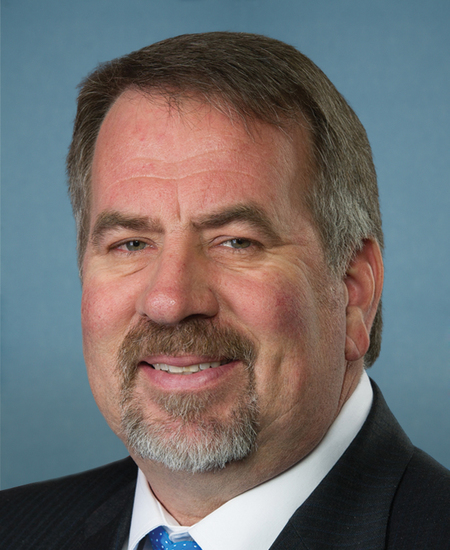
Rep. Doug LaMalfa
Sponsored bills
Maddy summaryThis bill cancels Executive Order 14072, which aimed to protect old-growth forests, and prohibits the Agriculture and Interior Secretaries from implementing, enforcing, or developing rules related to that order or similar policies. It specifically blocks the finalization of a planned environmental review for managing old-growth forests across national forests, as outlined in a June 2024 Forest Service notice. The bill directly affects federal forest management decisions by halting actions tied to the canceled executive order. It focuses on reversing specific administrative steps rather than creating new environmental standards.
Maddy summaryThe Essential Caregivers Act of 2024 requires nursing homes and similar facilities to allow residents to designate essential caregivers who provide emotional support or assistance with daily activities. During emergencies when regular visitation is restricted, facilities must permit at least one essential caregiver access to residents daily and cannot deny access without following specific procedures. Facilities may deny access for a maximum of 7 days during emergencies (or 14 days with state approval), and must provide a written explanation and appeal process if access is denied. The bill establishes a 48-hour appeal process for residents and caregivers to challenge denials, with facilities required to prove violations during appeals. This law applies to Medicare skilled nursing facilities, Medicaid nursing facilities, intermediate care facilities, and certain inpatient rehabilitation facilities.
Maddy summaryThis bill modifies Social Security Number (SSN) requirements for claiming the Child Tax Credit and Earned Income Tax Credit. It specifies that qualifying SSNs must be issued to U.S. citizens (or under specific Social Security Act provisions) and issued before the tax return due date. The changes apply to tax years beginning after December 31, 2024, and update related tax code references to use "social security number" instead of "taxpayer identification number." These are technical adjustments to eligibility criteria, not new benefits or funding.
Maddy summary# Summary of Proposed Legislation This document outlines a comprehensive U.S. legislative proposal with several key components: 1. **Research Restrictions**: - Requires certification from Federal research grant recipients that they are not Chinese citizens or participants in Chinese talent programs - Prohibits employment of Chinese nationals in federally funded research - Requires institutions receiving Federal assistance to agree not to knowingly employ individuals participating in Chinese talent programs 2. **Foreign Gifts and Contracts Disclosure**: - Mandates disclosure of foreign gifts/contracts over $50,000 to universities - Requires public reporting of restricted/conditional gifts/contracts - Creates a searchable public database of foreign gifts to universities - Requires institutions to maintain policies regarding foreign gifts to faculty and staff 3. **Investment Restrictions**: - Restricts tax-exempt organizations from holding investments in "disqualified Chinese companies" (defined as corporations incorporated in China or with significant Chinese government ownership) - Requires annual reporting on such investments - Allows limited waivers with public disclosure 4. **Taiwan Policy**: - Prohibits U.S. government from recognizing PRC claims to sovereignty over Taiwan without Taiwan's consent - Requires U.S. government to treat Taiwan's democratically elected government as the legitimate representative of the people of Taiwan - Requires a strategy to protect U.S. businesses from Chinese coercion efforts 5. **Additional Provisions**: - Requires participants in Chinese talent programs to register as agents of the Chinese government - Amends economic espionage laws to include education and research - Mandates disclosure of certain funds received by visa holders The legislation represents a significant effort to limit Chinese influence in U.S. academic institutions, research, and business sectors while establishing a more robust policy framework regarding Taiwan.
Maddy summaryThe SAFE Home Act (HR 6658) prohibits federal-funded adoption and foster care agencies from delaying or denying placements for children based on a parent’s choices related to gender identity. Specifically, it bans discrimination if a parent: (1) raises a child consistent with their biological sex, (2) declines medical treatments to alter a child’s appearance or validate gender identity, or (3) refuses to change official documents (like birth certificates) to reflect gender identity inconsistent with biological sex. The bill defines "sex" biologically as male or female based on reproductive systems, and requires states to comply with these rules for federal foster care and adoption assistance programs starting in the first fiscal quarter after enactment. This directly affects state agencies and organizations receiving federal funds for child welfare services.
Maddy summaryThis bill adds audiology services to Medicare's covered benefits under Section 1861(s)(2)(KK), effective January 1, 2025. It allows qualified audiologists to provide hearing and balance assessments and diagnostic/treatment services without requiring a physician referral or supervision, directly affecting Medicare beneficiaries seeking these services and audiologists practicing under state law. Payment will be 80% of the lower of actual charge or the Medicare fee schedule. The bill does not expand the types of audiology services covered but changes how they are accessed and paid for under Medicare.
Maddy summaryThis bill revokes a specific waiver determination related to Iran sanctions that the State Department submitted to Congress on September 11, 2023. It directly affects the application of certain sanctions under two 2012 laws: the National Defense Authorization Act (Section 1245(d)(5)) and the Iran Freedom and Counter-Proliferation Act (Sections 1244(i) and 1247(f)). The bill’s key provision is to nullify the September 11 waiver, meaning the underlying sanctions must now be enforced without exception. This is a procedural change that reinstates the original sanctions requirements, not a new policy.
Maddy summaryHR 5967, the Unemployment Integrity Act of 2023, requires unemployment claimants to participate in job-seeking activities to maintain benefits. Specifically, it mandates that claimants respond to work-related requests, attend reemployment interviews, and comply with reasonable requests like drug testing or skills assessments. The bill also requires states to conduct a study on increasing random audits of unemployment claims and mandates that states adopt these new requirements to receive federal funds for extended unemployment benefits. These changes apply to weeks beginning one year after the bill's enactment, with adjustments for states holding biennial legislative sessions. The law directly affects individuals claiming unemployment benefits by linking eligibility to active job-seeking participation.
Maddy summaryHR 5840, the Transportation Security Screening Modernization Act of 2024, simplifies the process for transportation workers to obtain multiple TSA security credentials. It requires the TSA to allow individuals to apply for and renew programs like the TWIC (Transportation Worker Identification Credential) and HAZMAT Endorsement through a single enrollment at any TSA center, with a combined fee lower than separate applications. The bill mandates coordinated expiration dates for all credentials and ensures state-issued commercial driver's licenses reflect the correct HAZMAT endorsement validity. These changes aim to reduce duplication and costs for workers needing multiple security clearances. The TSA must implement these changes within two years and publish details online.