

Maddy summaryHRES 1542 is a symbolic resolution designating October 15, 2024, as "National Pregnancy and Infant Loss Remembrance Day" to honor individuals and families who have experienced pregnancy loss or infant death. It directly affects those who have endured such losses by affirming their experiences and promoting awareness of the emotional impact - citing that approximately 1 million pregnancies end in miscarriage, stillbirth, or newborn death annually in the U.S. The resolution requests the President issue a proclamation encouraging nationwide observance through community activities and support. It does not create new laws or funding but aims to reduce stigma and foster understanding around this issue.
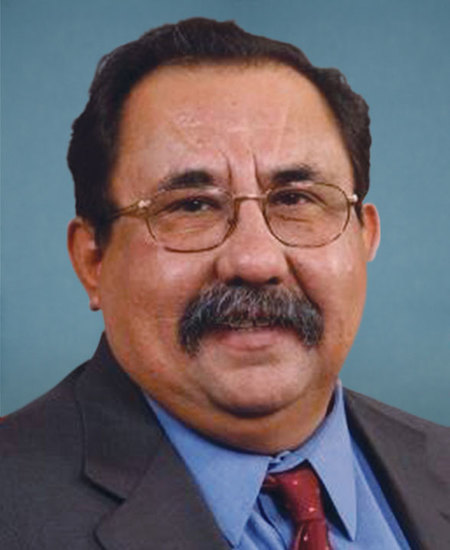
Rep. Raúl M. Grijalva
Sponsored bills
Maddy summaryHR 9964, the Urban Bird Treaty Act of 2024, establishes a voluntary conservation program managed by the U.S. Fish and Wildlife Service to protect urban bird habitats. It directly affects cities, tribes, nonprofits, community groups, and academic institutions (termed "covered entities") by providing technical and financial assistance for projects like restoring native plant habitats, controlling invasive species, reducing urban bird hazards, and engaging communities in bird monitoring. The bill creates a competitive grant program administered by the National Fish and Wildlife Foundation, authorizing $1 million annually from 2025-2031 (adjusted for inflation) to fund these conservation activities. The program focuses on collaborative habitat restoration and community involvement rather than regulatory mandates.
Maddy summaryHR 9982 creates a dedicated Office of Children’s Health Protection within the EPA to address environmental risks affecting children. The office, led by an EPA-appointed director, will assess health threats like pollution or chemicals that disproportionately impact infants, children, and adolescents, and coordinate federal efforts to reduce these risks through policy, research, and school health programs. It establishes a permanent advisory committee to guide the EPA and requires $7.8 million annually for the office plus $13.2 million for the committee through 2029. The bill directly affects children’s health by mandating EPA action on environmental hazards through specific programs, not by changing existing regulations or creating new taxes.
Maddy summaryThe PRIDE Act of 2024 amends the Dodd-Frank Wall Street Reform and Consumer Protection Act and the Housing and Community Development Act of 1992 to expand the scope of existing inclusion offices. It updates titles, definitions, and provisions to explicitly include LGBTQ+ individuals and businesses, changing "Office of Minority and Women Inclusion" to "Office of Minority, Women, and LGBTQ+ Inclusion" and defining "LGBTQ+-owned business" as one where over 50% ownership, control, and net profit accrues to LGBTQ+ individuals. This affects financial institutions and housing programs subject to these laws by requiring them to consider LGBTQ+ inclusion in their diversity efforts. The bill makes technical updates to existing frameworks rather than creating new programs or funding.
Maddy summaryThe Stop Wall Street Looting Act targets private equity fund practices that harm workers and communities by imposing new restrictions and accountability measures. It establishes joint liability for private equity firms and their executives for debts and worker protections when they acquire companies, limiting post-acquisition dividends and buybacks for four years. The bill also imposes a 100% surtax on certain payments received by investment firms from controlled target firms and requires new transparency about fund activities, including detailed financial disclosures. It strengthens worker protections in bankruptcy cases by prioritizing unpaid wages, severance pay, and pension benefits over other creditor claims. These provisions aim to prevent private equity firms from stripping assets and leaving workers and communities bearing the costs when investments fail.
Maddy summaryHRES 1539 is a symbolic resolution recognizing certified nurse-midwives (CNMs) and certified midwives (CMs) for their role in providing maternal and women’s health care. It acknowledges their contributions during National Midwifery Week (October 6-12, 2024), highlighting their work in rural and underserved communities where they attend over 30% of rural births. The resolution does not create new laws or alter funding; it simply formally recognizes CNMs/CMs as essential providers of evidence-based care for women and childbearing families. It encourages broader awareness of their credential and profession through National Midwifery Week activities.
Maddy summaryThis bill establishes federal protections for bison, grizzly bears, and wolves by prohibiting their "take" (hunting, killing, or harming) except under specific circumstances. It creates species-specific committees with strong tribal representation to guide restoration efforts, requiring decisions based on "best available science" and consultation with federally recognized tribes. The legislation prioritizes reintroducing these species to Tribal lands and areas where tribes have treaty rights, while prohibiting lethal predator control measures that might harm them on public lands. It also allows for limited "take" for scientific purposes, population control, or to protect agricultural interests or public safety under strict conditions. The bill builds on previous conservation laws like the National Bison Legacy Act and emphasizes tribal coexistence and cultural connections to these species.
Maddy summaryHouse Resolution 1532 is a symbolic resolution expressing the U.S. House of Representatives' support for the United Nations-designated World Space Week, scheduled for October 4-10, 2024. It encourages schools, communities, and the public to participate in events celebrating space science and technology, highlighting the 2024 theme "Space and Climate Change." The resolution recognizes space technology's role in monitoring environmental shifts and promoting climate resilience, while urging K-12 students and citizens to engage with space-related educational activities. As a non-binding resolution, it does not create new laws or directly affect policies.
Maddy summaryHRES 1525 is a non-binding resolution calling for the U.S. government to address policies contributing to forced migration and displacement. It urges reforms such as overhauling economic sanctions, investing in developing countries to reduce poverty and instability, and reforming trade agreements to protect workers. The resolution also calls for expanding legal immigration pathways, improving asylum processing, and creating a roadmap to citizenship for immigrants living in the U.S. As a resolution, it does not create new laws but sets policy priorities for future legislative action.
Maddy summaryHRES 1530 is a non-binding House resolution recognizing former President Jimmy Carter's 100th birthday. It honors his life, public service, and key achievements, including his presidency (noting the Panama Canal treaties, Camp David Accords, and founding the Departments of Education and Energy), post-presidency work with the Carter Center, and decades of humanitarian efforts. The resolution does not create new laws or affect any policies; it is purely commemorative. It formally acknowledges his contributions to Georgia, the U.S., and global peace efforts, including his 2002 Nobel Peace Prize. This symbolic gesture has no direct impact on citizens or government operations.