

Maddy summaryHRES 1552 is a symbolic House resolution expressing support for recognizing October 26, 2024, as Intersex Awareness Day. It encourages federal, state, and local governments, schools, healthcare providers, and organizations to observe the day through educational programs and activities that celebrate intersex identity and promote awareness. The resolution specifically urges healthcare systems to provide culturally competent care for intersex individuals and schools to incorporate education about intersex diversity. It does not create new laws or policies but aligns with existing federal actions recognizing intersex rights and health equity. The resolution directly supports the intersex community and aims to foster greater public understanding of their experiences.
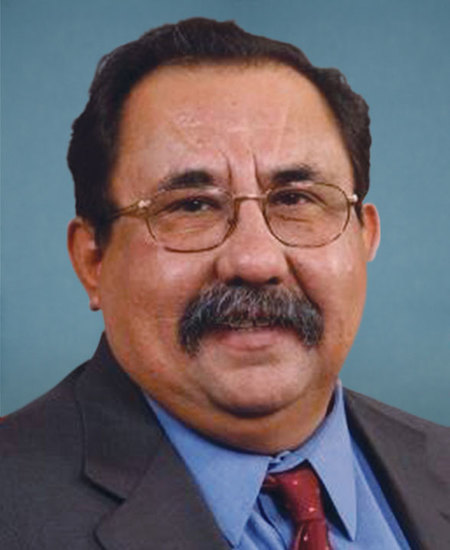
Rep. Raúl M. Grijalva
Sponsored bills
Maddy summaryHRES 1553 is a resolution expressing the House of Representatives' sense that action is needed to address a federal tax exemption under Puerto Rico's Act 22. This provision allows wealthy Americans who do not reside in Puerto Rico to receive 100% exemptions from income and capital gains taxes in Puerto Rico while legally avoiding U.S. federal taxes. The resolution focuses on the tax loophole enabling this arrangement, which the bill claims contributes to housing displacement and price spikes on the island. It does not change tax law but urges the House to act on this issue. (Note: As a resolution, it is procedural and not a binding legislative measure.)
Maddy summaryThis bill expands Medicaid coverage for low-income individuals diagnosed with breast or cervical cancer. It requires Medicaid programs to cover breast reconstruction surgery after a medically necessary mastectomy, adding this as a mandatory benefit under existing Medicaid rules. The bill also modifies eligibility criteria to ensure coverage for these specific cancer patients, aligning with prior Medicaid provisions. These changes apply to all states administering Medicaid, directly affecting eligible patients seeking cancer treatment and recovery services.
Maddy summaryThe Victims of Agent Orange Relief Act of 2024 would provide medical care, environmental remediation, and support services for people affected by Agent Orange exposure during the Vietnam War. The bill directly affects Vietnamese residents exposed to Agent Orange (including those living near contaminated areas), their children and descendants, Vietnamese Americans, and American veterans' families, particularly expanding VA benefits to cover birth defects for children of male veterans (previously limited to children of female veterans). Key provisions include creating new USAID programs for medical care, housing repairs, and environmental cleanup at Agent Orange hotspots, requiring health assessments for Vietnamese Americans, and mandating research into intergenerational effects. The bill sets implementation deadlines for federal agencies (180 days for plans, 18 months for full implementation) and expands VA benefits to address gaps in current support. This legislation aims to address longstanding gaps in assistance for victims across Vietnam, Laos, Cambodia, and the United States affected by Agent Orange exposure.
Maddy summaryThis bill disallows tax deductions for mortgage interest and depreciation on single-family homes owned by large institutional investors (defined as entities with over $100 million in assets), and imposes a 100% excise tax on the sale or transfer of such properties. It excludes government entities, nonprofits, and federally-assisted housing (like Section 8 properties) from these rules. Revenue from the sales tax funds the Housing Trust Fund to increase affordable rental housing for low-income families. The policy directly affects major real estate firms owning single-family homes as investments, not individual homeowners or small landlords.
Maddy summaryThis bill amends VA policy to allow headstones or markers for cremated veterans buried alongside other eligible veterans. It specifically permits the VA to provide such markers when the cremated veteran shares a burial site with another eligible veteran (per 38 U.S.C. §2402(a)), the marker includes both individuals' names, and the cost does not exceed current limits. The change directly affects cremated veterans interred with other eligible veterans at VA cemeteries. It does not expand eligibility but adjusts how existing markers are provided under specific conditions.
Maddy summaryThe VA Employee Fairness Act of 2024 modifies collective bargaining rules for employees of the Veterans Health Administration (VHA). It removes existing subsections (b), (c), and (d) from the law governing VHA employee bargaining and renumbers the remaining provision. This change streamlines the collective bargaining framework but does not alter the Secretary of Veterans Affairs' existing authorities over incentive pay and expedited hiring. The bill directly affects VHA employees by changing how their collective bargaining rights are structured under federal law. The law remains neutral, focusing solely on procedural adjustments to the existing bargaining framework.
Maddy summaryThe WISER Act of 2024 provides automatic discharge status upgrades and a one-time $25,000 compensation payment to eligible female veterans who were involuntarily separated from military service under Executive Order 10240 between April 1951 and February 1976. It directly affects these veterans (and their surviving spouses if the veteran died after the bill's enactment) by treating them as if they completed their assigned duty for benefits purposes and authorizing the $25,000 payment. The bill establishes automatic eligibility for veterans separated under the executive order, with additional eligibility for those who gave birth, gained custody of a child, or experienced a pregnancy loss within 10 months of separation. The Secretary of Veterans Affairs and Secretary of Defense will administer the programs, requiring applications but not further proof of eligibility for the covered groups.
Maddy summaryHRES 1545 is a non-binding resolution designating October 15, 2024, as a day to honor Hispanic cultural heritage and the contributions of Hispanic individuals in the legal profession and judiciary. It recognizes Hispanic representation in law, citing statistics such as 5.9% of U.S. lawyers/judges identifying as Hispanic and historical milestones like the first Hispanic federal judge appointed in 1961. The resolution celebrates Hispanic legal trailblazers, including Justice Sonia Sotomayor, and aims to raise awareness about ongoing efforts to increase Hispanic representation in legal roles. It does not create new laws or policies but serves as a symbolic acknowledgment of progress and goals toward reflecting the Hispanic population in the legal field.
Maddy summaryHRES 1544 designates September 22, 2024, as "National Hispanic Nurses Day" and formally recognizes the National Association of Hispanic Nurses (NAHN) as the leading organization representing Hispanic nurses. The resolution acknowledges Hispanic nurses' contributions to healthcare equity, cultural competence, and reducing disparities in underserved communities. It has no binding policy changes or funding implications - it serves as symbolic recognition to honor their work and NAHN's advocacy role. This is a ceremonial resolution, not a law with enforceable provisions.