

Maddy summaryHR 10138 amends the law governing appointments to the Board of Veterans' Appeals. It requires the Chairman to prioritize recommending individuals with at least three years of legal experience related to veterans' laws when suggesting candidates to the Secretary. This change directly affects who is considered for Board membership, aiming to ensure new members have relevant legal expertise in veterans' benefits. The bill focuses on procedural appointment criteria, not on changing veterans' benefits or services.
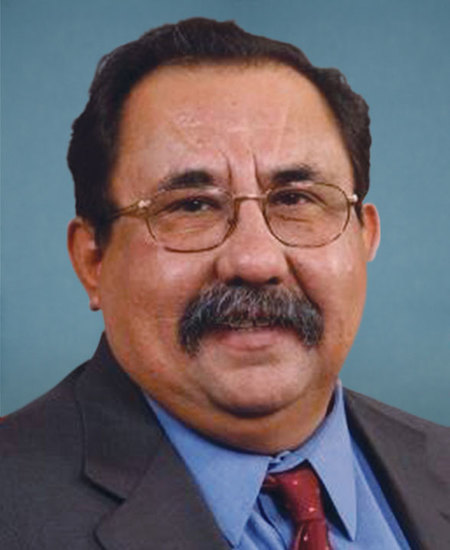
Rep. Raúl M. Grijalva
Sponsored bills
Maddy summaryHRES 1581 is a symbolic resolution expressing congressional support for designating November 2024 as "Prematurity Awareness Month." It highlights the U.S. maternal and infant health crisis, including higher preterm birth rates and disparities affecting Black and Native American women and their infants. The resolution urges Americans, communities, and organizations to observe the month through events and education focused on preterm birth prevention. It does not create new laws or funding but aims to raise public awareness about this health issue, which contributes to infant mortality and costs an estimated $25.2 billion annually.
Maddy summaryThis bill prohibits Medicaid from covering conversion therapy for any enrollee. It amends federal law to block Medicaid payments for any therapy aimed at changing a person's sexual orientation or gender identity (defined as "conversion therapy" in the bill), starting in the first full quarter after the law takes effect. The prohibition applies to all Medicaid providers who offer such therapy for compensation, but explicitly excludes support for gender transition, acceptance-based care, and interventions focused on safety or unlawful conduct. It directly affects Medicaid recipients seeking therapy and providers who previously billed for conversion therapy services.
Maddy summaryHR 10126, the Public Health Funding Restoration Act, restores annual funding for the Prevention and Public Health Fund to $2 billion starting in fiscal year 2025. This bill directly affects the Centers for Disease Control and Prevention (CDC), state, local, tribal, and territorial health departments, and community-based public health programs. It amends the Affordable Care Act to set the annual funding level at $2 billion, reversing previous cuts and enabling expanded investments in evidence-based prevention efforts like immunizations, chronic disease management, tobacco cessation, and pandemic preparedness. The restored funding aims to support proven programs that reduce healthcare costs and improve public health outcomes nationwide.
Maddy summaryHRES 1566 is a symbolic House resolution honoring all U.S. veterans on Veterans Day 2024. It recognizes the service and sacrifice of the estimated 15.8 million veterans living in the U.S. as of 2023, including those who served in conflicts from World War II to post-9/11. The resolution calls on the American public to observe Veterans Day to acknowledge veterans' role in preserving national freedom. As a non-binding resolution, it has no direct policy impact but formally expresses congressional recognition of veterans' contributions.
Maddy summaryThis bill authorizes a single gold medal to honor the 320th Barrage Balloon Battalion, an all-African American unit that served during the D-Day invasion in World War II. The medal commemorates their unique role as the only African American combat unit to land in Normandy, their deployment of barrage balloons to protect troops from air attacks, and their contributions to the Allied victory. The gold medal, to be struck by the Treasury and displayed at the Smithsonian Institution (including locations like the National Museum of African American History and Culture), will be made available for public display and research. This is a commemorative measure with no policy changes or direct impact on current laws or citizens.
Maddy summaryThis resolution (HRES 1558) is a symbolic House of Representatives measure supporting October as "National Domestic Violence Awareness Month." It does not create new laws or allocate funding but formally expresses the House's support for raising awareness about domestic violence and its impacts, and urges continued backing for existing programs that address domestic violence. The resolution cites statistics on domestic violence prevalence (e.g., 24 people per minute affected by intimate partner violence) to underscore the importance of the observance. It directly affects public awareness efforts but does not change policies or directly impact individuals.
Maddy summaryThis bill requires federal agencies that use or fund complex computer systems (like AI or machine learning algorithms) affecting government programs, economic opportunities, or protected rights to establish civil rights offices focused on algorithmic bias. These offices must submit detailed biennial reports to Congress on algorithm risks, mitigation steps, stakeholder engagement, and policy recommendations. The law also mandates an interagency working group under the Justice Department to coordinate efforts across agencies. It applies only to covered federal agencies, not private companies, and focuses on creating new reporting requirements rather than directly changing how algorithms operate.
Maddy summaryThis bill modifies how disability benefits are treated for homeless disabled veterans seeking housing assistance. It excludes certain disability payments (under Chapter 11 or 15 of Title 38, U.S. Code) from income calculations when determining eligibility for HUD-assisted housing programs, including the supported housing program under Section 8(o)(19) and housing on Department property. Specifically, it ensures these benefits are not counted toward income for housing eligibility, though they still count for "adjusted income" definitions. The bill directly affects disabled veterans applying for HUD housing assistance who receive these specific disability benefits. It makes a concrete change to income calculation rules without altering benefit amounts or creating new funding.
Maddy summaryThe IHS Provider Expansion Act creates a new Office within the Indian Health Service (IHS) to develop and manage residency and fellowship programs for healthcare professionals. This office will build pipelines for future doctors, nurses, and healthcare support staff, oversee current training programs at IHS facilities, and coordinate with academic institutions to improve recruitment and retention of staff. The bill authorizes $4 million annually starting in fiscal year 2026 to fund this office and establishes a 10-year interagency working group to support implementation, requiring quarterly progress reports to Congress. This directly affects IHS facilities and healthcare professionals seeking training opportunities within the tribal health system.