

Maddy summaryHR 9894, the Cool Roof Rebate Act of 2024, creates a federal program offering rebates to eligible low-income households for installing cool roofs that reflect sunlight. Households qualify if they live in single/multi-family homes, earn under 200% of their zip code’s median income, and reside in areas ranked in the top 25% for heat vulnerability by the CDC. Rebates pay $0.25 to $0.75 per square foot based on roof type (low-sloped or steep-sloped) and meeting specific sunlight-reflecting standards, with funding set at $25 million annually from 2025 through 2029. The program requires participants to report on their roof replacement details and the products used, with a final report due to Congress after its 2029 end date.
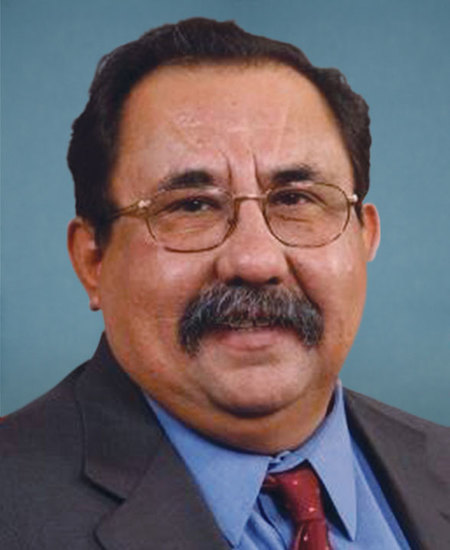
Rep. Raúl M. Grijalva
Sponsored bills
Maddy summaryThe Long COVID Research Moonshot Act establishes a dedicated National Institutes of Health research program to accelerate scientific understanding and treatment development for Long COVID, directly affecting millions of people experiencing persistent health issues after COVID-19 infection. The bill creates a Long COVID Research Program with a specific Director to coordinate all NIH research, develop an annual research plan, and establish a patient-informed advisory board with representation from both patients and scientific experts. It authorizes $1 billion annually for 10 years (2025-2034) to fund research on Long COVID's causes, prevention, detection, management, and treatment, including a clinical trial registry and public health surveillance through the CDC. The legislation also includes provisions for public education campaigns, provider training, and a national network of multidisciplinary Long COVID clinics to improve care access, particularly for underserved populations. This comprehensive approach aims to address Long COVID through coordinated research, surveillance, and clinical care improvements.
Maddy summaryHR 9864, the Keep Food Containers Safe from PFAS Act of 2024, prohibits the sale of food packaging containing intentionally added PFAS chemicals (like those used in non-stick coatings) in interstate commerce. It directly affects food manufacturers and packaging producers who currently use these chemicals. The bill amends federal food safety law to ban such packaging starting January 1, 2025, defining PFAS as man-made chemicals with at least one fully fluorinated carbon atom. This is a concrete policy change to remove specific chemicals from food contact materials.
Maddy summaryHRES 1504 designates October 2024 as Filipino American History Month to celebrate the history, culture, and contributions of Filipino Americans to the United States. The resolution urges the American public to observe the month through educational programs and activities highlighting the community's early settlements, military service (including World War II veterans' contributions), and roles in healthcare, labor movements, and other fields. As a non-binding congressional resolution, it formally recognizes Filipino American heritage without creating new legal obligations or policy changes.
Maddy summaryHRES 1515 designates October 1, 2024, as "National Animal Rescue Day" to raise public awareness about animal adoption, promote spaying and neutering to reduce pet overpopulation, and encourage more adoptions nationwide. The resolution supports community events, educational efforts, and charitable activities on that day to assist animal shelters and reduce the number of animals euthanized. It is a non-binding symbolic gesture without legal force, intended to unite communities around animal rescue initiatives.
Maddy summaryHR 9807, the Strengthening Access to Contraceptive Care Act, provides $100 million annually (2025-2029) in federal grants to health centers in areas with limited contraceptive access, known as "contraceptive deserts." The bill directly supports clinics, hospitals, and community organizations in underserved communities - particularly impacting Black, Hispanic, and low-income individuals who face barriers to contraception - by funding expanded services. Grants cover essential activities like patient education on all contraceptive methods, purchasing supplies (including emergency contraception), telehealth services, hiring staff, and creating culturally appropriate materials. This aims to increase provider capacity to offer comprehensive, person-centered contraceptive care without coercion, addressing documented gaps where over 19 million people lack access to full contraceptive options.
Maddy summaryThis bill makes it illegal to intimidate election workers while they perform duties like vote counting, tabulation, or certification during federal elections. It creates a legal presumption that carrying visible firearms (including realistic replicas) near voters or election workers constitutes intimidation, unless proven otherwise. The law applies to actual firearms, imitation firearms, and antique firearms that could reasonably be mistaken for real weapons. Courts can also impose temporary restrictions on firearm carrying in related cases to protect election workers and voters.
Maddy summaryThis bill eliminates a tax credit for using carbon dioxide (CO2) in enhanced oil recovery (EOR) operations. It amends the Internal Revenue Code by removing Section 43 (the EOR credit) and modifying Section 45Q to prohibit the credit for new facilities starting construction after the law's enactment. The primary effect is ending the federal tax incentive for oil companies that inject CO2 to extract more oil from existing wells. This change directly affects oil and gas companies planning new EOR projects using CO2, as they will no longer qualify for this specific tax credit.
Maddy summaryThe Toxic Free Food Act of 2024 requires the FDA to revise its "Generally Recognized As Safe" (GRAS) rule within 180 days of enactment. It mandates that food manufacturers must submit detailed safety data - including cumulative effects, safety factors, and protections for vulnerable groups - before marketing a substance as GRAS or using it in food. The bill also prohibits carcinogens and novel chemicals from being classified as GRAS, requires public posting of all GRAS submissions with a 90-day review period, and bans the use of experts with conflicts of interest in safety assessments. This directly affects food manufacturers, the FDA, and consumers by increasing transparency and safety standards for food additives.
Maddy summaryThis bill requires the Transportation Security Administration (TSA) to develop and update guidance within 90 days (and every five years) to prevent contamination of breast milk, baby formula, and related cooling items during airport security screening. The guidance must be created with input from maternal health organizations and ensure hygienic handling during re-screening or additional testing. It also mandates a DHS Inspector General audit within one year to review compliance and assess how screening technologies affect these items' processing. The bill directly affects breastfeeding parents traveling with infants by standardizing secure handling of essential items.