

Maddy summaryHCONRES 130 is a symbolic concurrent resolution commending state and local governments that treat reproductive rights as human rights following the *Dobbs* decision. It recognizes efforts by cities like Austin, Texas, and Montgomery County, Maryland, to expand abortion access and condemn criminalization of pregnancy outcomes. The resolution affirms that reproductive rights are human rights, urges states to repeal restrictive laws, and references U.S. obligations under international human rights treaties. As a non-binding resolution, it does not create new laws or alter existing policies.
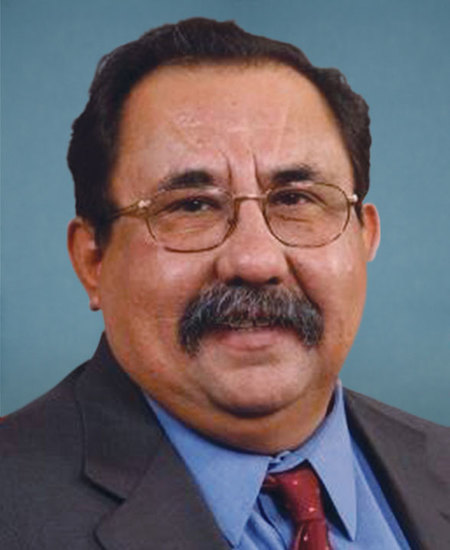
Rep. Raúl M. Grijalva
Sponsored bills
Maddy summaryHRES 1495 designates September 2024 as "Sickle Cell Disease Awareness Month" to raise public education about sickle cell disease (SCD), which affects approximately 100,000 people in the U.S., predominantly in African American communities. The resolution urges the Department of Health and Human Services to address access barriers for SCD treatments in Medicare and Medicaid, calls for increased National Institutes of Health research funding, and proposes forming a federal interagency cabinet to coordinate SCD policy. It also encourages public events during September to highlight early detection, treatments, and preventative care for SCD complications. As a symbolic resolution, it does not create new laws but directs federal agencies to prioritize equitable access and research for SCD.
Maddy summaryHRES 1494 is a non-binding resolution recognizing that air pollution and extreme heat disproportionately threaten maternal and infant health for pregnant Latinas in the U.S., citing systemic inequities that place them at higher risk than other groups. It expresses the House's sense that equitable interventions - such as bilingual air quality alerts, community air monitoring, expanded cooling access, and culturally tailored health education - must be rapidly developed to address these vulnerabilities. The resolution specifically calls for actions like improving heat guidelines at health facilities serving pregnant women and increasing access to affordable cooling solutions in Latino neighborhoods. As a statement of congressional opinion, it does not create new laws but aims to guide future policy and resource allocation.
Maddy summaryHRES 1499 is a symbolic resolution expressing concern about rising book bans in U.S. schools and libraries, citing PEN America data showing over 10,000 individual book bans in public schools between July 2023 and June 2024 - more than double the previous year. It highlights how bans disproportionately target books featuring LGBTQ+ themes, racial history, and marginalized voices (like *The Handmaid’s Tale*, *Maus*, and *Fry Bread*), while emphasizing students’ First Amendment rights to access diverse materials. The resolution calls on school districts and libraries to follow established best practices for handling book challenges and to protect students’ right to read widely, including works reflecting diverse perspectives. As a non-binding resolution, it does not create new law but urges local education entities to uphold free expression.
Maddy summaryThe STOPP Act (HR 9790) amends the Controlled Substances Act to regulate tableting machines, encapsulating machines, and their critical parts, which can be used to illegally manufacture pills including opioids. It requires these machines to have permanent serial numbers, creates a registration system for manufacturers and distributors, and establishes a National Pill Press Registry maintained by the Attorney General. The law imposes penalties for violations like removing serial numbers, failing to register, or dealing in these machines without proper authorization. This bill directly affects businesses that produce, distribute, import, or export these machines, requiring them to register with the Attorney General and maintain detailed records of transactions. The registration system aims to prevent these machines from being diverted into illegal drug manufacturing operations.
Maddy summaryHR 3433, the "Give Kids a Chance Act of 2024," requires pharmaceutical companies developing certain cancer drugs to conduct pediatric studies if the drugs target molecular pathways relevant to childhood cancers. It directly affects drug manufacturers submitting new applications for cancer treatments, particularly those combining previously approved adult cancer drugs or containing a single new active ingredient. The bill amends FDA regulations to mandate these pediatric investigations only when specific conditions are met, such as when a drug's molecular target is relevant to pediatric cancer growth. The FDA must issue implementing guidance within 12 months, and reports to Congress will track implementation and effectiveness starting 2 years after enactment.
Maddy summaryHCONRES 129 designates the week of September 22-28, 2024, as "National Fall Prevention Awareness Week" to raise public awareness about falls among older adults. The resolution cites CDC data showing falls cause approximately 14 million incidents, 3 million emergency visits, and $80 billion in annual medical costs for adults aged 65+. It supports existing evidence-based prevention strategies - such as balance exercises, home safety modifications, and medication management - without creating new legal requirements or funding. The bill focuses on awareness and collaboration among government agencies, healthcare providers, and community organizations to reduce fall risks.
Maddy summary# Summary of Health Equity and Accountability Act of 2024 This comprehensive legislation addresses multiple aspects of health care access, workforce development, and immigration policy with a strong focus on health equity. ## Key Themes 1. **Workforce Diversity**: Significant emphasis on increasing racial, ethnic, and socioeconomic diversity in the health care workforce 2. **Language Access**: Mandates for language access services for individuals with limited English proficiency 3. **Underserved Communities**: Targeted investments in medically underserved areas and communities 4. **Immigration Policy**: Modifications to programs that bring health care professionals to the U.S. ## Major Provisions ### Workforce Development - **$1 billion** for nursing education enhancement and modernization grants in underserved areas - **$552 million** for health professions workforce development in 2032 (increasing annually) - **$392 million** for health professions education programs in 2025 - New grants for schools of medicine and osteopathic medicine in underserved areas - Expansion of the Conrad State 30 program for foreign physicians to address physician shortages ### Language Access - Requires health care providers to provide language access services to individuals with limited English proficiency - Mandates translation services and interpretation services for all health care settings ### Diversity Initiatives - **David Satcher Public Health and Health Services Corps** to increase awareness of health career opportunities - **Louis Stokes Public Health Scholars Program** for underrepresented students - **Patsy Mink Health and Gender Research Fellowship Program** - **Paul David Wellstone International Health Fellowship Program** - **Edward R. Roybal Health Scholar Program** ### Immigration Policy - **Conrad State 30 program extension** through 2027 - **Physician retention** provisions to help foreign physicians stay in medically underserved areas - **Dual intent for physicians** seeking graduate medical training - **Clarifications to national interest waiver** requirements - **Automatic extension** of physician nonimmigrant status during residency transitions ### Funding - **Health Professions Workforce Fund** established with multi-year funding increasing from $392 million in 2025 to $552 million in 2032 - Specific allocations for nursing workforce development and health professions education This legislation represents a comprehensive approach to addressing health care disparities through workforce development, improved access, and policy changes to support a more diverse and equitable health care system.
Maddy summaryThis bill requires a government audit to study how federal agencies manage disaster recovery funds for Puerto Rico after hurricanes, earthquakes, and the pandemic. The audit will catalog all relevant grants, assess data tools used in the grant process, and identify gaps hindering effective aid delivery. Agencies managing these funds must provide timely information to complete the report within one year of the bill's passage. The study aims to improve data systems specifically for Puerto Rico's recovery efforts.
Maddy summary# Summary of Voter Empowerment Act Legislation This comprehensive legislation, titled the "Voter Empowerment Act," aims to significantly reform election administration across the United States to increase voter access, improve election security, and ensure equitable treatment of all voters. Key provisions include: 1. **Voter Access Enhancements**: - Requires states to provide voter-verified paper ballots for all voters - Mandates secure drop boxes for absentee ballots with specific accessibility requirements - Prohibits restrictions on curbside voting - Requires states to notify voters of polling place changes at least 7 days before elections - Allows use of sworn written statements or student ID cards to meet voter ID requirements 2. **Special Populations Accommodations**: - Requires accommodations for voters residing on Indian lands, including designated ballot pickup locations - Mandates bilingual voting materials for covered jurisdictions - Provides special provisions for military and overseas voters - Requires institutions of higher education to serve as voter registration agencies 3. **Election Administration Improvements**: - Requires states to establish contingency plans for natural disasters and public health emergencies - Establishes minimum standards for polling place operations to prevent unreasonable waiting times - Mandates states to provide sufficient poll workers and voting systems - Requires states to participate in post-election surveys 4. **Enforcement Mechanisms**: - Creates private rights of action for individuals to challenge violations - Authorizes the Attorney General to bring civil actions for enforcement - Establishes clear timelines for addressing violations - Prohibits campaign activities by chief state election officials 5. **Implementation Timeline**: - Most provisions apply to the 2026 election cycle or later - Some provisions apply immediately upon enactment The legislation is designed to modernize election administration while ensuring accessibility and security, with specific provisions addressing the needs of historically marginalized voting populations and creating new enforcement mechanisms to hold states accountable for compliance.