

Land Restoration and Resiliency Act of 2023 This bill directs the U.S. Fish and Wildlife Service to enter into cooperative agreements with the National Fish and Wildlife Foundation to establish the Community Resilience and Restoration Fund at the foundation, for purposes including to improve community safety in the face of climactic extremes through conservation and protection of restoration and resilience lands; protect, conserve, and restore restoration and resilience lands in order to help communities respond and adapt to natural threats, including wildfire, drought, extreme heat, and other threats posed or exacerbated by the impacts of global climate; and protect and enhance the biodiversity of wildlife populations across restoration and resilience lands. The bill defines restoration and resilience lands as fish, wildlife, and plant habitats, and other important natural areas in the United States, on public lands, private land (after obtaining proper consent from the landowner), or land of Indian tribes, including grasslands, shrublands, prairies, chaparral lands, forest lands, deserts, and riparian or wetland areas within or adjacent to these ecosystems. To the extent amounts are available in the fund, the foundation shall award grants to eligible entities (e.g., a federal agency, a unit of local government, an Indian tribe, or a nonprofit organization) through a competitive grant process to carry out eligible projects and activities.
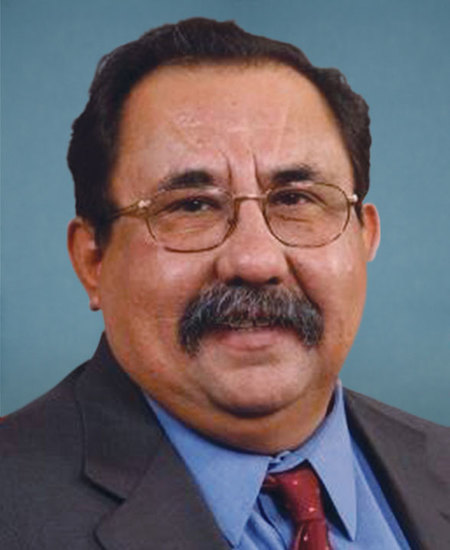
Rep. Raúl M. Grijalva
Sponsored bills
Maddy summaryThis bill prohibits the federal government from issuing oil and gas leases for exploration, development, or production on the outer Continental Shelf off the coasts of California, Oregon, and Washington. It amends the Outer Continental Shelf Lands Act to specifically block the Secretary of the Interior from authorizing such leasing in those coastal areas. The direct effect is on the Department of the Interior, which would no longer be permitted to conduct lease sales in these regions. The bill does not create new programs or funding but changes existing leasing authority.
Maddy summaryThis bill streamlines renewable energy development on federal lands by designating priority areas for wind, solar, and geothermal projects, with specific timelines for implementation (e.g., solar priority areas within 3 years). It establishes "variance areas" for additional development and mandates that 25% of collected fees go to states, 25% to counties, 25% to expedite permits, and 25% to a conservation fund for habitat restoration and recreational access. The revenue-sharing rules begin January 1, 2024, directly affecting project developers, state/local governments, and conservation efforts on public lands. The law aims to balance renewable energy growth with conservation and economic benefits while updating environmental reviews.
Maddy summaryThis resolution (HRES 99) is a non-binding statement supporting National Black HIV/AIDS Awareness Day, observed annually on February 7. It directly addresses the disproportionate impact of HIV/AIDS on Black communities in the U.S., citing data showing Black Americans face higher diagnosis rates, later care access, and greater mortality compared to other groups. The resolution encourages state/local governments and health agencies to promote HIV testing and awareness, supports the National HIV/AIDS Strategy, and advocates for culturally competent care and the "U=U" (Undetectable equals Untransmittable) messaging. It does not create new laws or allocate funding but urges recognition of existing disparities and community-led solutions.
Maddy summaryThis bill provides financial assistance to help low-income renters cover security deposits and moving costs. It directly affects families using housing choice vouchers (Section 8) and those receiving housing assistance through the HOME program. The law requires public housing agencies to use federal funds to pay for reasonable security deposits and moving expenses, and mandates that unused funds be returned to the agency for future use. It also directs the Department of Housing and Urban Development to study alternatives to traditional security deposits and report findings to Congress within 180 days.
Maddy summaryHR 1088, the Shirley Chisholm Congressional Gold Medal Act, authorizes a posthumous Congressional Gold Medal to honor Congresswoman Shirley Chisholm, the first African-American woman elected to Congress (1968) and the first Black candidate for a major party's presidential nomination (1972). The bill directs the Treasury Secretary to design and strike a gold medal featuring Chisholm's image, which will be presented by Congress and then permanently displayed at the Smithsonian Institution. Duplicate bronze medals may be sold to the public to cover production costs, with proceeds deposited into the U.S. Mint fund. This bill commemorates Chisholm's legacy and achievements without creating new laws or affecting any current policies.
Disposable ENDS Product Enforcement Act of 2023 This bill requires the Food and Drug Administration (FDA) to update its enforcement guidance regarding Electronic Nicotine Delivery System (ENDS) products to include certain disposable ENDS products. In April 2020, the FDA published revised guidance on how it intends to prioritize enforcement resources with respect to ENDS products that do not have premarket authorization (i.e., that have not received FDA approval). The guidance specifies that the FDA intends to prioritize enforcement against (1) flavored, cartridge-based ENDS products (except for tobacco or menthol flavored products); (2) other ENDS products for which the manufacturer has not taken adequate measures to prevent access to minors; (3) any ENDS products that are targeted or promoted towards minors; and (4) any ENDS products for which the manufacturer has not submitted an application for market approval or did not receive approval. For purposes of this guidance, cartridge-based ENDS products do not include disposable products that are completely self-contained . The bill requires the FDA to incorporate these products, including nicotine products that are not derived from tobacco, into its enforcement priorities. The bill additionally specifies that the FDA may prioritize enforcement against these products in advance of updating the guidance. The FDA must also annually report on its enforcement actions with respect to these products.
Maddy summaryThe Energy Resilient Communities Act creates a federal grant program to fund clean energy microgrids that keep critical community services running during climate disasters like wildfires or floods. Eligible entities - including local governments, nonprofits, and Tribal agencies - can apply for grants covering up to 90% of costs in environmental justice communities (defined as areas with high populations of people of color, low-income residents, or Tribal communities) to build microgrids supporting hospitals, schools, or medical baseline customers (e.g., those relying on life-saving medical devices). Priority is given to projects that reduce pollution, lower energy costs, create local jobs, and use U.S.-made materials, while requiring fair wages and community-focused hiring. The program mandates annual reports to Congress tracking grant use, environmental benefits, and job creation.
Maddy summaryHR 902, "Ellie’s Law," authorizes $10 million annually from fiscal years 2024 through 2028 for the National Institute of Neurological Disorders and Stroke to conduct broader research on unruptured brain aneurysms. The funding aims to study diverse patient populations by age, sex, and race, supplementing existing research budgets without replacing them. This bill directly affects researchers and future patients by increasing federal investment in a condition impacting 6.6 million Americans, with current federal spending at only $2.08 per affected person yearly. The legislation focuses on advancing scientific understanding to improve prevention and treatment, citing the high mortality rate (50% fatal) and significant healthcare costs ($4.1 billion annually in direct costs) associated with brain aneurysm ruptures.
Maddy summaryHR 949, the Insular Area Medicaid Parity Act, removes federal funding caps on Medicaid for U.S. territories, directly affecting Puerto Rico, the U.S. Virgin Islands, Guam, the Northern Mariana Islands, and American Samoa. The bill amends the Social Security Act to eliminate the existing limit on federal Medicaid funding for these territories, allowing them to receive full federal matching funds like states. This change takes effect for fiscal year 2023, ending the previous restriction that required territories to fund a portion of their Medicaid costs themselves. The policy change ensures these territories can access the same level of federal Medicaid support as states.