

This resolution reaffirms the central role of local frontline health workforces in achieving global health objectives. The resolution also urges greater global attention and support for local frontline health workers.
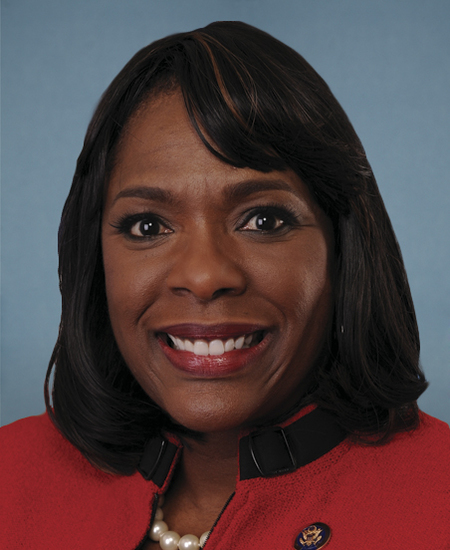
Rep. Terri A. Sewell
Sponsored bills
Maddy summaryHR 3238, the Affordable Housing Credit Improvement Act of 2023, updates the Low-Income Housing Tax Credit (LIHTC) program to increase the availability of affordable housing across the United States. The bill makes several key changes including increasing state funding formulas, modifying tenant eligibility rules to better serve vulnerable populations (such as domestic violence victims and students), and expanding credit eligibility for projects in rural and Native American communities. Specific provisions raise the credit for properties serving extremely low-income households, clarify rules around tenant income increases, and require housing providers to protect victims of domestic violence. The bill also updates terminology from "low-income" to "affordable" throughout the tax code and enhances program transparency through data sharing requirements. These changes aim to make the LIHTC program more effective at creating and preserving affordable housing units for low-income households nationwide.
Maddy summaryHR 3201 grants Cristina Martin permanent resident status (a green card) by waiving standard immigration requirements. It allows her to apply for permanent residency within two years of the bill's enactment, bypassing grounds for removal or denial listed in her DHS/State Department records, and requires the removal of any prior deportation orders against her. The bill specifically affects only Cristina Martin, not a broader group, and includes a provision reducing the visa count for her country of birth by one. This is a procedural individual relief bill, not a policy change affecting others.
Maddy summaryThis bill modifies how distilled spirits taxes collected in Puerto Rico are handled. It repeals a rule limiting tax coverage to Puerto Rico and the U.S. Virgin Islands, allowing those territories to transfer certain distilled spirits taxes to the U.S. Treasury. Crucially, it requires Puerto Rico to transfer 1/6 of the tax difference (above $10.50 per gallon) from rum taxes covered over into the Puerto Rico Conservation Trust Fund, which supports natural habitat conservation and sustainable agriculture. This directly affects Puerto Rico's rum industry and ensures a portion of those tax revenues funds conservation efforts.
Maddy summaryHRES 362 is a symbolic House resolution recognizing elementary and secondary school teachers' contributions to U.S. civic, cultural, and economic well-being. It specifically thanks teachers and encourages students, parents, school leaders, and officials to acknowledge National Teacher Appreciation Week (May 8-12, 2023). The resolution has no binding effect or policy changes - it solely promotes public appreciation for the teaching profession through a formal expression of gratitude. It directly affects teachers by affirming their societal value but does not alter laws, funding, or educational standards.
Maddy summaryHRES 351 is a symbolic resolution designating May as "National Menstrual Health Awareness Month" to address stigma around menstruation. It recognizes that stigma and lack of access to products/facilities impact women, girls, and people who menstruate in education, work, and health. The resolution supports normalizing menstruation, improving menstrual health education, and promoting access to products and private sanitation facilities. As a non-binding resolution, it does not create new laws but aims to raise awareness and advance gender equity through public acknowledgment.
Maddy summaryThis resolution (HRES 359) is a symbolic House measure expressing support for designating May 2023 as "National Physical Fitness and Sports Month." It does not create new laws or programs but encourages public awareness about the importance of physical activity and healthy lifestyles. The resolution cites obesity statistics and emphasizes benefits like reduced risk of chronic diseases, supporting existing efforts to educate the public on nutrition and exercise. It directly affects no specific group but aims to promote broader public health messaging.
Maddy summaryThis resolution designates April 30, 2023, as "National Adult Hepatitis B Vaccination Awareness Day" to raise public attention about hepatitis B vaccination for adults. It highlights that only 30% of U.S. adults are vaccinated despite the vaccine's 95% effectiveness and hepatitis B's serious health risks, including liver cancer. The resolution encourages testing, vaccination, and care linkage for adults but does not create new laws or funding. It serves as a symbolic congressional statement to support existing public health efforts, focusing on awareness rather than policy changes.
Maddy summaryHR 3105 amends the tax code to clarify how financial guaranty insurance companies qualify as "qualifying insurance corporations" under passive foreign investment company (PFIC) rules. It allows these companies to include unearned premium reserves in their insurance liabilities if they meet specific exposure thresholds: at least a 15-to-1 ratio of financial guaranty exposure to total assets (or 9-to-1 for state/local bonds), and they report only reserves within single-risk limits. This bill directly affects financial guaranty insurance companies whose sole business is writing or reinsuring financial guaranty insurance. The change simplifies their tax classification under existing PFIC rules without altering broader tax policy.
Maddy summaryHR 3073 creates a federal grant program to fund community-based mental wellness and resilience initiatives. It provides planning grants (up to $250,000) for organizations to form community networks and assess needs, followed by program grants (up to $500,000 annually for 4 years) to implement evidence-based programs. The bill requires grantees to use a public health approach, collect community input, and develop strategic plans addressing protective factors and risk factors for mental wellness. At least 20% of funds must support rural communities, and programs must involve diverse community groups like schools, faith organizations, health professionals, and local government. The bill authorizes $36 million over 2024-2028 to support these community-led efforts.