

Maddy summaryHR 3046 establishes a federal grant program to support medical education focused on primary care in underserved areas. It provides funding to eligible public colleges in states with severe primary care physician shortages, prioritizing institutions in regions with significant Indian Tribes and public-private partnerships. Grants require schools to use funds for hands-on community training, telehealth integration, mental health care coordination, scholarships, and programs specifically preparing students to serve Tribal, rural, or medically underserved communities after residency. The program authorizes $150 million annually for fiscal years 2023-2025 to expand this training pipeline.
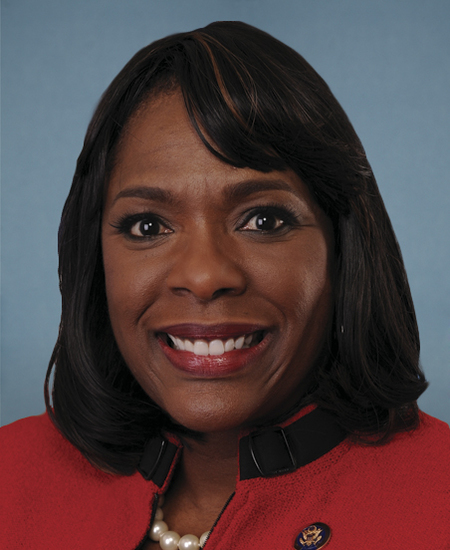
Rep. Terri A. Sewell
Sponsored bills
Maddy summaryHR 3078, the Sunlight in Workplace Harassment Act, requires publicly traded companies (those filing Form 10-K) to annually disclose detailed data on workplace harassment, discrimination, and sexual abuse settlements and judgments. Companies must report the number and total dollar amounts of these cases, broken down by type (such as sex, race, disability, or sexual orientation) and whether they involved corporate executives, along with average resolution times and open complaints. The disclosure must not reveal victims' names and allows victims to object to sharing certain categories of information. This data will be made publicly available through Form 10-K filings, alongside descriptions of the company’s prevention measures for such incidents.
Maddy summary# Summary of EDUCATORS for America Act Provisions This comprehensive legislation makes significant changes to educator preparation, certification, and support systems, with a strong focus on loan forgiveness and retention of educators in high-need settings. ## Key Provisions: 1. **Enhanced Loan Forgiveness Programs**: - Creates new "Educator Loan Forgiveness Programs" under sections 428J and 460 of the Higher Education Act - Provides 100% loan forgiveness for educators who complete 5 years of qualifying service in high-need schools or early childhood education programs - Offers monthly loan forgiveness/cancellation during the service period (in addition to annual forgiveness) 2. **Expanded Eligibility**: - Defines "high need school" as schools where: * Over 30% of students meet poverty measures * School is identified for comprehensive support * School is Bureau of Indian Education funded * School is operated by Tribal educational agencies - Includes Tribal early childhood programs, Native Hawaiian education systems, and Bureau of Indian Education programs as eligible settings - Special rule for educators providing instruction in Native American languages 3. **"Qualifying Educator" Definition**: - Includes elementary/secondary teachers (with full certification) - Includes school leaders (with full certification) - Includes early childhood educators and program directors - Includes educators working in Native American language instruction regardless of certification status 4. **New Support Programs**: - Centers of Excellence for teacher preparation at institutions serving underrepresented populations - Recruitment and completion grants for underrepresented students in education - Resiliency grants for technology integration and educator workforce partnerships - Doctoral fellowships to diversify faculty in high-need education areas 5. **Implementation Details**: - Monthly loan credit program for eligible educators in income-driven repayment plans - Allows counting of partial service years under specific conditions - Prevents double benefits with other service programs - Allows for promotions within qualifying schools without losing eligibility This legislation aims to create a more diverse, stable, and well-prepared educator workforce by reducing financial barriers to entering and remaining in the education profession, particularly in high-need schools and early childhood education settings.
Maddy summaryThis bill protects living organ donors from insurance discrimination by prohibiting life, disability, and long-term care insurers from denying coverage, raising premiums, or altering policy terms solely because someone donated an organ while alive. It also updates the Family and Medical Leave Act to include recovery from organ donation surgery as a qualifying health condition, allowing donors to take protected leave for this purpose. Additionally, the bill requires the Health and Human Services Secretary to update public educational materials about living donation benefits, risks, and insurance protections within six months of enactment. These changes directly affect living organ donors, insurers, employers, and healthcare systems by ensuring fair access to insurance and workplace leave.
Maddy summaryHR 2955, the Stop Institutional Child Abuse Act, establishes a Federal Work Group to improve data collection and best practices for youth in residential programs (like therapeutic schools, treatment centers, and group homes). The Work Group, composed of federal agency representatives and diverse stakeholders, must develop national data standards, create risk assessment tools, and issue biennial reports with recommendations to enhance safety, reduce restraints, and expand community-based alternatives. It directly affects youth with mental health, substance use, or disability needs placed in these facilities, as well as agencies overseeing them. The bill also mandates a National Academies study to examine funding, oversight, and barriers to community care. These mechanisms aim to standardize data tracking and promote less restrictive, trauma-informed care for youth in residential programs.
Maddy summaryHR 2904, the Anti-Racism in Public Health Act of 2023, establishes a National Center on Antiracism and Health within the CDC. The center will declare racism a public health crisis, conduct research on how structural racism affects health outcomes, and develop data systems to track health disparities across race, ethnicity, gender, and other factors. It will fund regional centers in minority communities, create public health interventions, and require CDC to report annually on antiracist efforts. This bill directly affects public health agencies, researchers, and communities of color by mandating systemic analysis of racial inequities in healthcare and public health policy.
Bringing Aquaculture Indemnities To Speed Act or the BAITS Act This bill expands the Livestock Indemnity Program (LIP) to eligible producers of farm-raised fish. (LIP provides indemnity payments to eligible livestock producers for loss or reduced sales price due to specified events.) Specifically, the bill adds farm-raised fish to the LIP definition of livestock , expanding LIP indemnity payments to farm-raised fish producers due to (1) an attack by an animal reintroduced into the wild by the federal government or protected by federal law (e.g., avian predators) or (2) disease. Under current law, LIP also provides indemnity payments to eligible livestock producers due to adverse weather. This bill prohibits LIP from making payments to producers of farm-raised fish due to adverse weather.
Maddy summaryHRES 334 is a symbolic resolution recognizing "Community College Month" to celebrate over 1,000 community colleges across the United States. It highlights how these institutions support accessible higher education, workforce training, and economic prosperity - serving 10.2 million students annually while charging affordable tuition (averaging $3,860 for in-district students). The resolution does not create new laws or requirements but formally acknowledges community colleges' role in strengthening local communities and the national economy. This acknowledgment applies broadly to all community colleges and their students, without imposing any obligations.
Maddy summaryThe Election Mail Act (HR 2987) establishes new requirements for handling mail-in ballots in federal elections to improve reliability and accessibility. It requires the Postal Service to process absentee ballots on the same day received, place postmarks indicating mailing dates on ballot envelopes, and treat election mail as first-class mail with free postage for completed ballots. The bill also mandates states to use intelligent mail barcodes on return envelopes, affix specific tags for ballot visibility, and adopt a uniform 7-day deadline for accepting mailed ballots postmarked on or before election day. These changes apply to federal elections, with most provisions taking effect for the 2024 election cycle. The bill includes additional provisions for the Postal Service to consult with Indian Tribes about voting barriers on tribal lands.
Maddy summaryThe Child Care for Working Families Act establishes a federal entitlement program providing subsidized child care for working families with children under age 6 who are not yet in kindergarten. It creates a sliding fee scale where families at or below 85% of State median income pay no copayment, while higher-income families pay up to 7% of their income based on income thresholds. The bill requires states to develop quality rating systems for child care providers and ensures providers receive sufficient funding to meet quality standards, including wages equivalent to elementary educators. It prioritizes access for underserved populations including children with disabilities, infants and toddlers, children experiencing homelessness, and families in low-income communities. The program is funded with $20 billion for fiscal year 2024 and subsequent years through 2029.