

Maddy summaryThis bill provides one-time financial assistance to U.S. farmers growing specific crops (like corn, soybeans, wheat, cotton, and rice) during the 2024 crop year if their expected costs exceed expected returns. Payments equal 60% of the difference between the expected cost of production per acre (based on USDA cost forecasts) and the expected gross return per acre (based on projected farm prices and yields). Payments are calculated using actual planted acreage plus 50% of acreage prevented from planting due to natural disasters, with annual caps of $175,000 or $350,000 depending on the farm’s primary income source. The program uses existing USDA data sources and applies standard farm payment limits.
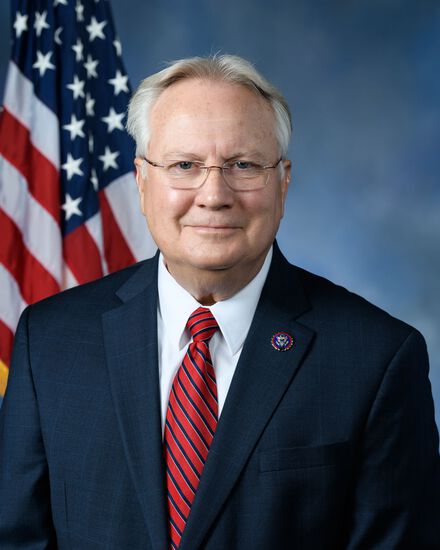
Rep. Jerry L. Carl
Sponsored bills
Maddy summaryThis bill delays federal oil and gas activities in the Gulf of Mexico until specific scientific reviews are completed. It requires the National Marine Fisheries Service to first issue a rule designating critical habitat for the endangered Rice’s whale (based on a National Academies study) and correct previous estimates of how oil/gas operations impact marine mammals. The bill also blocks the use of current agreements (the Stipulated Agreement and Notice to Lessees) for offshore leasing until these steps are finalized. It directly affects federal agencies (NMFS, Bureau of Ocean Energy Management), oil and gas operators, and environmental groups involved in Gulf of Mexico energy projects. The law mandates public access to scientific data, peer review by the National Academies, and quarterly stakeholder meetings during the review process.
Maddy summaryHR 10010, the Protect American Fisheries Act of 2024, amends the Magnuson-Stevens Act to address economic harm to U.S. fisheries. It adds "economic cause" to the definition of fishery disasters, specifically when foreign activities distort markets, disrupt sustainable harvesting, or threaten the economic viability of U.S. fisheries. The bill defines "foreign person" broadly to include foreign governments, companies, and U.S. entities controlled by foreign interests, and requires documentation of foreign activities like illegal fishing, predatory pricing, or harmful subsidies when declaring a disaster. This change directly affects U.S. fishing communities and industries by expanding the criteria for federal disaster assistance to include economic impacts from foreign actors.
Maddy summaryThis non-binding resolution (HRES 1533) expresses the U.S. House of Representatives' continued support for Israel one year after the October 7, 2023, attacks. It condemns Hamas' attacks against Israel and calls on Hamas to immediately cease violence, release all living hostages, and return the bodies of deceased hostages. The resolution does not create new laws or policies but formally reaffirms congressional sentiment toward U.S.-Israel relations and the response to the Hamas attacks. It was introduced by 13 House members on October 4, 2024, and referred to the Foreign Affairs Committee.
Maddy summaryHRES 1530 is a non-binding House resolution recognizing former President Jimmy Carter's 100th birthday. It honors his life, public service, and key achievements, including his presidency (noting the Panama Canal treaties, Camp David Accords, and founding the Departments of Education and Energy), post-presidency work with the Carter Center, and decades of humanitarian efforts. The resolution does not create new laws or affect any policies; it is purely commemorative. It formally acknowledges his contributions to Georgia, the U.S., and global peace efforts, including his 2002 Nobel Peace Prize. This symbolic gesture has no direct impact on citizens or government operations.
Maddy summaryHRES 1496 is a resolution supporting the designation of October 23, 2024, as "National Marine Sanctuary Day." It aims to raise public awareness about the National Marine Sanctuary System, which protects ocean, coastal, and Great Lakes areas. The resolution encourages community engagement with these protected sites and acknowledges their role in conserving biodiversity, supporting local economies, and providing recreational opportunities. As a non-binding resolution, it does not create new laws but formally recognizes the importance of marine sanctuaries.
Maddy summaryHR 3433, the "Give Kids a Chance Act of 2024," requires pharmaceutical companies developing certain cancer drugs to conduct pediatric studies if the drugs target molecular pathways relevant to childhood cancers. It directly affects drug manufacturers submitting new applications for cancer treatments, particularly those combining previously approved adult cancer drugs or containing a single new active ingredient. The bill amends FDA regulations to mandate these pediatric investigations only when specific conditions are met, such as when a drug's molecular target is relevant to pediatric cancer growth. The FDA must issue implementing guidance within 12 months, and reports to Congress will track implementation and effectiveness starting 2 years after enactment.
Maddy summaryThis bill (HJRES 163) is a congressional disapproval resolution targeting an Environmental Protection Agency (EPA) rule finalized on May 9, 2024. The EPA rule established new emissions standards for greenhouse gases from fossil fuel power plants (both new and existing) and repealed a previous rule called the Affordable Clean Energy Rule. The resolution would block this EPA rule from taking effect by invoking the Congressional Review Act (Chapter 8 of Title 5, U.S. Code). If passed, it would prevent the EPA rule from being enforced, directly affecting fossil fuel power plant operators and the EPA’s regulatory authority over emissions.
Maddy summaryHR 705, the Veterans 2nd Amendment Protection Act, prohibits the Department of Veterans Affairs (VA) from automatically sending veterans' personal information to the national background check system solely because a fiduciary (like a guardian) manages their benefits. It specifically blocks the VA from sharing this data with the Justice Department without a court order finding the veteran a danger to themselves or others. This directly affects veterans who have a fiduciary appointed due to incapacity but are not deemed dangerous, preventing automatic barriers to firearm purchases based only on their fiduciary status. The bill amends 38 U.S.C. § 5501B to require judicial authorization before such data can be transmitted.
Maddy summaryThis bill redirects 15% of net revenues from silencer transfer taxes (under IRS section 5811) into a new Conservation of America’s Wildlife Trust Fund. The fund will expedite processing of silencer transfer and manufacturing applications by the ATF, requiring approvals within 90 days (unless a legal violation is found). It also directs 85% of these tax revenues to the existing Pittman-Robertson Wildlife Restoration Fund for wildlife management and public target range construction. The provisions apply for seven years from enactment and directly affect silencer applicants, the ATF, and state wildlife programs receiving federal funds.