Issue · Transportation

Transportation

Every transportation bill, vote, and legislator stance in United States, automatically classified by Maddy, our AI policy reader.

Total bills
850
119th Congress
Top supporter
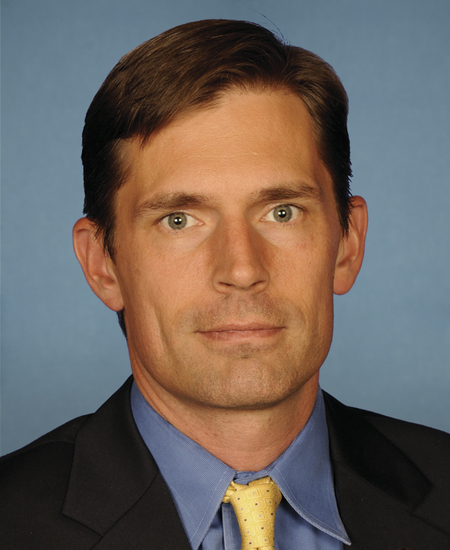
Martin Heinrich
78% support rate
Top opponent
Marsha Blackburn
22% support rate
Ranked legislators
10
5 support · 5 oppose
Key legislators

Who's moving transportation in United States

Legislators moving transportation in United States
Legislator Party Stance Support rate Decisive votes
Martin Heinrich
Martin Heinrich Senate
D
Support
78% 9
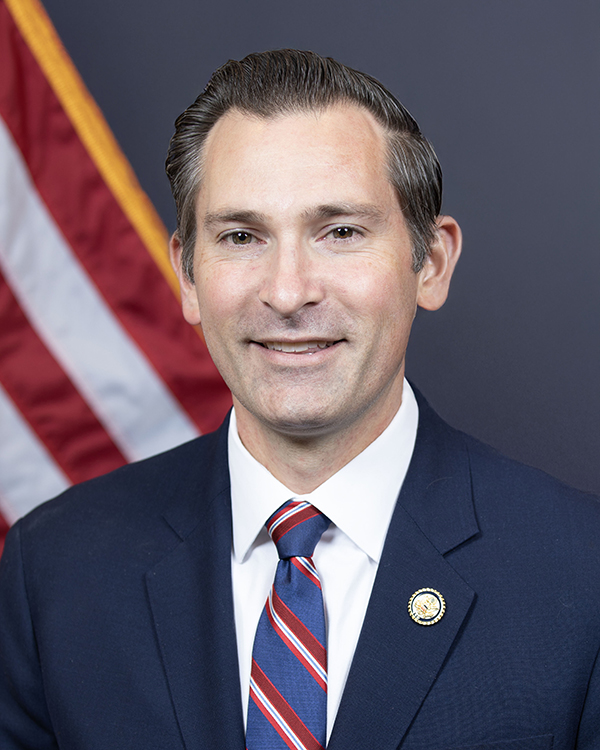
Matt Van Epps
Matt Van Epps House · District 7
R
Support
78% 9
Greg Casar
Greg Casar House · District 35
D
Support
75% 12
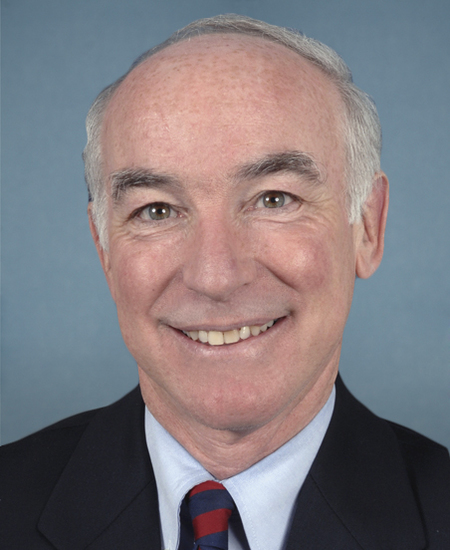
Joe Courtney
Joe Courtney House · District 2
D
Support
75% 12
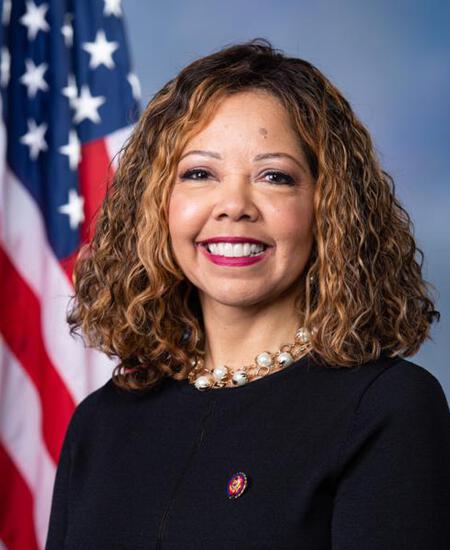
Lucy McBath
Lucy McBath House · District 6
D
Support
75% 12
Marsha Blackburn
Marsha Blackburn Senate
R
Oppose
22% 9
Ted Budd
Ted Budd Senate
R
Oppose
25% 12
Mary E. Miller
Mary E. Miller House · District 15
R
Oppose
29% 14
Wesley Hunt
Wesley Hunt House · District 38
R
Oppose
30% 10
Joni Ernst
Joni Ernst Senate
R
Oppose
31% 26
Showing 381–390 of 850 bills

All transportation bills

passed · United States · House Sep 9, 2025

HR 3423: Facility for Runway Operations and Safe Transportation Act

This bill amends an existing aviation safety law to clarify that "storage facilities for aircraft deicing equipment and fluids" are explicitly included under regulatory coverage. It directly affects airport operators and federal aviation authorities (FAA) who manage deicing operations at airports. The change corrects a technical omission in the law's definition, ensuring storage facilities for deicing equipment are covered under existing safety regulations without creating new requirements. This is a procedural clarification, not a policy change.
Sub-Topics Airports
in committee · United States · Senate Sep 16, 2026

S 3135: Cold Weather Diesel Reliability Act of 2025

The Cold Weather Diesel Reliability Act of 2025 requires the Environmental Protection Agency (EPA) to revise Clean Air Act regulations to address diesel vehicle challenges in extreme cold. It allows diesel vehicle manufacturers to temporarily disable engine power reductions or shutdowns caused by emissions system faults when temperatures are at or below freezing, but only until temperatures rise above freezing. The bill also grants a year-round exemption from diesel exhaust fluid (DEF) system requirements for vehicles primarily operating north of 59°N latitude or in regions with prolonged freezing conditions that make DEF use impractical. This exemption prevents engine derates or shutdowns due to DEF system issues, ensuring critical transportation and emergency services remain functional. The bill does not change overall emissions standards but provides targeted relief for safety and operational needs in cold weather regions.
Sub-Topics Air Quality
in committee · United States · Senate Oct 14, 2025

S 3007: Diesel Truck Liberation Act of 2025

This bill prohibits all federal enforcement of emissions control requirements for diesel trucks. It directly affects diesel truck manufacturers, importers, distributors, and owners by eliminating all federal mandates (including under the Clean Air Act) for emissions control devices or onboard diagnostic systems on diesel vehicles. Key provisions repeal existing EPA regulations, prevent future rulemaking on emissions devices, and expunge past legal records related to non-compliance with emissions standards. The law would remove all federal legal barriers to modifying or removing emissions equipment from diesel engines.
Sub-Topics Air Quality Freight
in committee · United States · Senate Feb 3, 2025

S 360: A bill to provide for across-the-board rescissions of nonsecurity discretionary spending.

S 360 would automatically reduce nonsecurity federal spending by specific percentages each fiscal year: 1% for 2026, 2% for 2027, and 5% annually starting in 2028. It directly affects nonsecurity discretionary programs like education, transportation, and scientific research (excluding defense and intelligence), as defined by the bill. The reductions apply pro rata across all such programs funded through annual appropriations. The Office of Management and Budget must report these cuts to Congress annually after each fiscal year ends.
in committee · United States · House Jul 14, 2025

HR 4376: AV Safety Data Act

HR 4376, the AV Safety Data Act, requires vehicle manufacturers and operators (called "covered entities") to report detailed safety data to the National Highway Traffic Safety Administration (NHTSA) about autonomous vehicles and Level 2 driver assistance systems. Covered entities must submit monthly reports including miles traveled broken down by vehicle type, location, and software version, plus data on collisions involving vulnerable road users and "unplanned stoppage events" (like vehicles stopping unexpectedly on roads). This data, including location, weather, and resolution times for incidents, becomes publicly available online in machine-readable format 120 days after the law takes effect. The law directly affects companies producing or operating autonomous vehicles, aiming to create a standardized public safety database for these technologies.
in committee · United States · House Jul 21, 2026

HR 3168: National Earthquake Hazards Reduction Program Reauthorization Act of 2025

This bill reauthorizes the National Earthquake Hazards Reduction Program through fiscal year 2030, providing $83.4 million annually with $30 million each year dedicated to completing the Advanced National Seismic System. It expands the program to include Tribal governments, updates standards to cover building design, evaluation, and post-earthquake recovery (such as minimizing downtime for critical infrastructure), and requires better coordination between federal agencies like the USGS, Federal Communications Commission, and FEMA for earthquake early warnings. The bill mandates that early warning alerts be broadcast in the predominant languages of affected regions and includes new provisions for tsunami response coordination and data sharing.
Tags Emergency Management
in committee · United States · House Feb 12, 2025

HR 1253: Fair SHARE Act of 2025

This bill imposes a $550 tax on each heavy battery module (over 1,000 pounds) and a $1,000 tax on each electric vehicle sold by manufacturers or importers. It excludes hybrid vehicles from the tax definition, as they use both internal combustion engines and rechargeable batteries. The collected revenue would be transferred to the Highway Trust Fund, which finances road and highway maintenance. The tax applies to sales after December 31, 2025.
in committee · United States · House Dec 2, 2025

HR 5598: Revitalizing Rural Communities Act of 2025

This bill increases annual funding for the Rural Economic Development Loan and Grant Program from $10 million to $12 million, effective for fiscal years 2026 through 2030. It directly affects rural communities eligible for loans and grants under this program, which supports local economic development projects. The key mechanism is a specific funding amendment to Section 313B of the Rural Electrification Act of 1936. This change extends and boosts financial resources for rural infrastructure and community initiatives without altering program eligibility or administration.
Tags Agriculture Rural Communities
in committee · United States · House Jul 7, 2025

HR 4302: Improving Atmospheric River Forecasts Act

The Improving Atmospheric River Forecasts Act aims to enhance forecasts of atmospheric rivers - narrow bands of moisture that cause heavy rain, snow, and flooding, particularly in the western U.S. - to reduce damage to communities and infrastructure. It authorizes a five-year pilot project (2026-2030) with $15 million annually to improve forecast models for mountainous terrain and atmospheric rivers, requiring coordination with NOAA, academic partners, and the National Weather Service. The bill also establishes a long-term program mandating NOAA to develop new forecast tools, incorporate social science for clearer public communication, and create annual budget plans for research and partnerships. These changes directly affect NOAA’s operations and water management efforts in the western U.S., without altering existing laws or imposing new regulations on the public.
passed · United States · House Mar 25, 2026

HR 3410: Supersonic Aviation Modernization Act

The Supersonic Aviation Modernization Act requires the Federal Aviation Administration (FAA) to issue new regulations within one year of enactment, enabling commercial supersonic flights (faster than the speed of sound) over U.S. airspace without special permission. These regulations would only permit such flights if the aircraft is operated to prevent sonic booms from reaching the ground. The bill directly affects companies developing and operating supersonic aircraft, as well as the FAA, which must revise existing rules to accommodate this change. This policy shift removes current barriers to routine supersonic travel in U.S. airspace under specific noise-reduction conditions.
Sub-Topics Airports
Showing 381 to 390 of 850 bills
Previous 1 38 39 40 85 Next