Issue · Transportation

Transportation

Every transportation bill, vote, and legislator stance in United States, automatically classified by Maddy, our AI policy reader.

Total bills
850
119th Congress
Top supporter
Martin Heinrich
78% support rate
Top opponent
Marsha Blackburn
22% support rate
Ranked legislators
10
5 support · 5 oppose
Key legislators

Who's moving transportation in United States

Legislators moving transportation in United States
Legislator Party Stance Support rate Decisive votes
Martin Heinrich
Martin Heinrich Senate
D
Support
78% 9
Matt Van Epps
Matt Van Epps House · District 7
R
Support
78% 9
Greg Casar
Greg Casar House · District 35
D
Support
75% 12
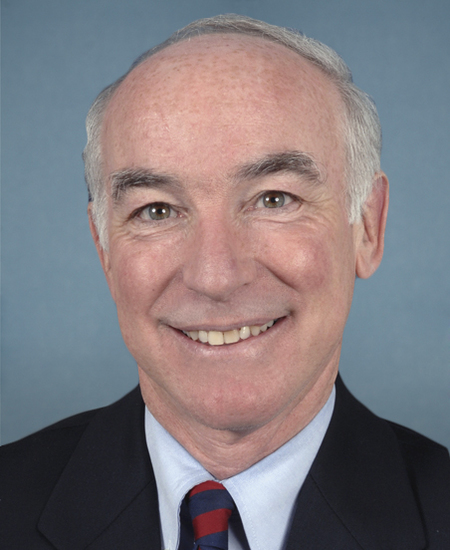
Joe Courtney
Joe Courtney House · District 2
D
Support
75% 12
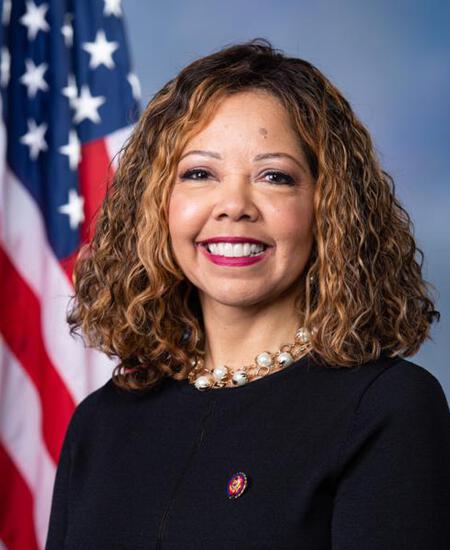
Lucy McBath
Lucy McBath House · District 6
D
Support
75% 12
Marsha Blackburn
Marsha Blackburn Senate
R
Oppose
22% 9
Ted Budd
Ted Budd Senate
R
Oppose
25% 12
Mary E. Miller
Mary E. Miller House · District 15
R
Oppose
29% 14
Wesley Hunt
Wesley Hunt House · District 38
R
Oppose
30% 10
Joni Ernst
Joni Ernst Senate
R
Oppose
31% 26
Showing 391–400 of 850 bills

All transportation bills

in committee · United States · Senate Jun 18, 2025

S 2104: Reliable Rail Service Act of 2025

The Reliable Rail Service Act of 2025 requires rail carriers to provide transportation service that meets shippers' reasonable needs for timely, efficient, and reliable delivery. It directly affects freight rail companies and the businesses (shippers) that rely on rail transport for moving goods. Key provisions mandate the Surface Transportation Board to consider factors like crew availability, equipment maintenance, and shippers' historical service needs when evaluating carrier compliance. The bill also sets strict deadlines: 180 days for violation proceedings and 45 days for resolving service term disputes.
Sub-Topics Freight Rail
in committee · United States · House Jun 11, 2025

HR 3904: U.S. Bicycle Production and Assembly Act

HR 3904, the U.S. Bicycle Production and Assembly Act, exempts specific bicycle parts from import duties when used for assembling or manufacturing complete bicycles in the United States. It directly affects U.S. bicycle manufacturers and importers who must certify parts will be used domestically and provide documentation to customs. The bill creates a new tariff code (9903.87.11) covering 30 specific part categories (e.g., frames, electrical components, tires) and requires importers to confirm parts are for U.S. assembly. It sets concrete goals: 2 million bicycles assembled annually within 5 years and 5 million within 10 years, with a mandatory report to Congress evaluating progress.
in committee · United States · Senate Jan 28, 2026

S 3718: Delivering for Rural Seniors Act of 2026

The Delivering for Rural Seniors Act of 2026 creates a pilot program to provide home delivery of food commodities from the Commodity Supplemental Food Program (CSFP) to low-income seniors in rural areas. It authorizes $10 million annually for fiscal years 2027-2029 to fund competitive grants to state agencies, which must use funds for transportation, staffing, and outreach related to home delivery services - with priority for rural communities. State agencies must report annually on program outcomes, including delivery numbers, cost per delivery, and effectiveness evaluations. The bill directly affects low-income seniors enrolled in CSFP who live in rural areas, aiming to improve their access to food assistance through home delivery.
Tags Rural Communities Seniors
in committee · United States · Senate Jul 29, 2025

S 2508: Gas Pipeline Leak Detection and Repair Act of 2025

This bill requires gas pipeline operators to immediately implement a federal safety rule mandating regular leak detection and prompt repair of gas leaks. The rule, finalized by the Pipeline and Hazardous Materials Safety Administration in January 2025, sets specific standards for identifying and fixing leaks in gas pipelines. By making this rule effective upon enactment, the bill removes any delays in its implementation. Pipeline companies operating under federal jurisdiction will be directly affected by these requirements.
in committee · United States · House Jul 23, 2025

HR 4649: Smart Cities and Communities Act of 2025

The Smart Cities and Communities Act of 2025 aims to help cities and communities across the United States implement smart technologies that improve services, safety, energy efficiency, and resilience. The bill establishes a federal council to coordinate agency efforts, creates a resource guide with best practices for local governments, and provides $100 million annually for demonstration grants to test smart city technologies in various communities. It also creates a cybersecurity working group to develop evaluation tools, a workforce training program focused on smart city technologies, and a voucher program to connect cities with national laboratories. The act requires a study on innovative financing for smart city projects and promotes international cooperation to expand U.S. exports of smart city technologies while ensuring privacy and security standards.
in committee · United States · House Aug 2, 2025

HR 4839: Merchant Marine Allies Partnership Act

The Merchant Marine Allies Partnership Act establishes a "Foreign Ally Shipping Registry" to allow vessels from designated U.S. allies to engage in U.S. coastwise trade (transporting goods between U.S. ports). Vessels must be wholly owned by nationals or governments of registry countries (including NATO members by default) and flagged in the U.S. or a registry country, with the Secretary of Transportation authorizing trade for up to five years per vessel. The bill exempts these vessels from U.S. crewing requirements (like citizenship rules) and waives duties on repairs made in shipyards of registry countries for documented vessels. Removal of a country from the registry requires congressional notice and a 30-day delay, except during declared war.
Sub-Topics Ports
in committee · United States · House Jan 31, 2026

HR 7275: Aviation Weather Safety Improvement Act

HR 7275, the Aviation Weather Safety Improvement Act, requires Center Weather Service Units to coordinate staffing with the National Weather Service, FAA, and relevant unions to ensure adequate coverage for aviation weather support. This directly affects FAA and National Weather Service staff at these units by mandating collaboration with union representatives to maintain safe aircraft movement. The bill also adds a requirement for the Secretary to submit annual reports to specific congressional committees on staffing implementation. The law aims to improve safety through structured staffing coordination, avoiding complex jargon while focusing on concrete procedural changes.
Sub-Topics Airports
in committee · United States · House Mar 18, 2025

HR 2188: COST Act

HR 2188 (COST Act) requires two studies to inform federal fleet decisions. The Comptroller General must analyze the costs of replacing gasoline-powered federal vehicles with electric or E85 flex-fuel vehicles, including necessary infrastructure. The Energy Secretary must compare lifecycle greenhouse gas emissions of conventional gasoline, E85 flex-fuel, and electric vehicles using established models. Both studies must be completed within one year of enactment, providing data for future federal vehicle fleet policies without changing existing regulations.
in committee · United States · House Sep 3, 2025

HR 5061: Counter-UAS Authority Security, Safety, and Reauthorization Act

HR 5061 establishes new authority for federal and local agencies to detect, identify, monitor, and mitigate unmanned aircraft systems (drones) that pose security threats to critical infrastructure, airports, and public events. The bill requires counter-UAS systems to meet minimum performance standards that ensure aviation safety and minimize interference with communications, with a list of approved systems maintained by the Secretary of Homeland Security. It creates a pilot program for state and local law enforcement to use authorized counter-UAS systems at covered sites (like critical infrastructure, oil refineries, and amusement parks) and covered events, with requirements for training, coordination, and privacy protections. The law includes annual reporting requirements and expires on October 1, 2030.
Sub-Topics Airports
in committee · United States · House Feb 1, 2025

HR 854: DERAIL Act

HR 854, the DERAIL Act, requires the Transportation Secretary to update federal regulations defining "high-hazard flammable train" to include any train carrying flammable liquids or gases in tank cars. It also mandates that rail carriers report all toxic-by-inhalation materials on such trains to emergency responders within 24 hours after a derailment. The bill directly affects rail companies transporting hazardous materials and emergency agencies responding to train accidents. These changes aim to improve safety communication and response during incidents involving dangerous goods.
Showing 391 to 400 of 850 bills
Previous 1 39 40 41 85 Next