Issue · Healthcare

Healthcare

Every healthcare bill, vote, and legislator stance in United States, automatically classified by Maddy, our AI policy reader.

Total bills
3,150
119th Congress
Top supporter
Darline Graham
82% support rate
Top opponent
Rick Scott
19% support rate
Ranked legislators
10
5 support · 5 oppose
Key legislators

Who's moving healthcare in United States

Legislators moving healthcare in United States
Legislator Party Stance Support rate Decisive votes
Darline Graham
Darline Graham Senate
R
Strong +
82% 11
Peter Welch
Peter Welch Senate
D
Strong +
81% 27
Ron Wyden
Ron Wyden Senate
D
Support
78% 27
Alex Padilla
Alex Padilla Senate
D
Support
77% 26
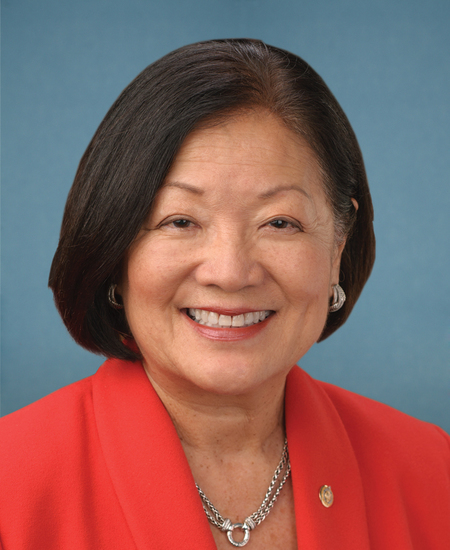
Mazie K. Hirono
Mazie K. Hirono Senate
D
Support
74% 27
Rick Scott
Rick Scott Senate
R
Strong −
19% 27
Ashley Moody
Ashley Moody Senate
R
Oppose
22% 27
Rand Paul
Rand Paul Senate
R
Oppose
22% 27
Brad Knott
Brad Knott House · District 13
R
Oppose
28% 18
Pat Harrigan
Pat Harrigan House · District 10
R
Oppose
28% 18
Showing 1,261–1,270 of 3,150 bills

All healthcare bills

in committee · United States · House Jan 31, 2025

HR 846: SAD Act

Stop Antiabortion Disinformation Act or the SAD Act This bill prohibits deceptive advertising for reproductive health services. Specifically, the bill makes it unlawful for a person (i.e., individual, partnership, corporation, association, or organization) to deceptively advertise the reproductive health services they offer, including by misrepresenting that the person (1) offers or provides contraception or abortion services (or referrals for such contraception or abortion services), or (2) employs or offers access to licensed medical personnel. The bill provides for enforcement by the Federal Trade Commission. In addition to any other penalty, violations are subject to a civil penalty that may not exceed the greater of $100,000 (adjusted annually for inflation) or 50% of the revenue earned during the preceding 12-month period by the ultimate parent entity of the person who violated the bill.
Sub-Topics Women's Health
in committee · United States · House Jan 23, 2025

HR 702: Improving Federal Assistance to Families Act

HR 702 establishes state-specific poverty lines called "Regionally Adjusted Poverty Lines" to replace the current uniform national standard. It requires the Census Bureau to calculate these lines annually for each state based on local costs (using Regional Price Parity data), and federal agencies must use whichever measure - regional or current - results in a higher poverty rate for that state when determining eligibility for programs like Medicaid and tax credits. This change aims to better reflect regional cost-of-living differences, potentially expanding access to assistance for low-income families in expensive areas. The bill also mandates a study on the ALICE poverty measure (which includes costs like housing and childcare) but does not incorporate it directly into policy.
Sub-Topics Medicaid
in committee · United States · House May 1, 2025

HRES 372: Recognizing the impact the stigmatization of menstruation has on the lives of women, girls, and people who menstruate, and expressing support for the designation of the month of May as "National Menstrual Health Awareness Month".

HRES 372 is a symbolic resolution designating May as "National Menstrual Health Awareness Month" to address stigma around menstruation. It does not create new laws but formally recognizes how menstrual stigma impacts women, girls, and people who menstruate in areas like education, health, and daily life. The resolution supports efforts to normalize menstruation, improve access to menstrual products and sanitation facilities, and promote research on menstrual health conditions. It urges awareness and education to advance gender equity but has no legal force or direct policy changes.
in committee · United States · House Jun 3, 2025

HR 3688: Protecting Children from Experimentation Act of 2025

HR 3688, the Protecting Children from Experimentation Act of 2025, prohibits healthcare professionals from performing or aiding gender transition procedures on minors (under age 18) when the procedure involves interstate commerce (e.g., travel, payments, or communications across state lines). The bill defines "gender transition procedures" broadly to include hormonal treatments and surgeries like puberty blockers, hormone therapy, and genital reconstruction, but excludes medically necessary care for disorders of sex development, precocious puberty, or life-threatening conditions. Healthcare providers violating this prohibition face criminal penalties of up to five years in prison or fines, while minors cannot be prosecuted for receiving such procedures. The law explicitly targets providers, not parents or minors, and includes specific medical exceptions to avoid restricting standard care for qualifying health conditions.
passed · United States · House May 20, 2025

HR 2201: Improving VA Training for Military Sexual Trauma Claims Act

HR 2201, the "Improving VA Training for Military Sexual Trauma Claims Act," requires the Department of Veterans Affairs (VA) to implement specific changes for handling military sexual trauma (MST) claims. It mandates annual sensitivity training for all VA employees processing MST claims, tailored to their experience level and updated yearly, and expands the VA’s duty to proactively obtain service personnel and medical records when evidence of MST is missing. The bill also requires a report on sensitivity training for contracted healthcare professionals who examine veterans filing MST claims, with plans to prevent retraumatization during these exams. These provisions directly affect veterans filing MST claims and VA staff handling such cases, aiming to improve claim processing and veteran experience.
in committee · United States · House Jul 23, 2025

HR 740: Veterans’ ACCESS Act of 2025

Veterans' Assuring Critical Care Expansions to Support Servicemembers Act of 2025 or the Veterans' ACCESS Act of 2025 This bill addresses the administration of the Veterans Community Care Program (VCCP) and other Department of Veterans Affairs (VA) health care matters. Among other provisions regarding the VCCP, the bill establishes in statute access standards that determine when a veteran is eligible to receive non-VA care through the VCCP, requires the VA to notify veterans regarding their eligibility for care within two business days after the VA is aware the veteran is seeking care, and extends the deadline for the submittal of claims under the VCCP by health care entities and providers. The VA must address its mental health treatment programs by establishing a standardized screening process to determine whether a veteran satisfies criteria for priority or routine admission to a mental health residential rehabilitation treatment program or a program for residential care for mental health and substance abuse disorders, tracking the performance of medical facilities and Veterans Integrated Service Networks in meeting the requirements for mental health treatment screenings and timely admission to treatment programs under such screenings, and establishing an appeal process for when a veteran is denied admission to a covered treatment program or is accepted into a program but not offered bed placement in a timely manner. Additionally, the VA must establish an online self-service module for veterans to request and manage appointments, track referrals, and appeal and track decisions related to requests for care.
in committee · United States · House Dec 17, 2025

HR 6782: Public Health Air Quality Act of 2025

The Public Health Air Quality Act of 2025 requires the Environmental Protection Agency to establish a national network for monitoring hazardous air pollutants near communities, focusing on facilities emitting specific chemicals linked to health risks like cancer and respiratory issues. The bill mandates fenceline monitoring at 100 high-priority facilities that emit chemicals such as benzene, formaldehyde, ethylene oxide, and other hazardous air pollutants, with public reporting of data within 7 days of collection. It also requires deployment of 1,000 low-cost air quality monitoring systems in communities disproportionately impacted by pollution, with data made accessible in multiple languages and formats. The Act authorizes $146 million for implementation during fiscal years 2026-2027 to support these monitoring requirements and public transparency efforts.
in committee · United States · House Feb 26, 2025

HR 1597: Compassion for Vulnerable and Struggling Workers Act

This bill (HR 1597) allows certain fired federal employees to continue or enroll in the Federal Employees Health Benefits Program (FEHBP). It directly affects civil service workers involuntarily removed between January 20, 2025, and January 1, 2026, who were removed without cause, had a "fully successful" performance rating, were pregnant at termination, or were diagnosed with cancer within five years prior. The bill requires health coverage contributions to be funded using savings from the newly created "United States DOGE Service" (established by a January 20, 2025, executive order). This provides a specific pathway for eligible former employees to maintain health insurance during a transition period, using redirected federal savings.
in committee · United States · Senate Apr 29, 2026

S 3395: Mammography Access for Veterans Act of 2025

S 3395, the Mammography Access for Veterans Act of 2025, permanently expands telehealth mammography services for veterans by ending the previous pilot program restrictions. It requires the Department of Veterans Affairs to provide at least one mammography option - full-service, tele-screening, or mobile - in every state and Puerto Rico within two years. All programs must comply with accessibility standards for veterans with paralysis, spinal cord injuries, or other disabilities. This directly affects veterans needing breast cancer screenings, particularly those in rural areas or with mobility challenges.
in committee · United States · House Sep 26, 2025

HR 5609: Stop RFK’s BS Act

This bill restores National Institutes of Health (NIH) grants and awards suspended or terminated between January 20, 2025, and its enactment date (unless fraud or mismanagement is found). It requires NIH to immediately reinstate eligible funding, process payment requests within 30 days, and extend grant terms by one year for reinstated awards. The bill directly affects NIH grant recipients (like researchers and institutions) and NIH officials responsible for award management. It focuses on concrete procedural changes to funding access, not on policy content or scientific substance.
Showing 1,261 to 1,270 of 3,150 bills