

Maddy summaryHR 9388, the Modern Firearm Safety Act, prohibits federal, state, and local governments from requiring certain safety features on handguns sold in interstate commerce. The bill specifically bans mandates for: loaded indicators, magazine insertion mechanisms, microstamping (microscopic markings on shell casings), or attachment points for such features. This directly affects handgun manufacturers and state/local governments that might have proposed or implemented such requirements. The law prevents new regulations requiring these features on handguns commonly used by the public, focusing on removing specific technical mandates rather than broader safety measures.
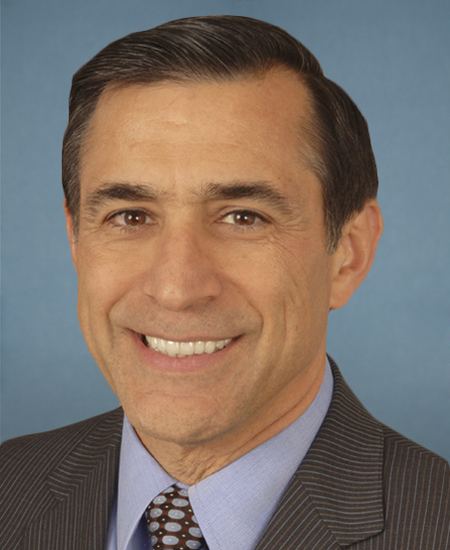
Rep. Darrell Issa
Sponsored bills
Maddy summaryThis bill adds "galactose-alpha-1,3-galactose" (alpha-gal) to the list of major food allergens under federal law. It requires food manufacturers to clearly label products containing alpha-gal, which is found in red meat and some other animal-derived foods, directly affecting consumers with alpha-gal syndrome (a meat allergy often triggered by tick bites). The law excludes certain mammal-derived ingredients (like those from alpha-gal-knockout animals) if they fall below a detectable limit. The new labeling requirement will take effect on January 1, 2026, giving manufacturers time to adjust. This change ensures clearer allergen information for people with this specific allergy.
Maddy summaryHR 9247, the BIS IT Modernization Act, requires the Bureau of Industry and Security (BIS) to replace outdated information technology systems with a unified environment by 2029. The bill mandates adopting advanced data tools to streamline export license reviews, improve tracking of military end uses in countries of concern, and enhance data sharing with industry and partners. It specifically directs BIS to reduce manual processing, strengthen cybersecurity, and facilitate easier access for U.S. exporters using its systems. The act authorizes $25 million annually (2025-2028) to fund these modernization efforts.
Maddy summaryHR 9274, the SHAWL Act, establishes two new Smithsonian museums: the National Museum of the American Latino and the American Women’s History Museum. It authorizes both museums to be located within the National Mall’s "Reserve" area, overriding prior restrictions, and requires federal agencies managing potential sites to transfer jurisdiction to the Smithsonian after notifying congressional committees. The bill mandates that both museums accurately represent diverse cultures, histories, and viewpoints within Latino and women’s communities through exhibits and programs, requiring input from a broad range of community experts. It also requires the Smithsonian to submit biennial reports to Congress detailing compliance with these representation requirements.
Freedom from Unfair Gun Taxes Act of 2024 This bill prohibits states or localities from imposing a levy or collecting an excise tax on the sale of a firearm, ammunition, or any part or component thereof, by a manufacture or retailer.
Maddy summaryHJRES 127 is a congressional disapproval resolution targeting a Securities and Exchange Commission (SEC) rule requiring public companies to standardize climate-related financial disclosures. It seeks to block the SEC’s March 2024 rule (89 Fed. Reg. 21668), which would mandate consistent reporting on climate risks for investors. If passed, this resolution would prevent the SEC rule from taking effect, directly affecting publicly traded companies required to comply with the proposed disclosure standards. The bill uses a specific congressional process under Title 5, U.S. Code, to nullify the rule without creating new regulations.
Maddy summaryThis bill reauthorizes the Debbie Smith DNA Backlog Grant Program, which provides federal funding to state and local law enforcement agencies to reduce backlogs in processing DNA evidence from crime scenes. It extends the program's funding period from fiscal years 2024 through 2029 (previously ending in 2024). The bill also updates audit requirements to ensure grant funds are used properly through 2029. This directly affects law enforcement agencies that receive these grants to accelerate DNA analysis for criminal investigations.
Maddy summaryHR 9153, the "HAMAS Terrorist Fugitive Act," is a non-binding congressional resolution directing federal agencies to use existing authorities to target specific Hamas leaders. It requires the FBI to add 11 named Hamas figures (including Ismail Haniyeh and Yahya Al Sinwar) to its Most Wanted list and directs the State Department to offer rewards for their arrest or conviction under current programs. The bill does not create new laws or penalties but mandates that agencies coordinate to avoid duplicate rewards. It focuses on holding accountable leaders of Hamas and affiliated groups for the October 7, 2023, attack on Israel, which involved U.S. citizens. This resolution expresses congressional policy but has no legal force beyond directing existing agency actions.
Maddy summaryHR 5617, the Space Transformation And Reliability Act (STAR Act), is a procedural bill that makes a technical amendment to existing law. It changes the reference from "2023" to "2031" in a specific provision (section 50905(c)(9) of Title 51, U.S. Code) regarding a learning period. This adjustment modifies a deadline year for an unspecified program or requirement within the referenced legal section. The bill does not establish new policy or directly affect specific stakeholders, as it only updates a single year in a technical legal citation.
Maddy summaryThe SAVE Act (HR 8281) requires U.S. citizens to provide documentary proof of citizenship when registering to vote in federal elections. It defines acceptable proof as documents like passports, REAL ID-compliant IDs, military IDs, or birth certificates, and mandates that states verify citizenship using information from government agencies like DHS and Social Security. States must establish processes for voters without required documentation to provide an attestation under penalty of perjury. The law also requires states to remove noncitizens from voter rolls when verified evidence shows they're not citizens. This bill directly affects all applicants registering to vote in federal elections and state election officials who must implement these requirements.