

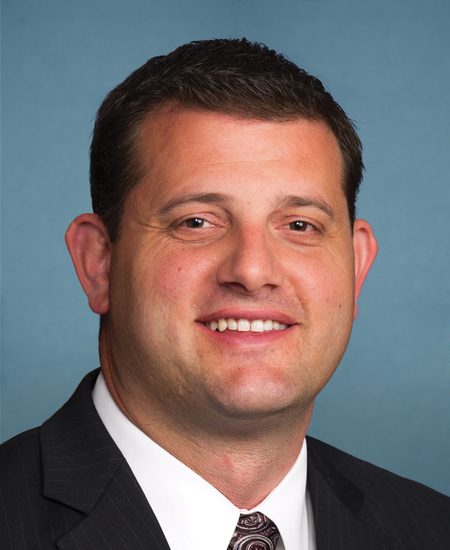
Photo of David G. Valadao
R United States House · District 22 · California On the 2026 ballot

Rep. David G. Valadao

Compare
Total votes
2,812
all sessions
Attendance
98%
53 missed
Near the chamber average
With party
90%
of cast votes
Near the chamber average
Bipartisan score
5%
crosses aisle rarely
Near the chamber average
Sponsored
1,221
bills & resolutions
Near the chamber average
Committees
8
assignments
1,221 bills and resolutions

Sponsored bills

Total
1,221
Primary
68
Co-sponsor
1,153
This page
1,221
matching current filters
Co-sponsor HR 7602
In committee · Texas House · Co-sponsor
State of Men’s Health Act

Maddy summaryHR 7602, the State of Men’s Health Act, requires the Government Accountability Office (GAO) to study U.S. men’s health disparities and submit a report to Congress within one year of enactment. It also mandates the Department of Health and Human Services (HHS) to establish an Office of Men’s Health within 18 months to coordinate existing federal programs focused on preventive care for men, including screenings for prostate cancer, mental health, and cardiovascular issues. The bill does not authorize new funding; all activities must use existing appropriations. This legislation directly affects all men in the United States by aiming to improve health outcomes through better coordination of current federal health initiatives.

In committee Feb 20, 2026 1 co-sponsor
Co-sponsor HR 4304
In committee · Texas House · Co-sponsor
Fair Accounting for Income Realized from Betting Earnings Taxation Act

Maddy summaryHR 4304, the FAIR Bet Act, amends the tax code to allow gamblers to deduct 100% of their wagering losses instead of the current 90% limit. This change directly affects individuals who report gambling losses on their federal income tax returns. The key provision modifies Section 165(d) of the Internal Revenue Code to remove the 90% restriction on deducting gambling losses. The bill does not alter how gambling winnings are taxed, only the deduction available for losses.

In committee Feb 12, 2026 1 co-sponsor
Co-sponsor HR 7450
In committee · Texas House · Co-sponsor
Disaster Zone Energy Affordability and Investment Act

Maddy summaryThis bill modifies tax credit rules to help businesses recover after disasters. It allows businesses operating in designated disaster areas to treat certain unused tax credits (carryforwards) as transferrable credits against current tax liability, rather than letting them expire. Specifically, it applies to taxpayers making eligible expenditures for business operations in areas with a major disaster declaration after December 31, 2023, or a state-declared disaster meeting specific criteria. The change affects businesses in affected zones by providing immediate tax relief for qualifying expenses incurred within two years of the disaster declaration. It does not involve energy policy or new funding, but adjusts existing tax credit rules for disaster recovery.

In committee Feb 9, 2026 1 co-sponsor
Co-sponsor HR 7437
In committee · Texas House · Co-sponsor
BASICS Act

Maddy summaryThis bill, known as the BASICS Act, creates a new $5.5 billion federal funding program over five years to repair and replace bridges in poor condition across the United States. The program prioritizes projects based on the cost of bridge rehabilitation in each state and guarantees a minimum funding allocation of $45 million per state annually. It also expands funding for regional transportation planning in rural areas and increases flexibility for local governments to select and manage transportation projects through enhanced consultation requirements. Additionally, the legislation removes local matching fund requirements for metropolitan planning activities and allows 100 percent federal funding for off-system bridge projects owned by local governments or tribes.

In committee Feb 9, 2026 1 co-sponsor
Co-sponsor HR 7373
In committee · Texas House · Co-sponsor
Trade Cheating Restitution Act of 2026

Maddy summaryHR 7373, the Trade Cheating Restitution Act of 2026, directs the U.S. Customs and Border Protection to redistribute accumulated interest on past antidumping and countervailing duty payments to eligible businesses. It specifically targets interest earned since October 1, 2000, with two distribution phases: one for interest from 2010 onward (within 210 days of enactment) and another for interest from 2000-2010 (within 210 days after the first phase). Eligibility requires prior receipt of payments under the repealed 2000 Act, timely certification, and meeting original eligibility criteria. The funds are distributed pro-rata based on the relevant duty orders, using existing Treasury accounts without new appropriations. This bill affects businesses that previously qualified for duty payment distributions but did not receive the interest component.

In committee Feb 4, 2026 1 co-sponsor
Co-sponsor HR 7352
In committee · Texas House · Co-sponsor
PASTEUR Act of 2026

Maddy summaryThe PASTEUR Act of 2026 creates a new government contracting program to incentivize development of new antimicrobial drugs for treating drug-resistant infections. The Health and Human Services Secretary would award contracts to pharmaceutical sponsors meeting specific criteria on clinical benefits, innovation, and public health impact, with annual payments ranging from $75 million to $300 million (adjusted for inflation). Contract requirements include ensuring drug availability, tracking resistance data, promoting appropriate use, and maintaining supply chains. The bill also establishes antimicrobial stewardship programs for hospitals and outpatient facilities and improves surveillance of antimicrobial use and resistance. This legislation aims to address antibiotic resistance by creating financial incentives for new treatments and improving how antimicrobials are used and monitored.

In committee Feb 4, 2026 1 co-sponsor
Co-sponsor HR 3699
In committee · Texas House · Co-sponsor
Energy Choice Act

Maddy summaryThis bill prevents state or local governments from banning or restricting energy connections (like installation, modification, or access) based on the type or source of energy, such as electricity, natural gas, or renewable fuels. It directly affects consumers choosing energy providers and energy companies seeking to offer services. The key provision prohibits local laws, regulations, or policies that limit energy services sold in interstate commerce, covering all energy types listed in the bill’s definitions. It does not create new programs but limits regulatory authority at the state or local level. The law aims to ensure open access to diverse energy sources without source-based restrictions.

In committee Feb 4, 2026 1 co-sponsor
Co-sponsor HR 1849
In committee · Texas House · Co-sponsor
Disaster Mitigation and Tax Parity Act of 2025

Maddy summaryThis bill creates a tax exclusion for certain disaster mitigation payments received by property owners. It allows individuals to exclude from gross income funds paid by state programs (or approved entities) to make improvements that reduce damage from windstorms, earthquakes, or wildfires. The exclusion applies to payments made for specific property upgrades like storm shutters or fire-resistant roofing. The change takes effect for 2021+ tax years and includes a retroactive option for taxpayers to amend prior returns. It directly affects homeowners participating in qualifying state disaster resilience programs.

In committee Feb 4, 2026 1 co-sponsor
Co-sponsor HR 6960
In committee · Texas House · Co-sponsor
Thomas M. Conway Veterans Access to Resources in the Workplace Act

Maddy summaryThis bill requires most employers (those with 50+ employees for 20+ weeks annually) to display a clear notice about veterans' benefits in visible workplace areas. The notice, developed by the Labor and Veterans Affairs Departments, includes the Veterans Crisis Line, how to apply for benefits, and state-specific veteran resources. Employers must post the notice starting one year after the bill's enactment, with the notice updated twice yearly and made available online. A 180-day information campaign will also inform employers about the requirement.

In committee Jan 29, 2026 1 co-sponsor
Co-sponsor HR 1663
Passed · Texas House · Co-sponsor
VSAFE Act of 2025

Maddy summaryThe VSAFE Act of 2025 establishes a Veterans Scam and Fraud Evasion Officer within the Department of Veterans Affairs to prevent and address fraud targeting veterans. This officer will develop communication plans, training, and reporting systems for veterans, families, caregivers, and survivors to identify and avoid scams, while coordinating with agencies like the IRS, DOJ, and Social Security Administration. The bill also modifies a home loan fee deadline in the VA loan program, changing a date from June 9, 2034, to June 23, 2034. It does not create new full-time positions or alter existing Inspector General authority.

Passed Jan 26, 2026 1 co-sponsor
Showing 81 to 90 of 1,221 bills
Previous 1 8 9 10 123 Next