

Maddy summaryThe Human Trafficking Awareness Training Recognition Act of 2026 creates a certification program for employers in industries with high human trafficking prevalence, allowing them to earn recognition after providing employee training on identifying and responding to human trafficking. Employers must apply annually between January 31 and April 30, detailing their training efforts, and the Secretary of Homeland Security will issue a one-year certificate to qualifying employers. The program prohibits false displays of certification, mandates annual reports to Congress on participation and costs, and authorizes application fees to cover administrative expenses.
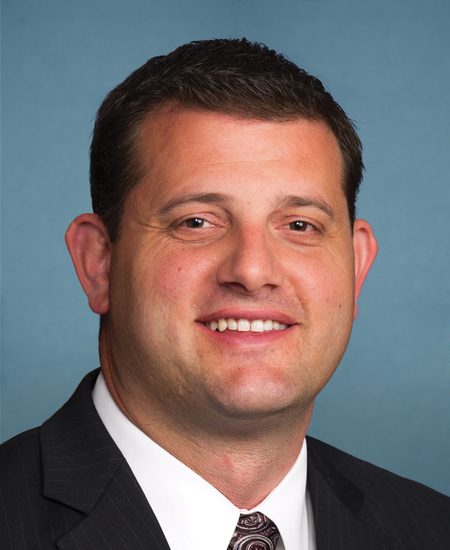
Rep. David G. Valadao
Sponsored bills
Maddy summaryThis bill creates a tax credit for businesses selling products made with U.S.-grown cotton. The credit equals 24% of the cotton's market value if processed only in the U.S. or in countries with U.S. trade deals, or 18% for other processing locations. To qualify, cotton must be digitally traced from U.S. farms to finished products and certified by the USDA as meeting origin requirements. It directly affects clothing and textile manufacturers selling qualifying products in the U.S. market.
Maddy summaryHR 7178, the U.S.-Israel Anti-Killer Drone Act of 2026, requires enhanced U.S.-Israel cooperation to counter Iranian unmanned systems. The bill directs the U.S. and Israel to jointly develop, test, and deploy counter-drone technologies through their existing Operations Technology-Working Group, including sharing threat intelligence and conducting joint training. It increases annual funding for this cooperation from $55 million to $100 million and mandates detailed annual reports to Congress on progress, threat assessments, and the adequacy of current counter-drone capabilities. The bill directly affects U.S. and Israeli military forces by accelerating joint efforts to address threats from Iran-origin drones targeting U.S. allies and military assets in the Middle East.
Maddy summaryHR 7145 defines "essential health systems" as hospitals serving large numbers of Medicaid and low-income patients, specifically targeting non-Federal, nonprofit, or government-run hospitals that meet one of three criteria for at least two of the past three years (e.g., high Medicaid patient percentage, high uncompensated care, or top 16th percentile in state rankings for low-income care). The bill requires MACPAC to annually publish an "essential health system index" ranking qualifying hospitals nationally, by state, and within local areas, using data from Medicare reporting. Hospitals designated as essential health systems receive a five-year designation, renewable if they maintain eligibility. This framework aims to identify facilities providing critical community care for vulnerable populations through standardized metrics.
Maddy summaryHR 7100 establishes a Department of Justice Task Force on Anti-Sikh Hate and Discrimination to address systemic bias against Sikhs. The Task Force must draft a formal definition of anti-Sikh hate for DOJ use, develop educational programs for law enforcement and schools, and produce annual reports on hate crimes and trends. It requires quarterly collaboration with Sikh organizations and translation of materials into Punjabi. The bill directly affects Sikhs in the U.S. (who face disproportionate targeting as noted in FBI data) and mandates federal agencies to improve hate crime data collection and response. This is a policy-focused measure to standardize definitions, enhance reporting, and support community safety through DOJ action.
Maddy summaryThis bill modifies federal sentencing for young people under 18 who were previously trafficked, abused, or assaulted before committing violent crimes. It allows judges to sentence below mandatory minimums and suspend parts of a sentence to account for the trauma the offender experienced. The law specifically applies to those convicted of violent offenses after the bill's enactment, provided the court finds clear evidence they were victimized under specific federal trafficking or abuse laws within the prior year. It directly affects minors with documented histories of victimization who commit violent acts, giving judges discretion to consider their trauma during sentencing.
Maddy summaryThe REAP Modernization Act of 2025 updates the Rural Energy for America Program (REAP) to better support rural agricultural and small business renewable energy projects. It requires the program to actively promote greenhouse gas emission reductions through funded projects, expands eligibility to include producer cooperatives and nongovernmental organizations, and increases the climate benefit consideration from 25% to 50% in project evaluations. The bill also establishes a streamlined application process, mandates a study on dual-use energy systems (combining farming with renewable energy on the same land), and adjusts funding rules to prioritize underutilized renewable technologies. These changes directly affect rural farmers, cooperatives, and small businesses seeking grants for solar, wind, or other renewable energy installations on agricultural properties.
Maddy summaryHR 5059 creates a new grant program to boost sales of U.S.-grown specialty crops (like fruits, vegetables, and nuts) within the domestic market. The U.S. Department of Agriculture will award grants to eligible organizations - such as agricultural trade groups, cooperatives, or nonprofit associations - to fund marketing and promotion activities. Organizations must contribute at least 25% of the grant amount from non-Federal sources and cannot use funds to directly assist large for-profit corporations (except cooperatives or specific associations). The program is authorized to receive $75 million annually starting in fiscal year 2026, with strict reporting and evaluation requirements to track how funds develop domestic markets.
Maddy summaryThis bill establishes a federal grant program to boost domestic sales of U.S.-grown specialty crops (like fruits, vegetables, nuts, and nursery products). It authorizes $75 million annually to fund grants for eligible organizations - such as agricultural trade groups, cooperatives, or state agencies - that develop marketing plans for domestic promotion. Grantees must provide at least 25% non-Federal matching funds (including in-kind support) and cannot use funds to promote foreign products or most for-profit corporations. The program includes strict oversight, requiring annual reviews, spending audits, and evaluations to ensure funds effectively expand domestic markets for specialty crops.
Maddy summaryHR 4782, the Local Farmers Feeding our Communities Act, establishes a USDA program to connect local farmers with food distribution networks. It requires eligible entities (like state agriculture agencies) to use funds to purchase unprocessed or minimally processed local foods from covered producers - including at least 25% from small-size, mid-size, beginning, or veteran farmers - while providing technical assistance for food safety and supply chains. The bill allocates $200 million annually (2026-2030) from the Commodity Credit Corporation, mandating 10% for Tribal governments and 1% per state before distributing remaining funds. This directly supports regional food security by boosting economic opportunities for local farmers and improving access to fresh, nutritious food through established distribution channels.