

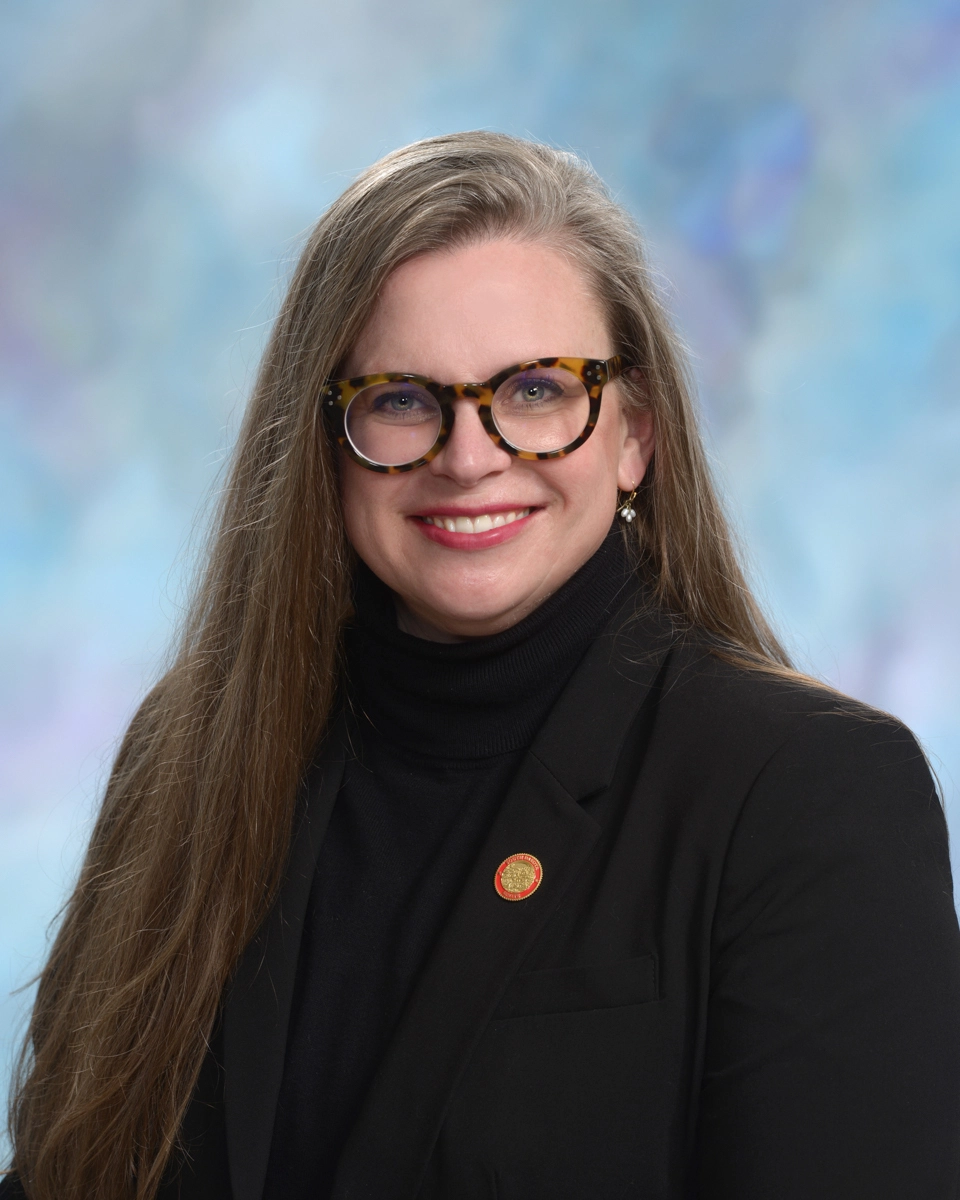
Maddy summarySB 104 requires South Dakota's Medicaid program to reimburse licensed therapists for equine-assisted therapy. The bill mandates reimbursement for physical therapists, occupational therapists, or speech-language pathologists who provide therapy using horse-human interactions to help patients meet treatment goals. This applies to Medicaid recipients and requires the state to submit a federal plan amendment by August 1, 2026, to implement the coverage. The law specifically defines "therapy using equine movement" as therapeutic activities leveraging horse interactions to achieve clinical objectives.
Sen. Liz Larson
Sponsored bills
Maddy summaryThis bill (SC 806) is a non-binding legislative commemoration honoring four South Dakota school administrators for their service: David Olson (Meade Middle School Principal), Kendra Becker (Redfield Secondary School Principal), Richie Hutchinson (Sioux Falls Assistant Middle School Principal), and Kay Bass (Harrisburg Assistant Secondary School Principal). It recognizes their combined 88 years of dedication to education, peer-elected "Outstanding School Administrator" status for 2025-2026, and their commitment to improving educational opportunities. The resolution formally names them as official representatives of South Dakota School Administrators. This is purely ceremonial and does not create new laws or affect policies.
Maddy summaryHB 1157 creates a 12-member task force to study ecological damage and costs from aquatic invasive species in South Dakota. The task force includes representatives from state agencies (Game, Fish and Parks; Agriculture; Tourism), tribal organizations, water development districts, recreation industries, and environmental groups. It must submit a report by November 2026 detailing prevention strategies, cost estimates, and funding recommendations for addressing invasive species. The bill appropriates $50,000 from the general fund for task force expenses and declares an emergency to expedite implementation.
Maddy summaryHB 1093 creates a new "small-batch winery" license in South Dakota for producers making limited quantities of wine. It sets specific requirements: producers must use at least 50% locally grown agricultural materials, limit annual production to 3,750 gallons, and pay a $500 license fee. The bill allows these wineries to sell directly on-site and to other licensed producers (like distillers or breweries) for use in manufacturing, while requiring verification of local ingredient sourcing. This license is distinct from existing "farm winery" licenses, which have higher production limits (150,000 gallons annually). The bill directly affects small-scale winery operators seeking to produce and sell wine under these defined parameters.
Maddy summaryThis ceremonial resolution (SCR 602) celebrates South Dakota's 42-year sister-state relationship with Taiwan, established in 1984. It highlights specific trade ties, including a 2025 agricultural mission visit and a wheat purchase agreement between South Dakota and Taiwan. The resolution expresses support for strengthening trade relations, academic exchanges, the U.S.-Taiwan tax agreement, and Taiwan's participation in international organizations. As a symbolic gesture, it does not create new laws or policies but formally recognizes the partnership.
Maddy summaryThis bill (SC 802) is a ceremonial resolution recognizing the 77th anniversary of Tabor Czech Days, an annual cultural festival in Tabor, South Dakota, scheduled for June 18-20, 2026. It formally honors the event and the Czech immigrant heritage it celebrates, highlighting traditions like music, food, museums, and community activities. The resolution has no legal effect or policy changes - it simply offers official state recognition through the legislature. It directly acknowledges the festival’s cultural significance to South Dakota’s Czech community and its annual events.
Maddy summarySB 105 requires anyone installing radon mitigation systems for compensation to obtain a state license from the South Dakota Department of Health. Applicants must provide proof of national certification, pay an initial fee of up to $500, and be at least 18 years old. To renew a license, installers must complete 7 hours of approved continuing education and maintain current national certification, with renewal fees capped at $250. Installing radon systems without a license is classified as a Class 1 misdemeanor.
Maddy summarySB 149 adds a new exemption to South Dakota law, protecting one motor vehicle owned by a debtor from being seized by creditors. The bill specifically exempts a debtor's interest in a single vehicle valued at $5,000 or less after accounting for any existing liens or security interests. This change adds to the existing list of protected property, such as family photos, clothing, and essential household items. The law directly affects debtors facing collection actions who own a single vehicle within the specified value limit.
Maddy summaryThis bill is a legislative commemoration honoring the Harrisburg Tigers girls' gymnastics team for winning the 2025 Class AA state championship. It recognizes their historic first-place finish, a team score record of 152.983, and individual victories by Katelyn Maeschen, Emery Myron, and Isabelle Reiners. The resolution, introduced by multiple legislators, formally celebrates the team's achievements and their coaches' recognition as Coach of the Year. As a symbolic gesture, it has no policy impact or direct effect on any laws or regulations.
Maddy summaryThis House Concurrent Resolution (HCR 6003) recognizes conservation and restoration practices - such as native vegetation restoration, stream rehabilitation, and beaver dam analogues - as critical for addressing water shortages and reducing wildfire risks in South Dakota's Black Hills region. It specifically commends organizations like the Black Hills Watershed Collaborative, landowners, and community groups working on these projects. The resolution does not create new laws or allocate funds but formally acknowledges these efforts' role in improving water availability, fire mitigation, soil health, and ecosystem resilience. It serves as a symbolic statement of legislative support for ongoing community-led conservation work.