

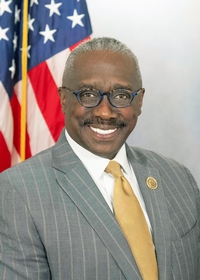
Photo of Dan Williams
D Pennsylvania House · District 74 On the 2026 ballot

Rep. Dan Williams

Compare
Total votes
6,308
all sessions
Attendance
99%
66 missed
Near the chamber average
With party
98%
of cast votes
Higher than 91% of chamber peers
Bipartisan score
1%
crosses aisle rarely
Lower than 87% of chamber peers
Sponsored
2,501
bills & resolutions
Higher than 93% of chamber peers
Committees
1
assignment
2,501 bills and resolutions

Sponsored bills

Total
2,501
Primary
51
Co-sponsor
2,450
This page
2,501
matching current filters
Co-sponsor HB 1742
In committee · Pennsylvania House · Co-sponsor
An Act amending the act of March 4, 1971 (P.L.6, No.2), known as the Tax Reform Code of 1971, in personal income tax, further providing for special tax provisions for poverty.

Maddy summaryHB 1742 amends Pennsylvania's personal income tax code to create special provisions for taxpayers living in poverty. The bill allows individuals with an income of $6,500 to $10,000, or married couples with a combined income of $13,000 to $20,000, to receive a refund or forgiveness of any taxes they have overpaid. Eligible taxpayers also receive an additional $9,500 income allowance for each dependent they claim. The poverty income thresholds are set to increase annually based on the Consumer Price Index, ensuring they do not decrease even if inflation rates are negative.

In committee Sep 23, 2024 1 co-sponsor
Co-sponsor HB 1849
In committee · Pennsylvania House · Co-sponsor
An Act amending Title 42 (Judiciary and Judicial Procedure) of the Pennsylvania Consolidated Statutes, in commencement of proceedings, providing for restorative justice.

Maddy summaryThis bill introduces restorative justice as a formal sentencing option in Pennsylvania courts, allowing judges to order it either as the sole punishment or alongside traditional penalties like probation or confinement. The legislation defines restorative justice as a participatory process involving victims, offenders, community members, and trained facilitators to address harm, resolve conflicts, and repair relationships through methods such as conferences or circles. By adding specific definitions and procedures to state law, the bill ensures that courts consider this approach when determining sentences, provided all participants voluntarily agree to take part.

In committee Sep 23, 2024 1 co-sponsor
Co-sponsor HB 2037
In committee · Pennsylvania House · Co-sponsor
An Act amending the act of September 27, 1961 (P.L.1700, No.699), known as the Pharmacy Act, further providing for authority to administer injectable medications, biologicals and immunizations and for laboratory waiver.

Maddy summaryThis bill expands the scope of practice for pharmacists in Pennsylvania by allowing them to administer injectable medications, biologicals, and immunizations to patients aged three and older. It establishes new requirements for training, parental consent for minors, and reporting procedures while also permitting pharmacists to delegate these tasks to specific healthcare professionals and qualified pharmacy technicians under strict supervision. Additionally, the legislation grants pharmacies with existing federal waivers the ability to perform certain laboratory tests for common illnesses like COVID-19 and the flu without adhering to some state clinical laboratory regulations.

In committee Sep 23, 2024 1 co-sponsor
Co-sponsor HB 2238
In committee · Pennsylvania House · Co-sponsor
An Act amending Title 12 (Commerce and Trade) of the Pennsylvania Consolidated Statutes, providing for consumer protection and prohibiting the use of perfluoroalkyl and polyfluoroalkyl substances in certain products; imposing powers and duties on the Department of Environmental Protection; and imposing penalties.

Maddy summaryThis Pennsylvania bill prohibits the intentional addition of perfluoroalkyl and polyfluoroalkyl substances, commonly known as PFAS, to a wide range of consumer products including cookware, cosmetics, food packaging, and artificial turf. While the law generally bans these chemicals, it allows for their use in specific items if the Department of Environmental Protection determines that no safer alternative exists and the chemical is critical for the product's function. The Department of Environmental Protection is tasked with enforcing these restrictions, managing a public database of PFAS information, and imposing penalties for violations.

In committee Sep 23, 2024 1 co-sponsor
Co-sponsor HB 2384
In committee · Pennsylvania House · Co-sponsor
An Act amending the act of July 7, 1980 (P.L.380, No.97), known as the Solid Waste Management Act, in general provisions, further providing for definitions; and, in residual waste, providing for prohibition on road spreading and land application of oil and gas wastewater.

Maddy summaryThis Pennsylvania bill amends the Solid Waste Management Act to clarify definitions and restrict how oil and gas wastewater is handled. It explicitly adds various types of oil and gas wastewater, such as production water and brine, to the legal definition of "residual waste." The legislation prohibits spreading this wastewater on roads or applying it to land, with the sole exception of tophole water used at the specific well site where it was extracted. Additionally, the bill bans vehicles transporting this wastewater from having mechanisms that could facilitate the prohibited disposal or reuse methods. These changes aim to limit the environmental impact of oil and gas operations by preventing the use of wastewater for dust suppression, road deicing, or road stabilization.

In committee Sep 23, 2024 1 co-sponsor
Co-sponsor HB 2430
In committee · Pennsylvania House · Co-sponsor
An Act amending Title 75 (Vehicles) of the Pennsylvania Consolidated Statutes, in motor carriers road tax identification markers, further providing for definitions, for identification markers and license or road tax registration card required and for false statement and penalties; and, in liquid fuels and fuels tax, further providing for refunds.

Maddy summaryThis bill updates Pennsylvania laws to allow online messengers to issue and renew motor carrier road tax identification markers, temporary permits, and related registration cards. To operate under these new rules, online messengers must post a financial bond and follow specific regulations set by the Department of Revenue. The legislation also establishes a $100 fine for online messengers who violate these provisions and clarifies the definition of an online messenger. Additionally, the bill expands tax refund eligibility for truck refrigeration units by increasing the allowable fuel purchase limit from 75 to 100 gallons per transaction.

In committee Sep 23, 2024 1 co-sponsor
Co-sponsor HB 2560
In committee · Pennsylvania House · Co-sponsor
An Act amending the act of May 31, 2018 (P.L.123, No.25), known as the Outpatient Psychiatric Oversight Act, further providing for definitions and for requirements; and abrogating regulations.

Maddy summaryThis bill updates Pennsylvania's Outpatient Psychiatric Oversight Act to clarify who qualifies as an advanced practice professional and to define how telehealth technology is used in mental health care. It allows certified nurse practitioners and physician assistants to provide psychiatric services remotely, provided they obtain mental health certification within two years of hiring or the law's effective date. The legislation requires that at least 50% of treatment and supervision be delivered in person, though clinics can request a waiver to increase remote care if they have a nearby physical facility ready to see patients within 10 days of referral. Additionally, the bill removes outdated regulations and establishes new rules for clinic leadership, ensuring that a psychiatrist oversees treatment standards and participates in regular staff meetings.

In committee Sep 10, 2024 1 co-sponsor
Co-sponsor HB 2136
In committee · Pennsylvania House · Co-sponsor
An Act providing for Maternal Care Access Program; and imposing duties on the Department of Health.

Maddy summaryThis bill creates the Maternal Care Access Program within the Pennsylvania Department of Health to improve maternal health outcomes by directing resources to underserved areas. The legislation defines specific terms like "maternity care desert" and "at-risk" zones based on the availability of obstetric care, birth centers, and medical providers. It authorizes the department to distribute funds to birth centers, obstetrician-gynecologists, certified nurse midwives, and hospitals located in designated zones that lack adequate care options. Additionally, the bill establishes criteria for identifying distressed hospitals and outlines various health and social indicators used to assess maternal vulnerability.

In committee Aug 21, 2024 1 co-sponsor
Co-sponsor HB 2539
In committee · Pennsylvania House · Co-sponsor
An Act amending Title 61 (Prisons and Parole) of the Pennsylvania Consolidated Statutes, in general administration relating to correctional institutions, providing for secure transport of detained individuals or inmates.

Maddy summaryThis bill requires correctional officers in Pennsylvania to use safety seat belts when transporting detained individuals or inmates in vehicles. It allows for exceptions if using a seat belt would endanger the officer or others, or if the person is being transported on a bus. The Department of Corrections must create specific regulations for seat belt use within 120 days, including rules for transporting pregnant individuals. The law applies to all peace officers and other authorized personnel who transport detainees under official detention.

In committee Aug 21, 2024 1 co-sponsor
Co-sponsor HB 2540
In committee · Pennsylvania House · Co-sponsor
An Act prohibiting the penalization of employees for nonparticipation in religious or political matters; providing for notice requirements; and imposing penalties.

Maddy summaryThis bill prohibits employers in Pennsylvania from punishing, disciplining, or retaliating against employees for refusing to attend meetings or listen to communications about religious or political topics. It defines "voluntary" participation as attendance that is not incentivized by benefits or threatened with negative employment consequences, ensuring employees can opt out without fear of reprisal. To enforce these protections, the law allows aggrieved workers to sue for remedies like reinstatement and back pay, while also requiring employers to post a notice explaining these rights. Additionally, the bill mandates that the Department of Labor and Industry investigate complaints and provides a framework for interested parties to report violations.

In committee Aug 21, 2024 1 co-sponsor
Showing 811 to 820 of 2,501 bills
Previous 1 … 81 82 83 … 251 Next