

Maddy summaryThis resolution designates March 18, 2025, as "National Transit Worker Appreciation Day" in Pennsylvania. It recognizes the work of approximately 16,800 public transit employees (including bus/train operators, drivers, and maintenance staff) who support over 237 million annual trips for Pennsylvania residents. The resolution does not create new laws or funding but encourages the public to thank transit workers for their role in connecting communities to jobs, healthcare, and education. It specifically highlights concerns about safety risks transit workers face, including recent incidents of violence. The resolution is symbolic and non-binding, limited to Pennsylvania's House of Representatives.
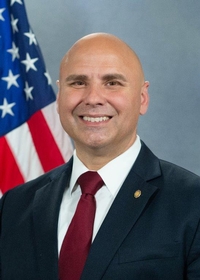
Rep. Bob Merski
Sponsored bills
Maddy summaryHB 815, the Worker Adjustment and Retraining Notification Act, requires employers with 50+ full-time equivalent employees to provide 90 days' written notice before mass layoffs or business closings affecting 30+ employees at a single site. It directly affects large employers in Pennsylvania, mandating notification to affected employees, the Department of Labor and Industry, and local municipalities. The bill specifies that notices must be delivered to employee representatives or employees directly, and includes exceptions for unforeseeable circumstances or natural disasters. Violations may result in civil penalties enforced by the Department of Labor and Industry.
Maddy summaryHB 816 proposes a constitutional amendment to Pennsylvania's tax code, creating a new standard for homeowners to qualify for relief from real property taxes. It would allow the state legislature to establish income-based thresholds, exempting homeowners from paying the portion of their local property tax on their primary home that exceeds a certain percentage of their household income. This directly affects homeowners who pay local property taxes and meet income criteria set by the legislature. As a constitutional amendment, it requires approval by the General Assembly and then by voters in a statewide election. The bill does not specify income percentages or implementation details, only authorizing future legislation to create such standards.
Maddy summaryHouse Resolution 98 designates March 2025 as "National Athletic Training Month" in Pennsylvania. It recognizes the work of athletic trainers who provide specialized health care services - including injury prevention, emergency care, and rehabilitation - and acknowledges their role in settings like schools, hospitals, and sports organizations. The resolution urges Pennsylvania residents to learn more about athletic training as a health care profession, though it does not create new laws or requirements.
Maddy summaryHB 785 creates a new electronic voter registration system in Pennsylvania. It requires the state to establish a secure online portal within 180 days where voters can submit registration applications or updates, verify identity using the last four digits of their Social Security number or driver's license, and provide digital signatures. The bill mandates accessibility features for voters with disabilities and specifies that applications must be processed through existing systems. This directly affects all Pennsylvania voters seeking to register or update their registration online, streamlining the process while maintaining verification requirements.
Maddy summaryThis House Resolution (HR 96) designates March 8, 2025, as "International Women's Day" in Pennsylvania. It formally recognizes women's contributions across all sectors of Pennsylvania society without creating new laws or policies. The resolution encourages residents to participate in events celebrating women's achievements and leadership, including noting the record number of women serving in the state legislature. It is a symbolic gesture by the Pennsylvania House of Representatives, not a legislative change affecting specific groups or programs.
Maddy summaryHB 787 would authorize Pennsylvania to join the Interstate Dental and Dental Hygiene Licensure Compact, a multi-state agreement. The bill creates a system where dentists and dental hygienists can more easily obtain licenses in participating states by sharing a single set of documents and passing the nationally recognized ADEX exam, eliminating duplicate paperwork and fees. This directly affects dental professionals seeking to practice across state lines, including military personnel and their spouses who receive expedited processing. The compact maintains each state's authority to regulate dental practice and take disciplinary action while standardizing licensing requirements and reducing costs for licensees.
Maddy summaryHB 696 modifies Pennsylvania's slot machine regulations by adding specific limits on reducing slot machine counts at licensed casinos. The bill requires gaming board employees to approve or deny requests to decrease machines, but prohibits decreases exceeding 2% of a facility's total machines. It also reinforces minimum machine requirements: licensed facilities must maintain at least 1,500 machines (for Category 1/2) or 250 machines (for Category 3) at all times. These changes directly affect existing casino operators holding slot machine licenses under Pennsylvania law.
Maddy summaryHB 637 establishes Pennsylvania's Youth Summer Employment Grant Program, administered by the Department of Labor and Industry. The program provides grants to eligible employers (including businesses, nonprofits, and municipalities) who hire residents aged 15-18 for at least eight weeks during summer, pay at least $15/hour or the state minimum wage, and offer work or educational experiences. Grants amount to $5,000 for 10-20 youth, $10,000 for over 20 youth, with an additional $5,000 if 50% of hired youth live in historically disadvantaged communities (defined as areas with ≥20% poverty for 30+ years). Funding comes from a new nonlapsing Youth Summer Employment Fund in the State Treasury, with the department required to advertise the program to employers and schools.
Maddy summaryHB 675 bans the sale or distribution of firefighting personal protective equipment (PPE) containing intentionally added PFAS chemicals in Pennsylvania starting January 1, 2028, directly affecting manufacturers, sellers, and distributors of such gear. The law includes an exception if the State Fire Commissioner determines PFAS use is unavoidable and issues official guidance. Violations carry civil penalties of up to $5,000 for first offenses and $10,000 for repeat offenses, with fines split equally between the Fire Company Grant Program and Emergency Medical Services Grant Program. This bill aims to reduce exposure to harmful PFAS chemicals while maintaining safety standards for firefighters.