

Maddy summaryHB 1034 amends Pennsylvania's 1951 Landlord and Tenant Act to clarify utility payment rules for renters. It requires landlords who collect water, sewer, gas, or electricity payments directly from tenants to include a written notice in the lease about this obligation and provide a copy of the utility bill to the tenant within five days of a written request. The bill directly affects residential tenants and landlords in Pennsylvania rental agreements. Key provisions ensure transparency by mandating written notice and timely access to billing information, with the law taking effect 90 days after enactment.
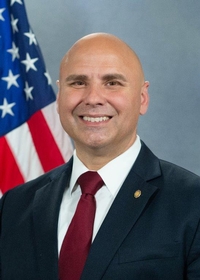
Rep. Bob Merski
Sponsored bills
Maddy summaryHR 121 is a symbolic resolution passed by Pennsylvania's House of Representatives designating March 18, 2025, as "National Transit Worker Appreciation Day" in the state. It recognizes the work of Pennsylvania's public transit workers, including bus operators, train drivers, and maintenance staff, who serve over 1 million daily riders across all 67 counties. The resolution aims to publicly thank these workers for their role in connecting communities to jobs, healthcare, and education, while raising awareness about their safety concerns and the importance of public transportation. As a non-binding resolution, it does not create new laws or funding but serves as a formal expression of appreciation for transit workers' contributions.
Maddy summaryThis resolution (HR 138) orders Pennsylvania’s Joint State Government Commission to study civic education in the state and develop cost-effective recommendations to improve it. It directly affects Pennsylvania students and schools by requiring an analysis of current civics assessments (under Act 35 of 2018), comparisons with high-performing states, and strategies to strengthen civic education across three pillars: knowledge, skills, and action. The study must include evaluations of existing assessment methods, successful models from other states, and approaches to boost student engagement, with a report due within 18 months. The resolution does not change laws but aims to inform future policy based on evidence.
Maddy summaryHB 861 amends Pennsylvania's Fiscal Code to change how funds from the Pennsylvania Race Horse Development Fund are distributed. It requires annual transfers to the State Racing Fund specifically for medication testing costs at horse racing facilities, including personnel, equipment, and supplies (excluding stables). These funds must be transferred in 52 equal weekly installments before other distributions, with the provision expiring June 30, 2028. This directly affects horse racing facilities, the commission overseeing medication testing, and the fund's allocation process.
Maddy summaryHB 620 increases the recycling fee for waste processing facilities in Pennsylvania from $2 to $5 per ton. The bill directly affects operators of municipal waste landfills and resource recovery facilities, requiring them to pay this fee on all solid waste processed at their facilities or disposed of at landfills (excluding certain residues). The key provision amends Section 701(a) of the 1988 Municipal Waste Planning Act to set the new fee amount. The change takes effect 60 days after enactment.
Maddy summaryHB 362 amends Pennsylvania's 1929 Administrative Code to authorize the Energy Development Authority to administer federal funds from the Inflation Reduction Act of 2022 for the Solar for All Program. It directs the Authority to distribute funds for residential solar installations, storage, and upgrades to qualifying households across all Pennsylvania counties, prioritizing rural, suburban, and urban communities. The bill specifically prohibits using funds for solar panels or parts made with forced labor (defined as work performed under threat of penalty without voluntary consent) and requires the Public Utility Commission to protect non-participating ratepayers from cross-subsidization. This creates a clear administrative framework for implementing the federal program while adding labor and ratepayer safeguards.
Maddy summaryThis resolution designates April 29, 2025, as "22nd Amendment Day" in Pennsylvania. It commemorates Pennsylvania's ratification of the 22nd Amendment to the U.S. Constitution on April 29, 1947, which established presidential term limits. The resolution has no legal effect and serves only as a ceremonial observance. It does not alter any laws or impact any individuals or groups.
Maddy summaryThis Pennsylvania House resolution formally recognizes March 17, 2025, as "St. Patrick's Day" within the state. It acknowledges Irish Americans' military contributions during the Revolutionary War, citing historical records showing they comprised 40-50% of the Continental Army by 1778. The resolution has no legal effect or policy changes - it is purely ceremonial, celebrating cultural heritage. It directly affects Pennsylvanians of Irish descent (over 15% of the state's population) through this official recognition. The resolution does not alter any laws or provide funding.
Maddy summaryHB 933 increases penalties for construction employers who misclassify workers as independent contractors, raising fines to $2,500 for a first violation and $5,000 for subsequent violations. It expands accountability to include general contractors and other parties who knowingly contract with employers that misclassify workers, subjecting them to the same penalties. The bill also adds a three-year ban on public contracts for intentional violators and clarifies that stop-work orders can require construction to halt within 24 hours for intentional misclassification, applying to successor businesses.
Maddy summaryHB 894 establishes the Veterans Entering the Sustainability Sector Program (VETSS) to help veterans enter jobs in renewable energy and environmental sectors. The bill creates a Veterans Entering the Sustainability Sector Fund to provide grants to eligible employers - businesses focused on renewable energy (like solar, wind, or bioenergy) that hire veterans who completed approved apprenticeship training in fields such as electrician work, solar installation, or environmental maintenance. The Department of Community and Economic Development will administer the program, overseeing training development and grant applications. This directly affects veterans seeking sustainability-sector careers and employers in renewable energy who hire them, with the goal of addressing environmental concerns like climate change through workforce development.