

1 co-sponsor
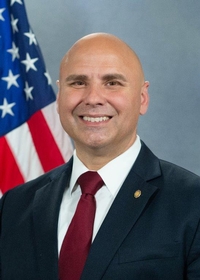
Rep. Bob Merski
Total votes
2,631
all sessions
Attendance
62%
1,505 missed
Near the chamber average
With party
98%
of cast votes
Near the chamber average
Bipartisan score
1%
crosses aisle rarely
Near the chamber average
Sponsored
770
bills & resolutions
Higher than 75% of chamber peers
Committees
5
assignments
770 bills and resolutions
Sponsored bills
Total
770
Primary
51
Co-sponsor
719
This page
770
matching current filters
An Act amending Title 18 (Crimes and Offenses) of the Pennsylvania Consolidated Statutes, in human trafficking, further providing for asset forfeiture.
Maddy summaryPennsylvania House Bill 2752 amends state criminal law to mandate the seizure of assets from individuals convicted of human trafficking offenses. The bill requires courts to order the forfeiture of any property used in the crime or derived from its proceeds, ensuring these assets are transferred to local district attorneys or the state Attorney General for sale. A key provision establishes that funds recovered through this process must be prioritized for victim restitution before being distributed to law enforcement agencies or other government bodies. This legislation directly affects convicted traffickers by expanding the scope of their financial penalties and aims to ensure victims receive compensation from the illicit gains of the offenders.
In committee Aug 27, 2026
1 co-sponsor
An Act amending the act of April 9, 1929 (P.L.177, No.175), known as The Administrative Code of 1929, in powers and duties of the Department of Drug and Alcohol Programs, further providing for powers and duties.
Maddy summaryPennsylvania House Bill 2731 directs the Department of Drug and Alcohol Programs to work with the Department of General Services to procure opioid antagonists through a competitive process. The bill mandates that cost-effectiveness must account for at least 90% of the decision-making weight, while also considering product efficacy, availability, brand type, and shelf life. Additionally, it requires the department to submit an annual report on the procurement strategy and vendor selection to legislative committee leaders starting in 2028.
In committee Aug 11, 2026
1 co-sponsor
An Act amending Titles 18 (Crimes and Offenses) and 42 (Judiciary and Judicial Procedure) of the Pennsylvania Consolidated Statutes, in riot, disorderly conduct and related offenses, providing for the offense of animal hoarding; and, in sentencing, providing for sentencing for animal hoarding.
Maddy summaryPennsylvania House Bill 2729 creates a new misdemeanor of the third degree for animal hoarding, defined as keeping animals in conditions that are unsanitary, unhealthful, malodorous, or dangerous to people, animals, or property. The bill specifies that each animal kept in violation constitutes a separate offense, but it excludes animals classified as agricultural commodities from this definition. For sentencing, the law requires a mental health evaluation of the defendant before any sentence is scheduled. If the court finds that the defendant suffered from a psychological or psychiatric disability at the time of the offense, it must order treatment and stay legal action pending a report on that treatment. Upon successful completion of treatment, the court must order the forfeiture of the animals, prohibit future ownership, reverse the conviction, and expunge the arrest record.
In committee Aug 7, 2026
1 co-sponsor
An Act amending the act of March 4, 1971 (P.L.6, No.2), known as the Tax Reform Code of 1971, in tax credit and tax benefit administration, further providing for definitions; and providing for green infrastructure tax credit.
Maddy summaryThis Pennsylvania bill creates a new tax incentive to encourage the installation of green infrastructure, such as rain gardens, green roofs, and permeable pavement, on properties within the state. It defines "green infrastructure" as stormwater management practices that reduce or reuse runoff and sets rules for claiming a tax credit based on qualified costs like design, materials, and installation. To receive the credit, taxpayers must complete a certified project and submit detailed documentation to the Department of Revenue, while excluding costs covered by grants or routine maintenance. The legislation also updates the legal definition of "tax credit" to include this new program alongside existing state tax benefits.
Budget & TaxesSupports Budget & TaxesBill introduces a new tax credit for green infrastructure, providing fiscal incentives and encouraging sustainable development through tax benefits.
EnvironmentSupports EnvironmentBill creates tax incentives for green infrastructure like rain gardens and permeable pavement to reduce runoff and protect the environment.
TransportationSupports TransportationBill promotes sustainable transportation via green infrastructure like permeable pavement, which supports road infrastructure and stormwater management.
In committee Jul 29, 2026
1 co-sponsor
A Resolution designating October 20, 2026, as "Community Health Worker Awareness Day" in Pennsylvania.
Maddy summaryThis Pennsylvania House resolution designates October 20, 2026, as Community Health Worker Awareness Day to honor the contributions of community health workers throughout the state. The bill aims to raise public awareness about these trusted professionals who help residents navigate healthcare systems, access resources, and manage health conditions. While the resolution does not create new laws or funding, it formally recognizes the vital role these workers play in improving community health and encourages continued investment in their training and support.
In committee Jul 27, 2026
1 co-sponsor
An Act amending Title 4 (Amusements) of the Pennsylvania Consolidated Statutes, providing for prediction markets; and imposing civil penalties.
Maddy summaryThis bill legalizes prediction markets in Pennsylvania by adding a new chapter to the state's amusement laws that defines how these speculative platforms must operate. It directly affects the companies that build and run these platforms, as well as the individuals who wish to place bets on the outcomes of future events. Key provisions include setting a minimum age of 21 for participants, banning markets related to deaths or assassinations, and prohibiting anyone involved in gambling from acting as a market maker or sharing in the platform's revenue. The legislation also establishes rules to prevent insider trading and market manipulation, while giving the state board authority to create specific regulations and impose civil penalties for violations.
In committee Jul 22, 2026
1 co-sponsor
An Act providing for insurance coverage for epinephrine delivery systems; and imposing duties on the Insurance Department.
Maddy summaryThis bill requires health insurance policies in Pennsylvania to cover at least two epinephrine delivery systems, such as EpiPens, for an annual maximum cost of $35 regardless of deductibles or copayments. It applies to standard medical insurance plans but excludes limited coverage types like dental-only or accident policies. Additionally, the state Insurance Department must investigate manufacturer pricing practices and submit a public report with recommendations to control costs within one year. Insurance companies are also permitted to offer lower out-of-pocket costs than the $35 cap if they choose.
In committee Jul 20, 2026
1 co-sponsor
An Act amending the act of July 10, 1984 (P.L.688, No.147), known as the Radiation Protection Act, in general provisions, further providing for definitions; and, in fees, providing for small modular reactor and microreactor fees and further providing for creation of special funds.
Maddy summaryHB 2017 amends Pennsylvania's Radiation Protection Act (1984) by updating definitions related to radiation safety and revising fees for nuclear facilities and radioactive material transport. It directly affects nuclear power plant operators and companies transporting radioactive materials by changing how these fees are calculated and collected. The bill clarifies specific terms used in the original law and adjusts fee structures to reflect current operational standards. These changes aim to modernize the regulatory framework governing radiation safety oversight.
Signed into law Jul 20, 2026
1 co-sponsor
An Act amending Title 68 (Real and Personal Property) of the Pennsylvania Consolidated Statutes, providing for county property contact information list; imposing duties on chief assessor; and providing for penalties.
Maddy summaryHB 858 requires Pennsylvania county chief assessors to maintain and annually update a public list of property contact information, including owners' names and addresses. This applies directly to county assessors and ensures property owners' contact details are accessible to the public. The bill also imposes penalties for failure to comply with these requirements, aiming to improve transparency in property ownership records.
Signed into law Jul 20, 2026
1 co-sponsor
Ask Maddy
·
AI policy assistant
Ask Maddy about Bob Merski
Scope: pennsylvania
Hi! I can help you understand Bob Merski's legislative record. What would you like to know?
Try one of these
i
Maddy answers using official bill text and legislative records. Always verify before sharing.
Sources cited inline