

Maddy summaryThis Pennsylvania House Resolution officially designates the week of May 10 through 16, 2026, as "National Police Week" and May 15, 2026, as "Peace Officers Memorial Day" within the state. The measure serves to honor law enforcement officers who have died in the line of duty and aligns with the federal observances established by the U.S. Congress. It does not create new laws or funding but rather establishes a symbolic recognition to acknowledge the service and sacrifices of police officers in Pennsylvania.
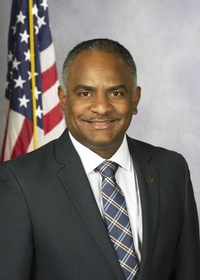
Rep. Danilo Burgos
Sponsored bills
Maddy summaryThis House Resolution officially recognizes the week of April 20 through 24, 2026, as "National Work Zone Awareness Week" in Pennsylvania. The resolution encourages drivers to exercise extra caution, slow down, and pay attention when traveling through roadway construction zones to improve safety for motorists, passengers, and construction workers. It does not create new laws or funding but serves as a formal acknowledgment of an existing national safety campaign aimed at reducing work zone accidents and fatalities. The resolution highlights statistics on work zone crashes and injuries to underscore the importance of the awareness initiative.
Maddy summaryHB 973 creates a grant program to support municipal police departments in Pennsylvania. It provides funding for police department consolidation, achieving accreditation standards, officer training, and community outreach programs. Grants range from $5,000 to $100,000 per department depending on the purpose, with special provisions for small departments (under 10 officers). The program, administered by the Pennsylvania Commission on Crime and Delinquency, is funded through a new Municipal Police Enhancement Consolidation Grant Program Fund. This directly affects cities, boroughs, and townships with their own police departments.
Maddy summaryHB 99 amends Pennsylvania criminal law to change sentencing for murder (including murder of an unborn child or law enforcement officer), clarify arson and property destruction offenses, and update appellate procedures. It establishes direct appeals from common pleas courts for certain cases, adds requirements for postconviction DNA testing, and removes outdated procedures for execution warrants. The bill directly affects courts, prosecutors, defense attorneys, and individuals convicted of crimes covered under the amended statutes. These changes aim to standardize sentencing and legal processes without altering current penalties or introducing new criminal charges.
Maddy summaryThis bill creates a new chapter in Pennsylvania's public utilities laws focused on protecting responsible customers from financial harm caused by others' unpaid bills. It establishes clearer rules for how utilities handle security deposits, payment arrangements, and service termination while requiring utilities to report on delinquent accounts and public assistance recipients. The legislation also introduces specific definitions for creditworthiness and income changes, mandates automatic meter readings, and provides additional collection tools for city natural gas distribution operations to improve their financial stability.
Maddy summaryHB 1278 amends Pennsylvania's Election Code to require candidates for state, local, and federal offices (including U.S. Congress) to submit a written statement (replacing the prior "affidavit" requirement) instead of an affidavit. This statement must include specific details like the candidate's residence, election district, office sought, eligibility confirmation, commitment to election laws, and awareness of campaign finance reporting rules. The bill updates penalties for false statements to reference Pennsylvania's unsworn falsification statute (18 Pa.C.S. § 4904), applying to all candidates filing nomination documents. It directly affects every candidate submitting paperwork for election in Pennsylvania, including those running for county, city, school board, or federal positions.
Maddy summaryThis bill creates a new Office of Housing Opportunity within Pennsylvania's Department of Community and Economic Development to oversee housing production goals. The office will be led by a Deputy Secretary appointed by the Governor and will work with other state agencies to develop and meet ten-year housing targets. A new advisory committee will be formed to guide the office, including representatives from the General Assembly, local governments, and housing experts. The office will also manage a grant program for residential economic development districts and publish annual reports on housing progress.
Maddy summaryThis bill expands death benefit eligibility in Pennsylvania for firefighters who die from cancer linked to their work. To qualify, a firefighter must have served at least four years, had direct exposure to a carcinogen, and passed a pre-service physical exam showing no signs of cancer. The law presumes these deaths occurred while performing official duties, allowing their families to receive financial support under the existing Emergency and Law Enforcement Personnel Death Benefits Act. The changes will take effect 60 days after the bill is signed into law.
Maddy summaryThis bill amends Pennsylvania's Municipalities Planning Code to create a streamlined approval process for high-density housing in designated growth areas. It requires the state Department of Community and Economic Development to establish rules that allow municipalities to fast-track land use decisions for vacant lots in zones where such housing is already permitted by right. The expedited process applies specifically to attached or detached homes, including accessory dwelling units, provided they meet minimum density standards and do not involve environmentally sensitive or hazard-prone areas. To support this initiative, the bill mandates the use of pre-approved building plans, concurrent review procedures, and a technical assistance hub to help local governments reduce delays and meet permitting timelines.
Maddy summaryThis bill creates a new Office of Transformation and Opportunity within the Governor's Office to streamline economic development projects and coordinate resources across state agencies. The office will act as a central hub to speed up permit reviews, manage funding applications, and ensure that projects benefit disadvantaged communities. It also establishes a Commonwealth Housing Ombudsman to resolve disputes and align policies related to residential housing needs. The office will be led by a Chief Officer appointed by the Governor, who will report directly to the Governor and produce annual reports on economic progress.