

Maddy summaryThis Pennsylvania bill creates a limited tax credit program for manufacturers of malt or brewed beverages who make specific capital investments in their production facilities. Under the new rules, eligible companies can receive a tax credit for up to $200,000 in qualifying equipment purchases made during designated time periods, with the credit potentially usable over five years. The legislation also allows these tax credits to be sold to other taxpayers, who can then apply the credit against up to 50% of their own tax liability for that year. The Department of Revenue will oversee the program, including verifying taxpayer compliance before approving credit sales and setting guidelines for the process.
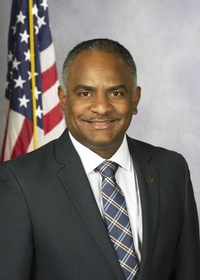
Rep. Danilo Burgos
Sponsored bills
Maddy summaryThis bill establishes a legal framework in Pennsylvania for event outcome prediction wagering, allowing individuals to place bets on the results of various future events such as elections, sports competitions, and weather patterns through licensed digital platforms. To operate, companies must obtain a state license from the Gaming Control Board and adhere to specific rules regarding how they set odds and manage payouts, while the existing lottery, horse racing, and fantasy sports remain excluded from these new regulations. The legislation also creates a new tax on the revenue generated from these wagers, directing a portion of the funds into state accounts for gaming oversight and financing, and imposes penalties for violations of the new rules.
Maddy summaryThis bill repeals the Pennsylvania Medical Education Loan Assistance Program, which previously provided financial incentives to students pursuing medical, nursing, biomedical, and life sciences education. The program allowed eligible students to access loans with favorable terms, including low interest rates and fees, to encourage them to practice medicine or nursing in Pennsylvania, particularly in underserved areas. By removing this legislation, the state will no longer administer this specific loan assistance program for medical education.
Maddy summaryThis bill amends Pennsylvania's existing Crane Operator Licensure Act to expand its scope and create a unified regulatory framework for both crane operators and well drillers under the State Board of Crane Operators and Well Drillers. The legislation establishes new definitions for various types of wells, including environmental, geotechnical, and geothermal wells, and introduces requirements for well driller licensure, examinations, bonding, insurance, and continuing education. It also mandates registration for drilling companies and rigs, adds reporting and sampling requirements, and includes provisions for license identification and exemptions for agricultural operations. The bill further outlines enforcement mechanisms, including procedures for license suspension or revocation for violations of the act.
Maddy summaryThis Pennsylvania House resolution designates the week of May 3 through 9, 2026, as "Tardive Dyskinesia Awareness Week" to raise public and medical awareness about the condition. The bill highlights that tardive dyskinesia is a movement disorder that can occur in people taking antipsychotic medications, particularly those who are older, Black, female, or have had long-term medication exposure. It encourages healthcare providers, patients, and caregivers to learn more about the symptoms of the condition and the importance of regular screenings to enable early detection and treatment. The resolution does not create new laws or funding but serves as a symbolic gesture to promote education and awareness about this health issue.
Maddy summaryThis bill is a House Resolution that formally recognizes April 2026 as "National Poetry Month" within Pennsylvania. It does not create new laws or change existing policies, but rather serves as an official statement of support for poetry and the literary arts. The resolution acknowledges the cultural and educational value of poetry, noting its role in education and community engagement. Sponsored by multiple legislators, it aims to honor the tradition of celebrating poetry during this designated month.
Maddy summaryThis is a symbolic resolution (not a law) passed by the Pennsylvania House of Representatives. It formally recognizes January 2026 as "Human Trafficking Awareness Month" in Pennsylvania. The resolution does not create new laws, impose requirements, or directly affect any specific group. It serves only to raise public awareness about human trafficking, referencing existing federal definitions and statistics on the issue.
Maddy summaryHB 2210 updates Pennsylvania's vehicle registration rules to allow electronic registration cards displayed on personal devices like phones or tablets. It defines key terms like "electronic registration card" (a digital version viewable on devices) and "electronic product device" (phones/tablets used to display it). The bill requires vehicle owners to sign physical cards or display digital versions when asked by police, but prohibits police from demanding device surrender and protects against liability for accidental damage or viewing unrelated phone data. It also prevents unrelated digital information viewed during a traffic stop from being used as evidence in court. The law takes effect 60 days after passage.
Maddy summaryHB 2246 would require large data centers in Pennsylvania to report water usage and undergo environmental reviews before construction. It mandates pre-application notification to the Department of Environmental Protection (DEP), including detailed water use estimates, source assessments, and proof that withdrawals won’t harm other water users or water quality. The bill adds new permit conditions under the Clean Streams Law, requiring data centers to implement water conservation measures like closed-loop systems and water recycling. These provisions apply specifically to "covered data centers" (large facilities with significant water needs) and aim to protect local water resources while enabling data center development.
Maddy summaryThis bill requires Pennsylvania public schools to adopt or update a bullying policy that includes clear disciplinary consequences for bullying incidents and designates a staff member to handle reports. Schools must notify parents within five days of a bullying or cyberbullying incident while following federal privacy laws. The policy may also include prevention and intervention programs, and the bill clarifies that bullying involves repeated, severe acts in a school setting that disrupt education or create a threatening environment. Cyberbullying is specifically defined as bullying occurring via electronic devices during school hours.