

Maddy summaryPennsylvania House Bill 2752 amends state criminal law to mandate the seizure of assets from individuals convicted of human trafficking offenses. The bill requires courts to order the forfeiture of any property used in the crime or derived from its proceeds, ensuring these assets are transferred to local district attorneys or the state Attorney General for sale. A key provision establishes that funds recovered through this process must be prioritized for victim restitution before being distributed to law enforcement agencies or other government bodies. This legislation directly affects convicted traffickers by expanding the scope of their financial penalties and aims to ensure victims receive compensation from the illicit gains of the offenders.
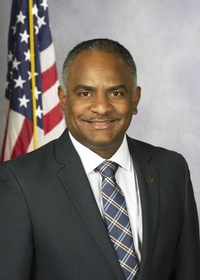
Rep. Danilo Burgos
Sponsored bills
Maddy summaryPennsylvania House Bill 2751 establishes a comprehensive legal framework for regulating both professional and amateur mixed martial arts within the state, placing oversight under the existing State Athletic Commission. The bill creates a dedicated Subcommission on Mixed Martial Arts, composed of three appointed members with specific martial arts training backgrounds, to develop and revise rules governing these competitions. It defines detailed operational standards, including licensing requirements for fighters and promoters, specific weight classes, round durations, and strict safety protocols for equipment such as rings, cages, and protective gear. Additionally, the legislation sets distinct rules for amateur events, mandating age brackets, medical testing, and the use of heavier gloves and headgear to protect younger participants.
Maddy summaryPennsylvania House Bill 2739 amends state public utility laws to standardize how depreciation is calculated for rate-setting purposes. The bill requires all public utilities to use the Average Life Group depreciation procedure when filing for voluntary rate changes, prohibiting them from proposing alternative methods. It also restricts the Public Utility Commission's authority by preventing it from substituting different depreciation procedures or adjusting expenses in ways that effectively change the calculation method. Instead, the commission's review is limited to verifying that the required procedure was used and determining if the inputs and assumptions are reasonable.
Maddy summaryPennsylvania House Bill 2740 amends state public utility laws to mandate that the Public Utility Commission use a fixed hypothetical capital structure of 50 percent equity and 50 percent debt when calculating rates for electric and gas distribution companies. The bill strictly prohibits regulators from considering a utility's actual financial leverage or the capital structures of its parent companies during rate-setting proceedings. While utilities must still use their actual cost of long-term debt if it was incurred prudently, they are not required to maintain the hypothetical 50-50 balance in their real-world finances. These new rules will apply to all base rate cases filed after the act takes effect, which is set for 60 days after its enactment.
Maddy summaryPennsylvania House Bill 2731 directs the Department of Drug and Alcohol Programs to work with the Department of General Services to procure opioid antagonists through a competitive process. The bill mandates that cost-effectiveness must account for at least 90% of the decision-making weight, while also considering product efficacy, availability, brand type, and shelf life. Additionally, it requires the department to submit an annual report on the procurement strategy and vendor selection to legislative committee leaders starting in 2028.
Maddy summaryThis Pennsylvania House Resolution formally honors the memory of Andrew James Carn, a former state representative from Philadelphia County who passed away in July 2026. The text details his legislative service from 1982 to 2000, highlighting his work on neighborhood revitalization, youth development, and economic opportunities for African-American entrepreneurs. It also recognizes his post-legislative roles as a videographer and community leader. The resolution directs that a copy of the document be sent to Mr. Carn's family as a gesture of condolence and appreciation for his public service.
Maddy summaryThis bill legalizes prediction markets in Pennsylvania by adding a new chapter to the state's amusement laws that defines how these speculative platforms must operate. It directly affects the companies that build and run these platforms, as well as the individuals who wish to place bets on the outcomes of future events. Key provisions include setting a minimum age of 21 for participants, banning markets related to deaths or assassinations, and prohibiting anyone involved in gambling from acting as a market maker or sharing in the platform's revenue. The legislation also establishes rules to prevent insider trading and market manipulation, while giving the state board authority to create specific regulations and impose civil penalties for violations.
Maddy summaryThis bill designates 2026 as the 80th Anniversary Year of the State YMCA of Pennsylvania Youth and Government Program. The resolution formally recognizes the program's eight-decade history of engaging high school students in hands-on civic education and leadership training. It also commends the organization for its long-standing commitment to developing future leaders and providing financial assistance to participants.
Maddy summaryHB 482 authorizes Pennsylvania to join the Interstate Occupational Therapy Licensure Compact, enabling licensed occupational therapists and assistants from Pennsylvania to practice in other participating states without obtaining separate licenses. The bill establishes mechanisms for mutual recognition of licenses, sharing of disciplinary and investigative data between states, and accountability for practitioners providing services across state lines. It directly affects occupational therapists, assistants, and patients seeking services in multiple states, particularly supporting military spouses relocating and expanding telehealth access. Key provisions include requiring states to participate in a shared data system, defining terms like "Compact Privilege," and preserving each state’s regulatory authority over local practice standards. This is a procedural bill enabling Pennsylvania’s participation in an existing interstate framework, not creating new licensing requirements.
Maddy summaryHB 1286 requires human trafficking awareness training for employees at hotels, motels, and similar public lodging establishments (defined as facilities offering >10 rooms for rent) and for workers contracted by third-party providers serving these locations. It also mandates similar training for short-term rental operators (like Airbnb hosts) and platforms listing such rentals. The training must cover identifying trafficking signs, legal definitions, reporting procedures, and differences between labor and sex trafficking in lodging contexts, with records maintained for two years. The Pennsylvania Commission on Crime and Delinquency will approve and list free training programs online to meet these requirements.