

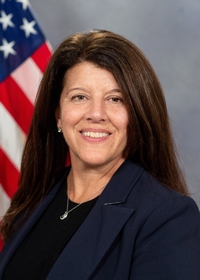
Photo of Lisa Borowski
D Pennsylvania House · District 168 On the 2026 ballot

Rep. Lisa Borowski

Contact Email Phone
Compare
Total votes
3,689
all sessions
Attendance
100%
of floor votes
Near the chamber average
With party
99%
of cast votes
Near the chamber average
Bipartisan score
0%
crosses aisle rarely
Near the chamber average
Sponsored
1,045
bills & resolutions
Higher than 87% of chamber peers
Committees
6
assignments
1,045 bills and resolutions

Sponsored bills

Total
1,045
Primary
38
Co-sponsor
1,007
This page
1,045
matching current filters
Co-sponsor HB 266
In committee · Pennsylvania House · Co-sponsor
An Act amending the act of June 3, 1937 (P.L.1333, No.320), known as the Pennsylvania Election Code, in primary and election expenses, providing for limitations on contributions.

Maddy summaryThis bill amends Pennsylvania's Election Code to set annual contribution limits for political campaigns. It caps individual donations to a single candidate at $10,000 per calendar year and limits political action committee (PAC) contributions to $20,000 per candidate annually. These restrictions apply directly to donors and PACs supporting candidates for any office within Pennsylvania. The changes take effect 60 days after enactment.

In committee Jan 22, 2025 1 co-sponsor
Co-sponsor HB 224
In committee · Pennsylvania House · Co-sponsor
An Act amending the act of March 10, 1949 (P.L.30, No.14), known as the Public School Code of 1949, in higher education accountability and transparency, further providing for comparison tool.

Maddy summaryHB 224 requires Pennsylvania's Department of Education to create an online comparison tool for higher education institutions. The tool must allow users to search colleges by major and compare high-priority occupations in Pennsylvania, including county-level data on required education, wages, and job demand. Pennsylvania colleges must annually submit relevant data (via existing federal reports) to the Department by January 1st to update the tool. This bill directly affects public and private colleges in Pennsylvania and students seeking education-to-career pathways.

In committee Jan 22, 2025 1 co-sponsor
Co-sponsor HB 281
In committee · Pennsylvania House · Co-sponsor
An Act amending the act of May 17, 1921 (P.L.682, No.284), known as The Insurance Company Law of 1921, in casualty insurance, providing for coverage for prostate cancer screening.

Maddy summaryHB 281 requires health insurance policies in Pennsylvania to cover prostate cancer screenings with no out-of-pocket costs for men aged 40+ who are at high risk. High-risk individuals include those with a family history of prostate cancer, genetic factors, or physician-determined medical need. The law mandates annual coverage for screenings like PSA tests and digital rectal exams, eliminating deductibles or copays. It applies to all health insurance policies issued or renewed 180 days after enactment, with full implementation in 60 days. This directly affects insurers, healthcare providers, and Pennsylvania residents meeting the specified risk criteria.

In committee Jan 22, 2025 1 co-sponsor
Co-sponsor HB 210
In committee · Pennsylvania House · Co-sponsor
An Act amending the act of October 25, 2012 (P.L.1618, No.197), known as the National Human Trafficking Resource Center Hotline Notification Act, further providing for required posting.

Maddy summaryHB 210 requires businesses (such as restaurants, hotels, and retail stores) to post signs in visible restroom locations - including stalls, mirrors, and above hand dryers - with the National Human Trafficking Resource Center Hotline number (1-888-373-7888) and a statement about legal protections for trafficking victims. The signs must be at least 8.5x11 inches, feature the hotline number in bold and large font, and be available in English, Spanish, and any other language required by the Voting Rights Act in the business's county. The Department of Labor and Industry will design and provide the sign template online for businesses to print. This law takes effect 60 days after enactment.

In committee Jan 17, 2025 1 co-sponsor
Primary HB 213
In committee · Pennsylvania House · Lead sponsor
An Act amending Title 35 (Health and Safety) of the Pennsylvania Consolidated Statutes, in emergency responder mental wellness and stress management, further providing for confidential communications involving emergency responders and providing for mental health evaluations for 911 dispatchers.

Maddy summaryThis bill strengthens mental health support for emergency responders in Pennsylvania. It creates new confidentiality protections, prohibiting peer support staff, healthcare providers, or helplines from sharing an emergency responder's mental health information without consent (except in clear danger situations). Specifically for 911 dispatchers, it requires employers to provide free mental health evaluations for PTSD symptoms upon the dispatcher's request or a supervisor's recommendation. If symptoms are identified, the employer must cover treatment until a provider determines the dispatcher can return to full duties, with administrative duty assigned during this period.

In committee Jan 17, 2025 0 co-sponsors
Primary HB 212
In committee · Pennsylvania House · Lead sponsor
An Act amending the act of December 19, 1990 (P.L.1200, No.202), known as the Solicitation of Funds for Charitable Purposes Act, further providing for definitions.

Maddy summaryHB 212 amends Pennsylvania's 1990 Charitable Solicitations Act by clarifying the definition of "contribution." It explicitly excludes membership fees for bona fide benefits (like dues for actual membership rights), payments for performances/events, and government grants from being counted as contributions. This change directly affects charitable organizations, fundraisers, and regulators by reducing the scope of activities requiring registration under the law. The bill makes no new requirements but clarifies what is legally considered a "contribution" for regulatory purposes.

In committee Jan 17, 2025 0 co-sponsors
Co-sponsor HB 199
In committee · Pennsylvania House · Co-sponsor
An Act establishing the State Emergency Supplemental Grant Program; imposing duties on the Pennsylvania Emergency Management Agency; establishing the State Emergency Supplemental Assistance Fund; and making a transfer.

Maddy summaryHB 199 creates the State Emergency Supplemental Grant Program to provide additional financial assistance to Pennsylvania residents and businesses after they receive the maximum federal disaster aid. The program, administered by the Pennsylvania Emergency Management Agency, offers grants covering the gap between federal assistance and actual disaster damage (up to $10,000 for federally declared disasters) or a state-determined amount for state-declared disasters. It establishes a dedicated fund financed by an annual $5 million transfer from the Pennsylvania Liquor Control Board, with funds limited to essential items like housing, medical care, and temporary rental - excluding home improvements, luxury goods, or pre-existing damage.

In committee Jan 16, 2025 1 co-sponsor
Co-sponsor HR 10
In committee · Pennsylvania House · Co-sponsor
A Resolution directing the Joint State Government Commission to conduct a study of how Home and Community-Based Services waivers can be improved to meet the needs of individuals with disabilities, including programs administered by the Office of Long-Term Living and Office of Developmental Programs.

Maddy summaryHR 10 is a resolution directing Pennsylvania's Joint State Government Commission to study how Home and Community-Based Services (HCBS) waivers can be improved to better serve individuals with disabilities. It directly affects over 2 million Pennsylvanians with disabilities who rely on HCBS waivers administered by the Office of Long-Term Living (OLTL) and Office of Developmental Programs (ODP), including those excluded from eligibility despite meeting federal disability criteria. The study will examine five key areas: whether waivers meet medical needs, compare payment rates across programs, analyze service menus, address barriers to community living, and investigate low employment rates (16% in integrated settings) for waiver participants. The goal is to identify concrete changes to improve access, affordability, and outcomes for people using these programs.

In committee Jan 16, 2025 1 co-sponsor
Co-sponsor HB 195
In committee · Pennsylvania House · Co-sponsor
An Act amending the act of June 13, 1967 (P.L.31, No.21), known as the Human Services Code, providing for Mental Health Workforce Retention Program; and making an appropriation.

Maddy summaryHB 195 establishes Pennsylvania's Mental Health Workforce Retention Program under the Human Services Code. It provides $5,000 grants to mental health workers who are Pennsylvania residents and have worked with adolescents for at least seven consecutive years, using a lottery system to select recipients. The program allocates up to $1 million annually from a $5 million appropriation (continuing from the General Fund), with grants exempt from income tax. The program expires on June 30, 2030, and is open to workers in psychology, counseling, social work, or human services.

In committee Jan 16, 2025 1 co-sponsor
Co-sponsor HB 194
In committee · Pennsylvania House · Co-sponsor
An Act amending the act of March 10, 1949 (P.L.30, No.14), known as the Public School Code of 1949, establishing the Mental Health Professional Student Loan Forgiveness Program; imposing powers and duties on the Pennsylvania Higher Education Assistance Agency; and making an appropriation.

Maddy summaryHB 194 creates Pennsylvania's Mental Health Professional Student Loan Forgiveness Program, targeting mental health workers serving children and adolescents. It allows eligible residents who complete qualifying degrees (like social work, counseling, or psychology) and work in early childhood-to-adolescence mental health roles to receive up to $22,500 in loan forgiveness after signing a 7-year employment contract. The Pennsylvania Higher Education Assistance Agency (PHEAA) administers the program, requiring applicants to prove residency, partial degree completion, faculty recommendations, and secure employment in the specified field. Participants must maintain employment for seven years or repay the forgiven amount if they leave the field early, fail to comply, or provide false information. This directly affects mental health professionals in Pennsylvania seeking relief from student debt while addressing workforce needs in youth mental health.

In committee Jan 16, 2025 1 co-sponsor
Showing 531 to 540 of 1,045 bills
Previous 1 … 53 54 55 … 105 Next