

Maddy summaryPennsylvania House Bill 2754 requires new operators of long-term care nursing facilities to obtain a specific change of operator license from the Department of Health before taking over management. The bill mandates that applicants submit detailed financial disclosures, provide a bond equal to $10,000 per licensed bed for five years, and demonstrate at least five years of relevant administrative experience. It also establishes grounds for denying applications if the new owner has a history of facility closures, bankruptcies, or regulatory violations within the past five years. Operators who fail to comply with these reporting requirements or submit fraudulent information face daily civil penalties and potential license revocation.
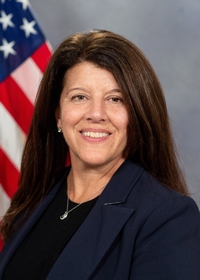
Rep. Lisa Borowski
Sponsored bills
Maddy summaryPennsylvania House Bill 2742 strengthens penalties for littering and vehicle load violations by adding community service requirements to existing fines. The bill amends state statutes to allow courts to order individuals convicted of violating rules on Commonwealth property, dumping trash in fishing or boating areas, or failing to secure vehicle loads to pick up litter or illegally dumped trash. Additionally, the legislation specifies that a portion of fines collected for unsecured vehicle loads may be directed to local counties with approved litter control programs, while the remainder goes to the state Motor License Fund.
Maddy summaryPennsylvania House Bill 2739 amends state public utility laws to standardize how depreciation is calculated for rate-setting purposes. The bill requires all public utilities to use the Average Life Group depreciation procedure when filing for voluntary rate changes, prohibiting them from proposing alternative methods. It also restricts the Public Utility Commission's authority by preventing it from substituting different depreciation procedures or adjusting expenses in ways that effectively change the calculation method. Instead, the commission's review is limited to verifying that the required procedure was used and determining if the inputs and assumptions are reasonable.
Maddy summaryPennsylvania House Bill 2740 amends state public utility laws to mandate that the Public Utility Commission use a fixed hypothetical capital structure of 50 percent equity and 50 percent debt when calculating rates for electric and gas distribution companies. The bill strictly prohibits regulators from considering a utility's actual financial leverage or the capital structures of its parent companies during rate-setting proceedings. While utilities must still use their actual cost of long-term debt if it was incurred prudently, they are not required to maintain the hypothetical 50-50 balance in their real-world finances. These new rules will apply to all base rate cases filed after the act takes effect, which is set for 60 days after its enactment.
Maddy summaryPennsylvania House Bill 2741 amends the state's Cave Protection Act to introduce a new penalty option for individuals convicted of violating cave-related laws. The bill allows courts to require offenders to perform community service by picking up litter or illegally dumped trash in addition to any other penalties imposed. This provision directly affects people found guilty of damaging or improperly accessing caves, aiming to address environmental harm through direct cleanup efforts.
Maddy summaryPennsylvania House Bill 2734 requires health insurance companies to cover FDA-approved diagnostic tests and treatments that slow the progression of Alzheimer's disease and related dementias. The mandate applies to insurers offering individual or group health policies in the state, with a compliance deadline of January 1, 2028, unless federal law preempts the requirement. The bill explicitly prohibits insurers from using step therapy for these specific treatments, meaning patients cannot be forced to try other medications first before receiving coverage for approved Alzheimer's therapies.
Maddy summaryPennsylvania House Bill 2728 amends state corporate law to prohibit business corporations, nonprofit corporations, and limited liability companies from directly or indirectly engaging in election activity or ballot question activity. The bill revokes existing general powers granted to these entities and re-grants them with specific exclusions for political spending, defining such activities as paying or contributing money to support or oppose candidates, political parties, or ballot measures. Any language in a corporate charter that purports to authorize this political activity is declared void, and any such activity conducted by an entity is considered ultra vires and legally invalid. Entities that violate these provisions face the automatic forfeiture of their charter privileges, including limited liability and perpetual duration, until they fully disgorge funds and certify future compliance. The Attorney General is authorized to pursue civil actions for injunctive relief and enforcement against non-compliant entities.
Maddy summaryThis Pennsylvania bill creates a new tax incentive to encourage the installation of green infrastructure, such as rain gardens, green roofs, and permeable pavement, on properties within the state. It defines "green infrastructure" as stormwater management practices that reduce or reuse runoff and sets rules for claiming a tax credit based on qualified costs like design, materials, and installation. To receive the credit, taxpayers must complete a certified project and submit detailed documentation to the Department of Revenue, while excluding costs covered by grants or routine maintenance. The legislation also updates the legal definition of "tax credit" to include this new program alongside existing state tax benefits.
Maddy summaryThis Pennsylvania House resolution designates October 20, 2026, as Community Health Worker Awareness Day to honor the contributions of community health workers throughout the state. The bill aims to raise public awareness about these trusted professionals who help residents navigate healthcare systems, access resources, and manage health conditions. While the resolution does not create new laws or funding, it formally recognizes the vital role these workers play in improving community health and encourages continued investment in their training and support.
Maddy summaryThis bill proposes to add cruelty to animals as a new criminal offense in Pennsylvania's Title 18. It would make it illegal to intentionally, knowingly, or recklessly illtreat, overload, beat, abandon, or abuse any animal. Additionally, the law would specifically prohibit using animals to pull carriages for business or money in cities with populations of 100,000 or more. If passed, these changes would take effect 60 days after the bill becomes law.