

Maddy summaryHB 381 requires Pennsylvania's Department of Education to conduct an independent study evaluating whether the ACT and SAT could replace the current Keystone Exams (in literature, algebra I, and biology) for high school students. The study must assess if these college readiness tests align with state standards, provide comparable achievement data for all students (including subgroups), offer appropriate accommodations for students with disabilities and English learners, and meet federal assessment requirements. The report, due within one year, will inform potential future changes to graduation requirements. This bill directly affects Pennsylvania public high school students and the state's education accountability system, but does not implement any changes itself.
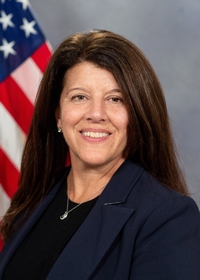
Rep. Lisa Borowski
Sponsored bills
Maddy summaryHB 357 amends Pennsylvania's 1971 Tax Reform Code to exempt specific property transfers from realty transfer tax. It directly affects surviving spouses and minor children of public safety personnel (police, firefighters, etc.) who died while performing official duties, as defined by the 1976 Emergency and Law Enforcement Personnel Death Benefits Act. The key provision excludes transfers where the property was the deceased's principal residence, and the transfer occurs within five years of death under defined conditions (e.g., the surviving spouse married within one year before the death, or the property was the deceased's residence regardless of the child's current residence). This creates a tax exemption for these specific family transitions without altering the broader tax structure. The bill takes effect 60 days after enactment.
Maddy summaryHB 317 requires creators and distributors of AI-generated content in Pennsylvania to watermark at least 30% of images, text, simulations, or videos with 50% opacity and the label "Artificial Intelligence Generated Material." It directly affects individuals and businesses producing AI content, with exceptions for film/TV productions using AI for visual effects without involving specific individuals or with their written consent. Violations carry a $1,000 fine for a first offense and $10,000 for repeat offenses within five years. The law takes effect 60 days after enactment.
Maddy summaryHB 360 requires Pennsylvania colleges and universities to adopt clear written policies addressing sexual harassment and sexual violence. These policies must inform victims of their legal rights, meet or exceed a state model, include specific investigation timelines, and provide protections for victims and witnesses during investigations. The bill directly affects all postsecondary institutions in Pennsylvania by mandating standardized, legally compliant procedures for handling such incidents. It does not change criminal law or provide new victim services, but sets requirements for institutional policy and process. The bill is pending in the Education Committee as introduced in January 2025.
Maddy summaryHB 341 requires Pennsylvania public schools to install certified point-of-use filters on all drinking water outlets by January 1, 2027, and replace older fountains without filters with bottle-filling stations or filtered fountains (at least one per 100 students/staff). It establishes a $10 million annual Safe Schools Drinking Water Fund to provide grants for filter installation and fountain replacement, prioritizing schools built before 2014 and those serving prekindergarten students. The bill also mandates schools to publicly report their compliance plans, filter maintenance schedules, and lead risk information online, while new outlets must meet strict lead-leaching standards (NSF 61). This directly affects all Pennsylvania public school entities, focusing on reducing lead exposure in drinking water.
Maddy summaryHB 329 modifies Pennsylvania's school funding formula to adjust how state funds are distributed to school districts starting in fiscal year 2025-2026. It creates a new "Senior Citizen Tax Freeze" program (Section 504.1), allowing eligible seniors (65+ who own their homes) to freeze school property taxes at their base payment level, preventing increases beyond that amount. Seniors must apply within 45 days of tax due dates, provide proof of ownership and payment, and the state will reimburse school districts for tax increases above the base amount starting April 2025. The program is funded through the existing Property Tax Relief Reserve Fund, with payments made annually from that fund. This directly affects seniors owning homesteads in Pennsylvania school districts.
Maddy summaryHB 315 amends Pennsylvania's sales tax discount rules to provide clearer, tiered incentives for businesses that file and pay taxes promptly. It replaces the previous discount structure with a new system offering fixed per-return discounts: $25 for monthly filers, $75 for quarterly filers, and $150 for semiannual filers. Additionally, it adds a revenue-based discount: 1% on the first $1 million of taxable sales, plus 0.25% on amounts above that threshold. This bill directly affects businesses required to file and pay sales tax in Pennsylvania, making prompt payment more financially beneficial through these specific, predictable discount tiers.
Maddy summaryHB 303 amends Pennsylvania's sales tax code to exclude construction materials and services purchased by contractors for affordable housing projects from state sales tax. It directly affects construction contractors working on housing defined as "affordable" under existing law (section 1902-A), covering projects involving construction, remodeling, repair, or maintenance. The bill adds a new tax exclusion (section 204(77)) to the 1971 Tax Reform Code, removing sales tax liability for these specific materials and services. This policy change takes effect 60 days after enactment.
Maddy summaryHB 286 allows Pennsylvania seniors meeting specific criteria to lock their property tax payments at the "base year" amount. To qualify, applicants must be at least 65 years old (or meet widow/widower/disabled criteria), live in their home for 10+ years, and have household income under $45,000 annually. Political subdivisions would implement the program through annual applications requiring proof of ownership, tax payment history, and income eligibility. The Department of Revenue would track participation and submit a legislative report by 2030.
Maddy summaryHR 21 is a Pennsylvania House Concurrent Resolution (not a bill) calling for an Article V constitutional convention. It requests Congress to convene a limited convention to consider two specific proposals: (1) term limits for U.S. House and Senate members, and (2) term limits for U.S. Supreme Court Justices. The resolution is procedural - it does not enact term limits but initiates the process for states to collectively seek a convention. It explicitly states Pennsylvania has no obligation to support any resulting constitutional amendment. This action aligns with Pennsylvania's intent to join other states in exploring these topics through the Article V process.