

Maddy summaryHB 93 designates specific dates for Rosh Hashanah, Yom Kippur, Eid al-Fitr, and Eid al-Adha as official holiday observances in Pennsylvania, based on Jewish and Islamic calendars. The bill recognizes these dates without requiring employers to provide paid leave or treat them as legal holidays. It explicitly states that the designation does not alter existing employment policies for businesses or schools. The law takes effect immediately upon enactment.
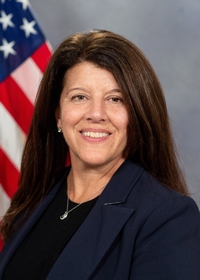
Rep. Lisa Borowski
Sponsored bills
Maddy summaryHB 50 amends Pennsylvania's Water Services Act by updating the definitions of "authority" and "city" to clarify which entities are subject to the law. It specifies that an "authority" must provide water or sewer services to at least 50% more residents outside a city's boundaries than inside, and defines "city" as a city of the third class with a population of 30,000 or less. These changes help determine which municipal authorities and cities must follow the Act's requirements for water and sewer service approvals. The bill does not alter existing service rules but ensures the law applies consistently to relevant entities.
Maddy summaryHB 108 requires all Pennsylvania municipalities (including cities, boroughs, and townships) to establish a "real property emergency services fund" financed by a $25 fee paid by both buyers and sellers during real estate transactions. The fund can only be used for specific emergency services expenses, such as purchasing/maintaining firefighting equipment, firehouse construction, firefighter and emergency medical personnel salaries, and ambulance maintenance. Municipalities must deposit the fees into the fund, impose a $250 penalty for non-payment, and annually publish reports detailing fund usage. The bill mandates biennial audits of the fund and takes effect 60 days after enactment.
Maddy summaryHB 53 waives fees for certain state documents for individuals affected by domestic abuse. It applies to people who received protection orders within 90 days or verified recent abuse (within 120 days) through a victim service provider, medical professional, or standardized form. The bill covers duplicate/corrected documents like driver's licenses, vehicle titles, and birth certificates from the Departments of Transportation and Health. Eligible individuals with dependents also receive fee waivers for their dependents' documents. The Departments of Transportation and Health must create public policies for this waiver within 90 days of the law's effective date.
Maddy summaryHB 66 creates a Pennsylvania program providing $5,000 semester stipends to residents enrolled in accredited Master of Social Work (MSW) programs with a 3.0+ GPA. It directly affects students pursuing social work careers by funding their education through paid internships. The program requires internships at state-approved facilities to meet clinical training and licensing requirements, with stipends adjusted annually for inflation. Funding is contingent on available state budget resources, administered by the Department of Human Services.
Maddy summaryHB 89 requires Pennsylvania telecom companies to respond to equipment or infrastructure failures within 90 minutes if the failure prompts volunteer firefighters to deploy. If they fail to respond on time, the company must pay the volunteer fire company $1,000 for each hour the firefighters are actively deployed. This applies specifically to volunteer fire departments as defined under Pennsylvania law (35 Pa.C.S. § 7802). The bill creates a direct financial obligation for telecom companies when their failures disrupt emergency response, targeting infrastructure reliability for volunteer fire services.
Maddy summaryHB 25 amends Pennsylvania's Public School Code to extend deadlines for school districts to adopt budgets and levy property taxes. It changes the budget adoption deadline from 15 to 30 days after the state enacts basic education funding legislation (for reimbursement of the prior year), and the tax levy deadline from 20 to 35 days for most districts. This affects all public school districts in Pennsylvania, providing more time to finalize financial plans without altering the existing 25-mill property tax rate cap. The bill takes effect 60 days after enactment.
Maddy summaryHB 26 removes Pennsylvania’s existing abortion statutes (including the "Abortion Control Act" and its restrictions like parental consent, spousal notice, and gestational limits) and replaces them with a new framework focused on "reproductive rights." It repeals specific provisions related to medical consultation, informed consent, facility requirements, and reporting, while adding language affirming reproductive rights for patients and providers. The bill also eliminates references to federal healthcare compliance for insurers and updates terminology, changing the chapter heading from "Abortion" to "Reproductive Offenses." This bill directly affects all abortion providers, patients, and public health systems in Pennsylvania by fundamentally restructuring the legal landscape governing abortion access.
Maddy summaryThis law prohibits people in Pennsylvania from owning, using, or selling devices that can swap or hide a vehicle's license plate. The ban covers any tool, whether manual or electric, that allows a driver to change the plate shown on their car or flip it to make the number invisible. Anyone caught with or operating such a device faces a summary offense charge and a fine of up to $2,000. The rule applies to the possession, installation, sale, or distribution of these plate-flipping tools. The law became effective 60 days after it was signed into law.
Maddy summaryThis bill requires the Pennsylvania Department of Human Services to submit detailed reports on the state's 988 suicide and crisis lifeline to legislative committees. The initial report, due within 180 days of the law's effective date, must include data on call volumes, answer rates, and awareness campaign performance, followed by an updated report one year later. Additionally, the legislation mandates that the department ensure effective communication with diverse populations and non-English speakers when providing crisis support. These provisions aim to improve oversight and transparency regarding mental health crisis response efforts in the state.