

Maddy summaryHB 824 amends Pennsylvania's Conservation and Natural Resources Act to require the Department of Conservation and Natural Resources to prioritize grant applications for playgrounds, playground equipment, and recreation areas that address accessibility for people with disabilities. The bill specifies that projects must include features like ramped play areas, accessible swings, wheelchair-friendly tables, and adaptations for blind or visually impaired individuals to receive priority. It mandates that the department favor universally designed recreation areas - where all equipment and the space itself are fully accessible - over projects with only partial accessibility. This change directly affects communities applying for state grants to build or improve local playgrounds, ensuring new facilities meet inclusive design standards from the start.
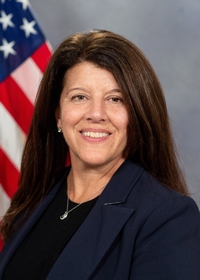
Rep. Lisa Borowski
Sponsored bills
Maddy summaryHB 821 amends Pennsylvania's Human Services Code to require the Department of Human Services to add assisted living services and supplemental health care services to the Community HealthChoices Medicaid program within 60 days. This change directly affects licensed assisted living residences, allowing them to become certified as medical assistance providers for these services. The bill mandates that the department submit necessary documentation to the federal Centers for Medicare and Medicaid Services (CMS) to implement the expansion. The policy change will enable these facilities to participate in the state's Medicaid program for covered services. The bill takes effect 60 days after enactment.
Maddy summaryHB 814 creates a tax credit for Pennsylvania residents who are spouses of first responders (including police, firefighters, EMTs, or emergency rescue personnel) killed while performing their duties. The credit equals 100% of the real property tax paid on the couple's primary residence, up to the amount of personal income tax due for the year. Spouses who remarry after their partner's death or who claim other property tax rebates are ineligible. The Department of Revenue may require documentation to verify the residence qualifies as the principal home. This bill directly affects surviving spouses of eligible first responders by reducing their state income tax liability.
Maddy summaryHB 812 establishes a grant program to fund security improvements protecting hospital and emergency care workers from workplace violence. It directly affects hospitals and freestanding emergency medical facilities in Pennsylvania, which can apply for grants to implement violence prevention projects. The bill requires applicants to submit detailed plans with timelines, budgets, and measurable goals for reducing verbal/physical violence, with priority given to innovative, sustainable approaches. The Department of Health will administer the program, accept applications starting March 1, 2025, and manage the dedicated grant fund.
Maddy summaryHB 816 proposes a constitutional amendment to Pennsylvania's tax code, creating a new standard for homeowners to qualify for relief from real property taxes. It would allow the state legislature to establish income-based thresholds, exempting homeowners from paying the portion of their local property tax on their primary home that exceeds a certain percentage of their household income. This directly affects homeowners who pay local property taxes and meet income criteria set by the legislature. As a constitutional amendment, it requires approval by the General Assembly and then by voters in a statewide election. The bill does not specify income percentages or implementation details, only authorizing future legislation to create such standards.
Maddy summaryHB 806 protects student journalists in Pennsylvania public and private schools by prohibiting school officials from reviewing or censoring school-sponsored media content before publication (prior restraint). It requires schools to adopt policies by the 2025-2026 school year, granting student editors final approval authority over content while banning censorship except for legally unprotected speech like libel, obscenity, or material disruption. The bill defines key terms (e.g., "student journalist," "student editor") and ensures student-media advisors cannot be punished for supporting protected student expression. It directly affects all Pennsylvania school entities, including districts, charter schools, and private schools with journalism programs.
Maddy summaryHB 790 requires Pennsylvania hospitals with emergency departments to provide abortion services when an individual has an emergency medical condition that necessitates an abortion to stabilize their health. This applies to all hospitals in the state with emergency departments, directly affecting those facilities and the patients seeking emergency care. The bill defines "emergency medical condition" to include life-threatening situations like ectopic pregnancy, preeclampsia, or complications from pregnancy loss, requiring hospitals to offer the service unless the patient or their legal representative refuses after being informed of risks and benefits. Hospitals must take reasonable steps to secure written consent for refusal to ensure compliance. The law takes effect 60 days after enactment.
Maddy summaryHB 794 amends Pennsylvania's Public School Code to clarify the definition of community colleges and update the State Board of Education's authority over them. The bill defines "community college" to include institutions offering two-year programs, career education, college-parallel courses, and services for high school students. It requires the State Board to set standards for facilities, curriculum, faculty, admission, and student enrollment, while allowing community colleges to award a bachelor's degree in nursing to students with an associate nursing degree. These changes directly affect Pennsylvania community colleges and their students by standardizing operations and expanding degree options.
Maddy summaryHB 778 establishes a three-year pilot program to increase pre-kindergarten (Pre-K) teacher salaries in Pennsylvania to match those of elementary school teachers with similar qualifications. It directly affects Pre-K teachers working in programs located in high-poverty areas (school districts with ≥20% poverty or census tracts at ≤80% of the statewide median poverty level). The program requires the Department of Education to calculate salary gaps using a specific formula, provide subsidies to eligible Pre-K programs to close those gaps, and collect data for a legislative report. The bill mandates strict use of funds solely for teacher salary increases and includes requirements for reporting program outcomes to the legislature.
Maddy summaryHB 780 creates a tuition assistance program for early childhood educators in Pennsylvania. It provides grants to cover tuition costs (minus other financial aid) for individuals pursuing associate degrees or certifications in early childhood education, targeting those earning under 400% of the federal poverty level, enrolled in at least six credit hours per semester, and working 25+ hours weekly in approved early childhood programs. Recipients must agree to work in Pennsylvania early childhood education for two years after completing their program. Funding comes from a new state fund, with annual reports tracking enrollment, retention, wages, and job demand. The program aims to support workforce development in early childhood education through financial assistance tied to service commitments.