

Maddy summaryHB 781 creates a three-year pilot program to provide salary supplements for infant and toddler care professionals working at eligible child-care centers in Pennsylvania. The Department of Public Welfare will administer the program, establishing county-level pay parity standards that consider education and certification levels to prevent staff retention issues. Child-care centers receiving funds must use them exclusively for wage supplements and cannot reduce existing pay or replace staff costs. The program requires annual reporting to the General Assembly and expires after three fiscal years beginning in 2026-2027.
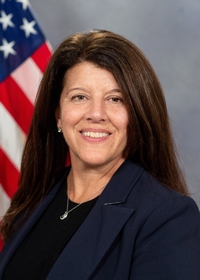
Rep. Lisa Borowski
Sponsored bills
Maddy summaryHB 779 establishes a three-year pilot program to increase salaries for Head Start teachers in Pennsylvania. It targets Head Start programs located in school districts with at least 20% poverty or census tracts with 80% or lower median poverty. The program calculates a salary supplement by comparing Head Start teachers' qualifications to public elementary school teachers in the same district, then provides funds to align their pay. The Department of Education will select participating programs, collect data, and report findings to the legislature after one year.
Maddy summaryHB 744 amends Pennsylvania's ethics laws to restrict gifts to public officials. It prohibits public officials, employees, nominees, or candidates from accepting cash gifts or non-cash gifts exceeding $50 in value from a single source in a year (Section 1103.1). Key exceptions include gifts from family members (excluding cash for candidates), lobbyists for major life events like weddings, and election contributions made under state law (Section 1103.2). The bill aims to prevent undue influence by clarifying what constitutes a prohibited gift under the state's financial disclosure framework.
Maddy summaryHB 739 amends Pennsylvania's 1951 Professional Nursing Law to modernize terminology and clarify roles for advanced practice nurses. It replaces "certified registered nurse practitioner" with "APRN-CNP" throughout the law, defines "collaboration" requirements for new APRN-CNPs (requiring 3,600 practice hours before independent work), and updates definitions for "medical nutrition therapy" and "population focus areas." The bill explicitly removes the State Board of Nursing's authority to license APRN-CNPs, shifting that responsibility elsewhere. These changes directly affect registered nurses seeking advanced practice certification and the Board's regulatory role in nursing licensure.
Maddy summaryThis bill amends Pennsylvania's Public School Code to replace the Keystone Exams with the ACT test for high school graduation requirements in algebra I, literature, and biology, effective July 1, 2027. After that date, students must meet proficiency through the ACT or alternative pathways, including completing local coursework, scoring well on Advanced Placement or International Baccalaureate exams, or providing evidence of postsecondary readiness. The bill updates definitions to include the ACT test and clarifies how students can demonstrate proficiency without taking the Keystone Exams. It directly affects Pennsylvania high school students and school districts responsible for implementing graduation requirements.
Maddy summaryHB 738 designates a specific stretch of State Route 1006 (Ferry Road) in Doylestown Township, Bucks County, as the "Judge R. Barry McAndrews Memorial Highway." The bill honors Judge McAndrews' life and service, including his role as a Bucks County Court of Common Pleas judge and President Judge. The only concrete action is requiring the Pennsylvania Department of Transportation to install and maintain highway signs bearing the new name. This is a ceremonial designation with no substantive policy changes or direct impacts beyond the road signage.
Maddy summaryHB 732 amends Pennsylvania's domestic relations law to help domestic violence victims gain independence from abusers tied to shared telephone plans. The bill requires courts to order abusers to remove victims from shared phone contracts within three days and cover any termination fees. It also mandates telecommunications providers to let victims opt out without fees or penalties when presenting valid documentation like a protection order or police report, and to provide a new phone number within 24 hours. This directly affects domestic violence victims who are financially or contractually linked to abusers through shared phone accounts. The law applies to phone plans entered into on or after its effective date.
Maddy summaryHB 700 creates a new, non-lapsing "Home and Community-Based Services for Individuals with Intellectual Disabilities Augmentation Account" within Pennsylvania's General Fund. It directs funds from the sale of former state centers for intellectual disabilities, annual transfers from the General Fund (based on prior-year funding levels), and operational cost savings from closed centers into this account. The money must be used by the Department of Human Services to provide home and community-based supports, housing assistance, and emergency waiting list services for individuals with intellectual disabilities. This bill directly affects people with intellectual disabilities receiving these services and the Department of Human Services managing the funds.
Maddy summaryHB 719 prohibits Pennsylvania insurance companies from denying coverage, limiting benefits, or charging higher rates to applicants or policyholders solely because they use FDA-approved HIV prevention medications (PrEP for pre-exposure or PEP for post-exposure prophylaxis). The bill directly affects individuals seeking or maintaining insurance coverage who are prescribed these medications for HIV prevention. It bans specific "adverse actions" like coverage denial, reduced benefits, or discriminatory pricing based solely on PrEP or PEP use. The law takes effect 60 days after enactment and enforces violations through existing insurance fraud and unfair practice laws.
Maddy summaryHB 699 requires Pennsylvania's Public Utility Commission to create new rules governing double utility poles (where multiple companies share one pole). It mandates annual registration for companies attaching infrastructure to poles, sets timelines for migrating facilities to new poles, and establishes procedures for compensating pole owners for relocation costs and removing abandoned attachments. The bill directly affects utility companies (electric, cable, telecom) and pole owners, requiring them to follow standardized processes for pole use, migration, and removal. Key provisions include annual registration, surety bonds for cost reimbursement, and civil penalties for noncompliance with the new rules. The legislation aims to address safety, efficiency, and aesthetics concerns related to long-term double-pole use.