

Maddy summaryThis bill designates September of each year as "International Underground Railroad Month" throughout Pennsylvania. It aims to honor the courage of freedom seekers and the individuals who assisted them in escaping slavery through a clandestine network. The legislation includes a list of historical findings that highlight the significance of the Underground Railroad and its role in the state's history. Importantly, the bill clarifies that this designation does not require employers to treat September as a paid holiday or provide special leave for employees.
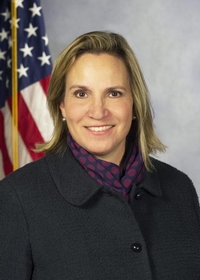
Rep. Christina Sappey
Sponsored bills
Maddy summaryThis bill, known as the Contraceptive Access for All Act, requires all government health programs and private health insurance policies in the state to cover FDA-approved contraceptive drugs, devices, and products without charging the patient any out-of-pocket costs. The law specifically mandates that these contraceptives be included in coverage without requiring prior authorization, step therapy, or any form of cost-sharing such as deductibles or copayments. It applies to a wide range of standard medical insurance plans while explicitly excluding limited policies like dental-only or accident insurance. Additionally, the bill assigns duties to the Insurance Department and the Department of Human Services to oversee compliance and establishes penalties for entities that fail to meet these new coverage requirements.
Maddy summaryThis bill expands the authority of Pennsylvania's intermediate units to acquire and lease property for school facilities and establishes a funding mechanism for these capital projects. It creates a program that allows nonpublic schools to receive grants for safety and security enhancements, which can be used for violence prevention, mental health initiatives, and hiring security personnel. Additionally, the legislation sets a minimum funding level for these targeted grants and clarifies that intermediate units can only use a small percentage of the funds for administrative costs.
Maddy summaryThis bill amends Pennsylvania's domestic relations laws to redefine marriage as a civil contract between two individuals, removing the previous legal requirement that it be between one man and one woman. It directly affects couples by eliminating state barriers to same-sex marriage and repeals the specific provision that declared such unions void within the Commonwealth. The legislation also updates the statutory definition of marriage to reflect this inclusive language while removing the section that stated it was public policy to restrict marriage to opposite-sex couples.
Maddy summaryThis bill amends the Administrative Code to update definitions and powers for Pennsylvania's Energy Development Authority. It clarifies what counts as a "project" and "cost" for energy initiatives, specifically including expenses for energy audits, environmental surveys, and infrastructure resilience. The legislation also changes how the Authority's board is structured, reducing the number of governor-appointed members from nine to five and adjusting the voting requirements for board decisions. These changes aim to streamline the Authority's governance while expanding its scope to support various energy-related activities.
Maddy summaryThis bill updates Pennsylvania's historic preservation tax credit program by increasing the annual funding limit from $5 million to $20 million. It allows the Department of Community and Economic Development to award these tax credits on a first-come, first-served basis if the full amount is not claimed during the initial application window. The changes apply to fiscal years starting after June 30, 2025, and take effect immediately, providing more financial incentives for property owners and developers to restore historic buildings.
Maddy summaryThis bill creates the Keystone Fresh Program to increase the amount of locally grown food served in Pennsylvania school meals. It establishes a grant system administered by the Departments of Education and Agriculture to reimburse school districts for purchasing local fruits, vegetables, grains, and other minimally processed foods. The program prioritizes funding for schools that source from veteran farmers, socially disadvantaged groups, new farmers, or those using sustainable agriculture techniques. A separate fund is also created to support the administration of these initiatives, aiming to improve child nutrition and provide economic benefits to local producers.
Maddy summaryThis bill establishes an independent Office of Child Advocate within Pennsylvania's Human Services Code to protect the interests of children. The Governor will appoint a Child Advocate who must have at least six years of relevant experience and a bachelor's degree, and the office will operate independently of the department regarding decision-making. The Advocate and their staff are required to complete specific trainings on topics like trauma-informed care and crisis intervention, and they are designated as mandated reporters for suspected child abuse. Additionally, the bill defines the scope of child health, safety, and well-being programs, which include preventing abuse, providing foster care, and offering early intervention services.
Maddy summaryThis bill establishes the Agriculture Innovation Grant Program within the Pennsylvania Department of Agriculture to provide financial reimbursement grants to eligible farms and agribusinesses. The program specifically targets projects that utilize new technologies or methods to improve energy efficiency, water quality, production processes, biosecurity, and farm management systems. To oversee the initiative, the legislation creates a new Agriculture Innovation Board composed of representatives from government agencies, higher education, cooperatives, financial institutions, and the legislative branches. Eligible applicants include individuals with anticipated agricultural sales over $2,000 annually or processors with sales exceeding $10,000, as well as service providers and entities utilizing agricultural commodities for product creation.
Maddy summaryHB 1477 updates the Pennsylvania Municipalities Planning Code to allow local governments to submit planning documents electronically instead of by mail or hand delivery. This change applies to municipalities and counties that need to send proposed or adopted plans, zoning ordinances, or amendments to other government bodies for review. To ensure reliability, the law requires that electronic files be in standard PDF format or similar, and it protects the validity of these submissions even if the recipient fails to receive them. The bill also mandates that local governments keep records of all electronic transmissions and allows comments on these plans to be sent back digitally. Finally, the legislation clarifies that any electronic submissions made before the law takes effect remain valid.