

Maddy summaryThis bill amends Pennsylvania laws to set a strict six-month deadline for the Public Utility Commission to issue final decisions on applications regarding the valuation of water and wastewater systems acquired by public utilities. The change directly affects utility companies seeking to determine the value of these assets and the regulatory body responsible for overseeing the process. By removing the previous language that allowed for extensions, the legislation ensures a faster timeline for resolving these specific valuation cases. The act takes effect immediately upon passage.
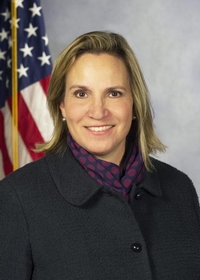
Rep. Christina Sappey
Sponsored bills
Maddy summaryThis bill establishes new rules for how Pennsylvania municipalities must sell their water and sewer systems to other public utilities. It requires the selling municipality to issue a formal request for proposals, advertise the sale in local newspapers, and provide residents with rate estimates from approved actuaries before a final decision is made. The acquiring utility must also notify its customers about the deal and any potential rate increases, while the state commission is mandated to hold at least two public hearings to review the transaction. These procedures aim to ensure transparency and protect consumers during the acquisition of public water and wastewater infrastructure.
Maddy summaryThis bill updates Pennsylvania's Second Class Township Code to establish a clearer process for filling vacancies on township boards of supervisors. It creates a "vacancy board" made up of the current supervisors and one registered elector appointed by them to fill empty seats within fifteen days if the supervisors do not act. If the vacancy board cannot fill a position or if most supervisor seats are empty, the bill allows the remaining board members or residents to petition a court to appoint a replacement. The changes are designed to ensure that township leadership positions are filled promptly without requiring a full election for every opening.
Maddy summaryThis Pennsylvania House resolution designates September 29, 2024, as "VFW Day" to honor the Veterans of Foreign Wars organization. The measure commemorates the date the VFW was founded in 1899 and acknowledges the group's history of advocating for veterans' rights and benefits. It encourages all Pennsylvanians to recognize and support the VFW and its members for their service to veterans and the community.
Maddy summaryThis Pennsylvania House resolution formally recognizes September 2024 as Suicide Prevention Awareness Month and designates September 10, 2024, as World Suicide Prevention Day within the state. The measure is sponsored by a group of representatives and addresses the issue by officially highlighting these dates to raise public awareness about suicide prevention. It encourages residents of Pennsylvania to offer support to those struggling with mental health challenges, aiming to reduce the stigma that often prevents people from seeking help.
Maddy summaryThis bill amends Pennsylvania's Municipalities Financial Recovery Act to update how receivers manage distressed municipalities. It specifically requires that before a receiver can sell, lease, or dispose of a municipality's assets, they must obtain approval from 75% of the governing bodies of neighboring municipalities that share service agreements or rely on the distressed entity for water or sewer services. The law mandates that this approval be granted through a formal resolution passed by a majority vote at a public meeting, with results sent within 48 hours. These changes aim to ensure that communities directly affected by asset sales have a significant voice in the decision-making process.
Maddy summaryThis bill amends Pennsylvania law to prevent the chairperson of a borough vacancy board from voting to fill their own vacancy in an elective borough office. The change directly affects boroughs that use vacancy boards to fill empty seats and ensures that the board's chair cannot participate in deciding their own appointment. By removing the chairperson's vote in this specific situation, the legislation aims to reduce potential conflicts of interest during the selection process. The provision applies only to the chairperson's vote and does not alter other aspects of how vacancies are filled.
Maddy summaryThis Pennsylvania bill prohibits the intentional addition of perfluoroalkyl and polyfluoroalkyl substances, commonly known as PFAS, to a wide range of consumer products including cookware, cosmetics, food packaging, and artificial turf. While the law generally bans these chemicals, it allows for their use in specific items if the Department of Environmental Protection determines that no safer alternative exists and the chemical is critical for the product's function. The Department of Environmental Protection is tasked with enforcing these restrictions, managing a public database of PFAS information, and imposing penalties for violations.
Maddy summaryThis Pennsylvania bill amends the Solid Waste Management Act to clarify definitions and restrict how oil and gas wastewater is handled. It explicitly adds various types of oil and gas wastewater, such as production water and brine, to the legal definition of "residual waste." The legislation prohibits spreading this wastewater on roads or applying it to land, with the sole exception of tophole water used at the specific well site where it was extracted. Additionally, the bill bans vehicles transporting this wastewater from having mechanisms that could facilitate the prohibited disposal or reuse methods. These changes aim to limit the environmental impact of oil and gas operations by preventing the use of wastewater for dust suppression, road deicing, or road stabilization.
Maddy summaryThis bill amends Pennsylvania's Human Services Code to update definitions related to child care and establish a new copayment system for families receiving subsidized child care. It clarifies terms such as "child care," "child-care center," and "family child-care home" to specify who is covered and under what conditions. Under the new rules, parents or caretakers must pay a portion of the child care cost based on their family's annual income, with a cap of fifteen percent. The legislation also provides special provisions for families where the parent or caretaker works as a child-care employee or a direct support professional, ensuring they remain eligible for subsidies regardless of income level while still requiring a capped copayment.