

Maddy summaryThis bill is a ceremonial resolution that designates June 12, 2026, as "Women Veterans Day" in Pennsylvania to honor the contributions of female military service members. The measure does not create new laws or change any government policies; instead, it serves to formally acknowledge the state's approximately 70,000 women veterans and highlight their growing presence in the armed forces. The text includes background information on the history of women in the military and notes specific challenges they face, such as higher rates of military sexual trauma and lower utilization of veteran benefits. Ultimately, the resolution aims to raise awareness about these issues rather than implementing concrete programs or funding changes.
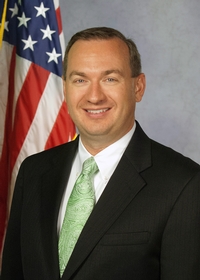
Rep. Pete Schweyer
Sponsored bills
Maddy summaryThis bill is a House Resolution that officially recognizes September 2026 as 'International Underground Railroad Month' within Pennsylvania. It does not create new laws or change how the state operates, but rather serves as a formal acknowledgment of the state's historical role in the Underground Railroad network. The resolution honors the individuals who helped enslaved people escape to freedom and highlights the significance of related historical sites across the Commonwealth.
Maddy summaryHouse Resolution 208 directs Pennsylvania's Legislative Budget and Finance Committee to study wait times, service processes, and operational challenges at two state offices: the Office of Vocational Rehabilitation and the Bureau of Blindness and Visual Services within the Department of Labor and Industry. The committee must examine current wait times for services, assess how delays affect individuals seeking support, and explore solutions like contracting with nonprofit organizations to improve efficiency. The study requires a report to the General Assembly within 180 days, focusing on concrete findings about service delivery rather than mandating policy changes. This resolution does not alter existing services but aims to inform potential improvements for Pennsylvanians with vision impairments who rely on these programs.
Maddy summaryThe context provided does not include the specific provisions, definitions, or benefit changes proposed in HB 151. While the bill title indicates it amends the Children in Foster Care Act regarding definitions and benefits, the details of these amendments are not described in the available information. Without knowing the exact changes to definitions or the nature of the benefits being provided, a factual summary of the bill's policy impact cannot be created. The referral to the Children & Youth committee indicates it relates to foster care policy, but concrete provisions remain unspecified in the provided context.
Maddy summaryThis Pennsylvania bill establishes a temporary program allowing businesses to receive tax credits for donations to scholarship and educational improvement organizations. The legislation sets specific annual spending limits for these credits, which are available only for fiscal years before 2027-2028, and creates a new restricted account to track the funds. It also defines various terms related to the program, including assessments and business firms, while assigning oversight duties to several state departments.
Maddy summaryThis bill prohibits Pennsylvania state agencies from using text messages to collect unpaid fines, fees, or tolls or to notify individuals about such charges. It defines a text-based communication as any written message sent on a mobile device, explicitly excluding standard email. The law applies to all Commonwealth agencies as currently defined by state statute and will become effective 60 days after passage.
Maddy summaryThis bill requires Pennsylvania's Department of Corrections to recognize medical diagnoses made by healthcare providers before an individual is incarcerated. It prohibits the department from removing or ignoring such diagnoses, except when a healthcare provider (who made the diagnosis or has relevant expertise) submits a written recommendation for removal. The department may then choose to remove the diagnosis based on that recommendation. This change directly affects individuals entering state prisons by ensuring their pre-incarceration medical conditions are acknowledged in their records. The law takes effect 60 days after enactment.
Maddy summaryThis bill updates Pennsylvania's Public School Code to clarify how state funding is distributed to charter and cyber charter schools. It establishes a specific formula where local school districts must pay charter schools based on the per-student cost of operating the district's own programs, adjusted annually by wage and employment cost indices. The legislation also sets up a process where the state education secretary can deduct unpaid amounts from a district's state funds if the district fails to pay the charter school on time. These changes aim to ensure that charter schools receive consistent and predictable funding from the districts where their students reside.
Maddy summaryHB 2633 amends Pennsylvania's Public School Code to change how school districts are funded for building construction, maintenance, and renovations. The bill repeals existing grant programs for maintenance projects and building condition assessments, replacing them with a new reimbursement system that calculates payments based on enrollment, building capacity, and local wealth factors. Under the new rules, school entities would receive reimbursement over 20 years for approved projects, with a requirement to match 50% of the cost using local funds unless the project is an emergency. These changes apply to projects seeking approval beginning July 1, 2026, while allowing districts to retroactively seek approval for projects not yet completed by that date.
Maddy summaryThis House Resolution honors the life of Pennsylvania State Police Corporal Timothy J. O'Connor, Jr., who died in the line of duty in March 2026, and extends condolences to his family. The document details his 15-year career, numerous awards, and community service, while formally recognizing his sacrifice as the 105th state police officer to die in service. It directs that a copy of the resolution be presented to his wife, Casey O'Connor, as a gesture of respect and support.