

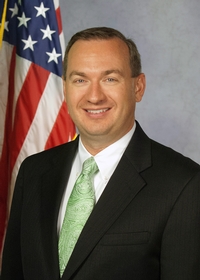
Photo of Pete Schweyer
D Pennsylvania House · District 134 On the 2026 ballot

Rep. Pete Schweyer

Compare
Total votes
8,344
all sessions
Attendance
100%
2 missed
Near the chamber average
With party
98%
of cast votes
Higher than 92% of chamber peers
Bipartisan score
1%
crosses aisle rarely
Lower than 89% of chamber peers
Sponsored
2,233
bills & resolutions
Near the chamber average
Committees
2
assignments
2,233 bills and resolutions

Sponsored bills

Total
2,233
Primary
64
Co-sponsor
2,169
This page
2,233
matching current filters
Primary HB 2602
In committee · Pennsylvania House · Lead sponsor
An Act amending the act of March 10, 1949 (P.L.30, No.14), known as the Public School Code of 1949, in pupils and attendance, further providing for attendance policy at charter, regional charter and cyber charter schools; in charter schools, further providing for cyber charter school requirements and prohibitions and for enrollee wellness checks and providing for child protection and support plan; and imposing penalties.

Maddy summaryThis bill updates Pennsylvania's Public School Code to establish stricter attendance and safety rules specifically for cyber charter schools. It requires these schools to define clear policies for counting student presence during live online classes and completing weekly assignments for independent study, with penalties including funding withholding or charter revocation for non-compliance. Additionally, the legislation mandates that cyber charter schools implement wellness checks and create child protection plans to ensure student safety. The state education department will also develop standardized forms to help schools submit and approve these new attendance policies by a set deadline.

In committee Jun 10, 2026 0 co-sponsors
Co-sponsor HB 2244
In committee · Pennsylvania House · Co-sponsor
An Act amending the act of March 4, 1971 (P.L.6, No.2), known as the Tax Reform Code of 1971, in sales and use tax, further providing for exclusions from tax. Amending Title 18 (Crimes and Offenses) of the Pennsylvania Consolidated Statutes, in firearms and other dangerous articles, providing for the offense of unauthorized access to firearms.

Maddy summaryThis bill introduces two main changes to Pennsylvania law: it exempts gun safes and gun locks from sales and use tax, and it creates a new criminal offense for failing to securely store firearms. Under the new provisions, firearm owners must keep their weapons locked in a designated safe or with a locking device when not in use, with stricter penalties if a minor or unauthorized person is likely to be present. The legislation also establishes civil liability for owners whose unsecured firearms cause injury or property damage and requires retailers to post notices about secure storage laws. Additionally, the bill clarifies that gun cabinets do not qualify as gun safes and defines specific terms like "securely store" and "unauthorized user" to guide enforcement.

In committee Jun 8, 2026 1 co-sponsor
Co-sponsor HB 2245
In committee · Pennsylvania House · Co-sponsor
An Act amending the act of March 4, 1971 (P.L.6, No.2), known as the Tax Reform Code of 1971, in sales and use tax, further providing for exclusions from tax.

Maddy summaryThis bill amends Pennsylvania's Tax Reform Code to exclude gun safes and gun locks from sales and use taxes. It directly affects retailers selling these security devices and consumers purchasing them for firearm storage. The legislation defines a gun safe as a self-contained enclosure with locking mechanisms that prevent unauthorized access, while explicitly excluding gun cabinets from the tax exemption. The changes will take effect 60 days after the bill is enacted.

In committee Jun 8, 2026 1 co-sponsor
Co-sponsor HB 2340
Passed · Pennsylvania House · Co-sponsor
An Act amending the act of March 4, 1971 (P.L.6, No.2), known as the Tax Reform Code of 1971, in malt beverage tax, further providing for limited tax credits.

Maddy summaryThis Pennsylvania bill creates a limited tax credit program for manufacturers of malt or brewed beverages who make specific capital investments in their production facilities. Under the new rules, eligible companies can receive a tax credit for up to $200,000 in qualifying equipment purchases made during designated time periods, with the credit potentially usable over five years. The legislation also allows these tax credits to be sold to other taxpayers, who can then apply the credit against up to 50% of their own tax liability for that year. The Department of Revenue will oversee the program, including verifying taxpayer compliance before approving credit sales and setting guidelines for the process.

Passed May 20, 2026 1 co-sponsor
Co-sponsor HB 2506
In committee · Pennsylvania House · Co-sponsor
An Act amending Titles 18 (Crimes and Offenses) and 53 (Municipalities Generally) of the Pennsylvania Consolidated Statutes, in firearms and other dangerous articles, further providing for limitation on the regulation of firearms and ammunition; and, in general provisions, further providing for limitation on municipal powers.

Maddy summaryHB 2506 prevents Pennsylvania counties, municipalities, and townships from passing local laws that restrict the ownership, possession, transfer, or transportation of firearms and ammunition, as long as those items are not already banned by state or federal law. The bill also stops local governments from suing gun manufacturers or dealers for damages related to how firearms are designed, manufactured, or sold to the public. Additionally, it removes the specific authority for municipalities to regulate firearms entirely, ensuring that gun policy remains a state-level responsibility rather than a local one.

In committee May 11, 2026 1 co-sponsor
Co-sponsor HB 2505
In committee · Pennsylvania House · Co-sponsor
An Act amending the act of July 28, 1953 (P.L.723, No.230), known as the Second Class County Code, in second class county charter law, further providing for charter limitations.

Maddy summaryThis bill amends Pennsylvania's Second Class County Code to prohibit these counties from passing laws or taking actions that regulate firearms. Specifically, it removes the existing provision that allowed second-class counties to create ordinances regarding the transfer, ownership, transportation, or possession of guns. The change directly affects local governments in second-class counties by restricting their ability to implement their own gun control measures. The legislation becomes effective 60 days after it is passed.

In committee May 11, 2026 1 co-sponsor
Co-sponsor HB 2269
Passed · Pennsylvania House · Co-sponsor
An Act amending the act of March 10, 1949 (P.L.30, No.14), known as the Public School Code of 1949, repealing provisions relating to medical education loan assistance.

Maddy summaryThis bill repeals the Pennsylvania Medical Education Loan Assistance Program, which previously provided financial incentives to students pursuing medical, nursing, biomedical, and life sciences education. The program allowed eligible students to access loans with favorable terms, including low interest rates and fees, to encourage them to practice medicine or nursing in Pennsylvania, particularly in underserved areas. By removing this legislation, the state will no longer administer this specific loan assistance program for medical education.

Passed May 7, 2026 1 co-sponsor
Co-sponsor HB 2237
Passed · Pennsylvania House · Co-sponsor
An Act amending the act of June 23, 1999 (P.L.159, No.22), known as the New Economy Technology Scholarship Act, further providing for annual report.

Maddy summaryHB 2237 amends the New Economy Technology Scholarship Act to update the annual report deadline for the scholarship program. It changes the reporting requirement from "by September 1, 2000, and every year thereafter" to "no later than September 1 following the end of the fiscal year." The bill does not alter the scholarship program's eligibility, funding, or operations - only the timing for the agency's annual report. This procedural change ensures reports are submitted consistently with Pennsylvania's fiscal year cycle.

Passed May 7, 2026 1 co-sponsor
Co-sponsor HR 228
Passed · Pennsylvania House · Co-sponsor
A Resolution designating July 31, 2025, as "Intern Day" in Pennsylvania.

Maddy summaryThis resolution designates July 31, 2025, as "Intern Day" in Pennsylvania to recognize the value of internships for students, educational institutions, and employers. It aims to raise awareness about work-based learning opportunities that connect classroom education with workplace skills, aligning with national observances. The bill does not create new laws or funding but symbolically highlights Pennsylvania’s commitment to supporting internships as part of economic development. It directly affects students seeking career experience, career and technical centers, and businesses offering internships.

Passed May 5, 2026 1 co-sponsor
Co-sponsor HB 2218
Passed · Pennsylvania House · Co-sponsor
An Act amending the act of March 10, 1949 (P.L.30, No.14), known as the Public School Code of 1949, providing for comprehensive school counseling services.

Maddy summaryHB 2218 amends Pennsylvania's Public School Code to require all school entities (including districts, charter schools, cyber charters, and career schools) to develop and implement a written comprehensive school counseling plan. The bill mandates that each plan, created by certified school counselors, must include annual reviews, K-12 systemic alignment, grade-level and building-specific strategies, and integration with existing student services plans. Key provisions define "direct services" (like individual counseling and classroom instruction) and "indirect services" (such as parent consultations), requiring plans to guide students in academic, career, and social-emotional development. The law establishes specific components for the plan - foundation, management, delivery, and accountability - without specifying funding or new programs.

Passed May 1, 2026 1 co-sponsor
Showing 11 to 20 of 2,233 bills