

Maddy summaryHB 1149 amends Pennsylvania's Construction Code Act to require residential building inspectors to complete five hours of mandatory continuing education. This training covers identifying faulty construction practices (including stucco installation), builders' legal liability, and homeowner remedies under federal or state law. The bill directly affects residential building inspectors licensed in Pennsylvania, adding this new requirement to their existing certification obligations. The law takes effect 60 days after enactment.
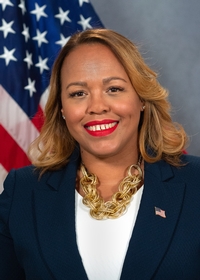
Rep. Johanny Cepeda-Freytiz
Sponsored bills
Maddy summaryHB 1151 requires developers in Pennsylvania to mail a plain-language pamphlet called the "Adjacent Neighbors' Bill of Rights" to homeowners living next to construction or development sites when a building permit is applied for. The pamphlet details homeowners' rights regarding property access, engineering surveys (at developer expense), damage claims from excavation, noise ordinances, and legal resources. It also mandates the Department of Labor and Industry to create and post this resource online and distribute it to officials and community groups. The bill directly affects homeowners adjacent to construction projects and takes effect 60 days after enactment.
Maddy summaryThis bill amends Pennsylvania's Home Improvement Consumer Protection Act to clarify who qualifies as an "owner" for registration exemptions and add a new fraud provision. It defines "owner" to include authorized representatives without requiring residency, but requires maintaining ownership for one year after construction to qualify for exemption. The new fraud provision specifically prohibits avoiding contractor licensing by claiming owner status with intent to sell a property without ever residing there. This primarily affects homeowners with multiple properties (limiting "owner" status to primary and recreational residences) and home improvement contractors.
Maddy summaryThis resolution directs Pennsylvania's Legislative Budget and Finance Committee to study a potential change to school funding. It would require the committee to collect data on all school districts' property tax revenue, calculate regional tax rates, and model how pooling that revenue at the intermediate unit level (regional education groups) and distributing it based on student enrollment would affect funding. The study aims to evaluate whether this approach would make school funding more equitable, addressing a court-ordered obligation to fairly fund public education. The committee must report findings within one year, but the resolution itself does not change current funding rules.
Maddy summaryHB 1118 amends Pennsylvania's Liquor Code to provide a $350 refund for club licensees who purchased less than $2,000 in liquor from the Pennsylvania Liquor Control Board during their previous license renewal period. Eligible licensees must submit a written application to the board, which will issue the refund without charging any fee. This provision directly affects small-volume club licensees by reducing their license and filing costs.
Maddy summaryHB 1122 amends Pennsylvania's Unfair Insurance Practices Act to explicitly prohibit insurance companies from discriminating against applicants or policyholders based on protected characteristics. The bill adds specific language banning unfair discrimination in underwriting and eligibility decisions due to race, religion, nationality, ethnicity, age, sex, family size, occupation, residence, marital status, or criminal history. This directly affects insurers (who must comply with these rules) and applicants/policyholders (who gain protections against such discrimination). The key change clarifies that insurers cannot deny coverage, adjust rates, or impose terms based on these factors, except where rates are set through proper regulatory processes. The bill takes effect 60 days after enactment.
Maddy summaryHB 1121 allows private providers of applied behavior analysis (ABA) services to work with students who have autism or developmental delays during school hours, as specified in their Individualized Education Program (IEP). Schools must permit this access without charging fees or creating barriers, provided parents give written consent and the services align with the student’s IEP. Private providers must coordinate with school staff, hold required certifications, and be supervised by a nationally certified behavior analyst. The bill requires schools to accommodate these services without disrupting classrooms and prohibits discrimination or retaliation against families using private pay services.
Maddy summaryHB 1150 raises Pennsylvania's minimum wage to $15 per hour starting January 1, 2026, with annual increases thereafter. It also establishes a phased timeline for tipped employees: requiring higher base cash wages starting in 2025 (e.g., $5.00/hour after June 2025) and mandating that by July 1, 2029, employers must pay the full minimum wage without relying on tips. The bill ensures all tips received by employees remain their property and cannot be used by employers to meet minimum wage requirements. This directly affects most private-sector employers and tipped workers in Pennsylvania, particularly in hospitality and service industries.
Maddy summaryHB 1081 imposes a temporary ban on cyber charter schools and their management companies from buying, leasing, or owning new property. The ban takes effect 60 days after the bill becomes law and does not apply to property already owned or acquired before that date. This policy directly affects cyber charter schools and the educational management service providers that operate them, restricting their ability to expand physical facilities through new property transactions. The bill does not impact existing buildings or operations of these schools.
Maddy summaryHB 1080 requires solar energy facility operators (grantees) in Pennsylvania to plan and fund the removal and land restoration of solar farms after operations end. It mandates that facility owners submit detailed decommissioning plans and proof of financial assurance to county recorders at specific intervals: 10% of estimated costs 30 days before construction begins, then 40% at 10 years, and 60% at 15 years (adjusted for salvage value). The bill ensures funds are available to cover removal costs, with third-party engineers verifying estimates every five years. These requirements apply to all new solar energy facility agreements executed after the law's effective date, directly affecting solar developers and landowners leasing property for solar installations.