

Maddy summaryHB 1087 establishes Pennsylvania's Active Volunteer First Responder Education Tax Credit Program under the Tax Reform Code of 1971. It allows businesses to claim a tax credit for donating to eligible schools, with funds used to provide scholarships for certified volunteer firefighters and emergency medical services workers. To qualify, applicants must be Pennsylvania residents, certified volunteers with at least one year of service, enrolled in approved educational programs at participating institutions, and provide proof of membership from their agency. The Department of Community and Economic Development administers the program, requiring eligible schools to submit accreditation details and ensuring donations directly fund tuition and school-related fees for qualifying students. This program directly affects volunteer first responders seeking higher education and businesses contributing to their scholarships.
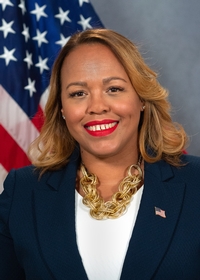
Rep. Johanny Cepeda-Freytiz
Sponsored bills
Maddy summaryHB 1078 updates Pennsylvania's school health requirements to strengthen vision screening and eye health examinations for students. It mandates annual vision screenings by trained school personnel for all school-aged children, with comprehensive eye exams by licensed professionals required if screenings fail. The bill specifies that students must receive eye health exams upon school admission, in fourth grade, and eighth grade, and adds requirements for exams related to special education evaluations. Schools must notify parents of failed screenings and provide resources, but are not responsible for covering exam costs or treatment. This directly affects all public and nonpublic school students in Pennsylvania.
Maddy summaryHB 1071 amends Pennsylvania's Liquor Code to allow limited winery license holders to partner with BYOB restaurants for off-premises wine service under a new permit program. It directly affects licensed wineries and BYOB restaurants (establishments with health permits that allow patrons to bring their own alcohol). Key provisions require wineries to pay a $500 initial fee and $500 annual renewal fee per permit, provide 14 days' notice to police and the Liquor Control Board, operate between noon and 9 PM, and ensure servers are certified. The bill defines "BYOB restaurant" as a dining establishment with a valid health permit that permits patrons aged 21+ to bring alcohol for on-premises consumption. This creates a structured framework for wineries to expand sales at partner venues while maintaining regulatory oversight.
Maddy summaryHB 1070 requires all health insurance policies covering maternity benefits in Pennsylvania to provide 24 additional hours of elective postpartum observation and care beyond the existing 48-96 hours of inpatient coverage, starting January 1, 2026. It also prohibits hospitals from involuntarily discharging postpartum patients or newborns between 10 p.m. and 8 a.m., with billing under "observation status" if discharge is refused. The bill directly affects mothers, newborns, hospitals, and health insurers by extending coverage duration and restricting nighttime discharges. The Department of Human Services must seek a federal waiver to extend government program coverage for this additional 24-hour period.
Maddy summaryHR 150 is a Pennsylvania House resolution designating April 11-17, 2025, as "Black Maternal Health Week" to highlight the disproportionate maternal health disparities affecting Black women and birthing persons in the state. It references Pennsylvania data showing Black women face maternal mortality rates twice as high as White women (148 vs. 74 deaths per 100,000 live births in 2020) and higher morbidity rates. The resolution does not create new laws or funding but aims to raise public awareness about preventable maternal health outcomes. It specifically targets state-level attention to this crisis, citing local statistics from Philadelphia and Allegheny Counties. As a symbolic resolution, it has no binding effect but seeks to spur broader discussion and action.
Maddy summaryHB 1066 amends Pennsylvania's Medical Practice Act to create a pathway for temporary medical licensees who graduated from international medical schools to obtain full, unrestricted licenses. To qualify, these individuals must have practiced medicine for at least three years outside the U.S., demonstrated competency to the State Board of Medicine, maintained good standing for two years after their temporary license was issued, and secured a job offer from a Pennsylvania healthcare facility. This provision applies only to eligible temporary licensees meeting all specified criteria, without altering general temporary license rules. The bill takes effect 60 days after enactment.
Maddy summaryHB 1075 amends Pennsylvania's Game Code to change how the Pennsylvania Game Commission pays for land acquisitions used as game lands. The bill removes a previous $400-per-acre payment cap, allowing the Commission to pay based solely on market value without that limit. This directly affects the Game Commission when purchasing land for conservation and landowners selling property for game land use. The key provision eliminates the specific dollar limit, requiring payments to align with local market value instead. The change takes effect immediately upon passage.
Maddy summaryHB 1110 requires Pennsylvania's Department of Military and Veterans Affairs to implement a public awareness campaign about military sexual trauma (defined as sexual assault or harassment during military service). The campaign must promote survivor acceptance, encourage active military members to report incidents, and provide information about available support resources. The department must design accessible materials (multilingual, mobile-friendly, and culturally appropriate) for its website, consult with advocacy groups and veterans with lived experience, and submit detailed reports within 180 days and one year of implementation. This bill directly affects active military members, veterans, and the public by improving access to trauma support and raising community awareness.
Maddy summaryHB 1094 creates a new tax credit for homeowners who rehabilitate historic properties in economically distressed areas of Pennsylvania. It directly affects homeowners who own and occupy as their primary residence certified historic properties located in designated "qualified census tracts" (areas at or below state median income or qualified opportunity zones). The credit covers qualified rehabilitation costs like structural repairs and exterior work, excluding property acquisition, interior improvements, or building expansions. The Pennsylvania Historical and Museum Commission and Department of Community and Economic Development will administer the program and manage a dedicated fund to support the credit.
Maddy summaryHB 1074 amends Pennsylvania's Dog Law to regulate contracts for the sale and lease of dogs and cats. It makes void any contract where ownership or repossession of the animal depends on future payments after the buyer takes possession (except for unsecured loans for the purchase), and voids leases offering an option to buy the animal at the end of the term. Consumers who enter such contracts are deemed the owners and can reclaim all payments made. The law applies to contracts entered into 60 days after the bill takes effect.