

Maddy summaryThis bill designates the week of May 16 through 22, 2026, as "National Safe Boating Week" in Pennsylvania to highlight the importance of safety on the state's waterways. It directly affects all boaters, including those using powerboats and personal watercraft, by encouraging them to review safety rules such as wearing life jackets and avoiding alcohol. The resolution does not change any laws or create new requirements but serves as a symbolic reminder of existing safety standards and available educational resources. By promoting these practices, the bill aims to raise public awareness about the risks of boating and the steps needed to prevent accidents.
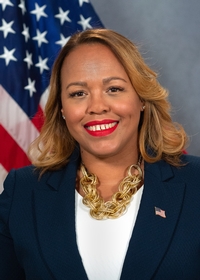
Rep. Johanny Cepeda-Freytiz
Sponsored bills
Maddy summaryThis Pennsylvania bill establishes a temporary program allowing businesses to receive tax credits for donations to scholarship and educational improvement organizations. The legislation sets specific annual spending limits for these credits, which are available only for fiscal years before 2027-2028, and creates a new restricted account to track the funds. It also defines various terms related to the program, including assessments and business firms, while assigning oversight duties to several state departments.
Maddy summaryThis bill creates a new tax credit for small businesses in Pennsylvania that help employees pay for health insurance purchased through the state exchange. To qualify, a business must have 50 or fewer employees and make contributions toward health reimbursement arrangements for their workers. The credit is calculated based on the first $1,000 of contributions per employee and can be applied to reduce the business's state tax liability. Companies claiming the credit must submit detailed forms to the Department of Revenue listing employee information and insurance provider details.
Maddy summaryHB 2198 repeals the Computer Data Center Equipment Incentive Program from Pennsylvania's Tax Reform Code of 1971. This bill eliminates tax exemptions and refunds previously available for investments in data center equipment, such as servers, cooling systems, and energy infrastructure. The repeal directly affects computer data centers and their owners/operators who previously qualified for these tax benefits under Article XXIX-D. The policy change removes a specific tax incentive program without creating new provisions. This is a procedural change to the tax code, ending an existing program for data center equipment investments.
Maddy summaryHouse Bill 1434 amends Pennsylvania's Crimes and Offenses statute to specifically address the sale of electronic nicotine delivery systems to minors. This legislation introduces new penalties for retailers who violate this prohibition. For a first or second offense, a retailer would face a $5,000 fine. A third offense would result in a $5,000 fine and the permanent revocation of their cigarette license. This bill directly affects retailers by imposing stricter financial and licensing consequences for selling these products to minors.
Maddy summaryThis bill establishes the Pennsylvania Maternal and Infant Outcome Measures Survey Program within the Department of Health to collect data on the health experiences of mothers and babies. The program will conduct surveys of individuals who have recently had a live birth to gather information on their behaviors, attitudes, and experiences before, during, and after pregnancy. The Department of Health is authorized to use available funding, including federal money, and may hire outside contractors to run the survey while ensuring all personal data remains confidential. Additionally, the bill allows the department to share de-identified survey results with researchers and publish them in public reports to help improve maternal and child health outcomes.
Maddy summaryHB 2544 updates Pennsylvania's Public School Code to establish a formal framework for negotiating compensation and benefits plans for school administrators, including principals and assistant principals. The bill requires school boards to meet with administrators in good faith to create written agreements covering salary schedules, fringe benefits, and performance evaluation processes. These agreements must remain in effect for at least one school year but no longer than five, and they include a nonbinding mediation step for resolving disputes before potential legal appeals. The legislation applies to all public school entities in the state and maintains existing restrictions on strikes while clarifying the definitions of administrative roles and employer responsibilities.
Maddy summaryThis bill prohibits Pennsylvania state agencies from using text messages to collect unpaid fines, fees, or tolls or to notify individuals about such charges. It defines a text-based communication as any written message sent on a mobile device, explicitly excluding standard email. The law applies to all Commonwealth agencies as currently defined by state statute and will become effective 60 days after passage.
Maddy summaryThis bill establishes a new framework for Pennsylvania public utilities to earn a return on their equity investments, directly affecting investor-owned electric, gas, and water companies regulated by the state commission. It creates a competitive auction process where utilities can bid to set their own return rates based on market conditions, while also providing a default rate of the 10-year U.S. Treasury yield plus 2 percent if no auction occurs. To support this system, the legislation requires utilities to separate their services into distinct legal entities and mandates annual reporting to ensure transparency. Ultimately, the law aims to determine how much profit these utility companies can make on their investments while maintaining oversight through the state commission.
Maddy summaryHB 2207 increases the maximum loan amount for small businesses in Pennsylvania seeking capital development loans (for land, buildings, machinery, and equipment) from $400,000 to $2,000,000, or 50% of total project costs, whichever is lower. It clarifies that costs incurred during the 12 months before applying are included in the total project costs calculation. The bill directly affects small businesses applying for these state-backed loans through Pennsylvania's capital development program. The changes take effect 60 days after enactment.