

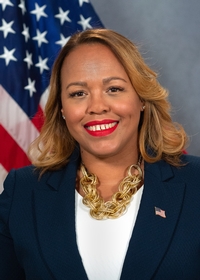
Photo of Johanny Cepeda-Freytiz
D Pennsylvania House · District 129 On the 2026 ballot

Rep. Johanny Cepeda-Freytiz

Compare
Total votes
3,231
all sessions
Attendance
100%
of floor votes
Near the chamber average
With party
99%
of cast votes
Higher than 94% of chamber peers
Bipartisan score
0%
crosses aisle rarely
Lower than 92% of chamber peers
Sponsored
1,779
bills & resolutions
Higher than 98% of chamber peers
Committees
6
assignments
1,779 bills and resolutions

Sponsored bills

Total
1,779
Primary
68
Co-sponsor
1,711
This page
1,779
matching current filters
Co-sponsor HB 2241
In committee · Pennsylvania House · Co-sponsor
An Act amending the act of July 19, 1979 (P.L.130, No.48), known as the Health Care Facilities Act, providing for hospital price transparency and for medical office price transparency.

Maddy summaryHB 2241 requires Pennsylvania hospitals and medical offices to publish standard charges for services online in a readable digital format and provide printed copies upon request. It mandates that hospitals list all standard charges - including gross charges, negotiated rates with insurers, and discounted cash prices - for every item or service, including both inpatient and outpatient care. The bill specifically requires a simplified, consumer-friendly list of "shoppable services" (like elective procedures patients can schedule in advance) alongside the full charge list. This applies directly to all hospitals operating under Pennsylvania's Health Care Facilities Act, aiming to help patients compare costs before receiving care.

In committee Feb 25, 2026 1 co-sponsor
Co-sponsor HB 2242
In committee · Pennsylvania House · Co-sponsor
An Act amending Title 51 (Military Affairs) of the Pennsylvania Consolidated Statutes, in the Governor as Commander-in-Chief, further providing for powers of Governor.

Maddy summaryHB 2242 amends Pennsylvania law to clarify the Governor's authority as Commander-in-Chief over state military forces. It specifically prohibits armed military forces from other states or territories from entering Pennsylvania for military duty without the Governor's express permission, except when federal service under the President's authority is involved. The Governor may grant permission for up to 30 days per calendar year, or longer if approved by a concurrent resolution of the General Assembly. This directly affects Pennsylvania's military operations and limits how neighboring states' forces can operate within Pennsylvania. The bill takes effect 60 days after enactment.

In committee Feb 25, 2026 1 co-sponsor
Co-sponsor HB 460
Passed · Pennsylvania House · Co-sponsor
An Act amending the act of March 10, 1949 (P.L.30, No.14), known as the Public School Code of 1949, in certification of teachers, further providing for child abuse recognition and reporting training; and, in terms and courses of study, providing for child abuse awareness and prevention.

Maddy summaryHB 460 requires all teachers in Pennsylvania public schools to complete child abuse recognition and reporting training as part of their certification process. It amends the Public School Code of 1949 to integrate this training into both initial certification and ongoing educator requirements. The bill directly affects educators by mandating specific training to identify and report suspected abuse, ensuring schools meet updated child safety standards. This change applies to all public school teachers, including those seeking certification or renewing credentials.

Passed Feb 13, 2026 1 co-sponsor
Co-sponsor HB 1923
Passed · Pennsylvania House · Co-sponsor
An Act providing for regulation of the meat packing and food processing industry by creating facility health and safety committees in the workplace; establishing the industry workers' rights coordinator within the Department of Labor and Industry; and imposing penalties.

Maddy summaryHB 1923 establishes new workplace safety requirements for meat packing and food processing facilities by mandating facility health and safety committees. It creates a dedicated workers' rights coordinator position within the Department of Labor and Industry to oversee compliance and address concerns. The bill also adds specific public health emergency protections for workers during outbreaks or crises, requiring employers to follow state health guidelines. These changes directly affect workers and employers in the meat and food processing industry across the state.

Passed Feb 13, 2026 1 co-sponsor
Co-sponsor HB 1935
Passed · Pennsylvania House · Co-sponsor
An Act amending Title 18 (Crimes and Offenses) of the Pennsylvania Consolidated Statutes, in assault, further providing for the offense of terroristic threats.

Maddy summaryHB 1935 requires individuals convicted of terroristic threats to pay restitution for costs incurred during evacuations, including emergency response, transportation, and employee wages for first responders. It also mandates a sentencing enhancement for threats targeting schools or institutions of higher education, which the Pennsylvania Commission on Sentencing must consider. The bill defines "school entity" to include public, charter, private, and cyber charter schools, and "institution of higher education" to cover specific universities like Penn State, Pitt, Temple, and others. These changes directly affect offenders who make terroristic threats in educational settings, holding them financially accountable for the costs their actions trigger.

Passed Feb 13, 2026 1 co-sponsor
Co-sponsor HB 1556
Passed · Pennsylvania House · Co-sponsor
An Act amending the act of March 4, 1971 (P.L.6, No.2), known as the Tax Reform Code of 1971, in Pennsylvania Economic Development for a Growing Economy (PA EDGE) tax credits, providing for an advanced clean manufacturing project and further providing for definitions.

Maddy summaryHB 1556 amends Pennsylvania's Tax Reform Code of 1971 to add new tax credits under the PA EDGE program specifically for "advanced clean manufacturing projects." This bill directly affects businesses constructing or expanding facilities that produce clean energy technology, such as solar panels or battery components. The key change expands the existing PA EDGE tax credit program to include these advanced clean manufacturing projects, providing financial incentives for qualifying investments. The bill does not alter other existing PA EDGE provisions or create new tax credit categories beyond this specific addition.

Passed Feb 13, 2026 1 co-sponsor
Co-sponsor HB 144
Passed · Pennsylvania House · Co-sponsor
An Act amending Title 42 (Judiciary and Judicial Procedure) of the Pennsylvania Consolidated Statutes, in juvenile matters, further providing for informal adjustment; and making an editorial change.

Maddy summaryHB 144 amends Pennsylvania's juvenile justice laws to adjust the process for "informal adjustment" in court cases involving minors. It directly affects youth and families involved in juvenile court by changing how cases can be resolved without formal court proceedings. The bill modifies specific provisions related to informal adjustment procedures within juvenile matters, while also making minor editorial corrections to the statute. This is a procedural change focused on streamlining court handling of certain juvenile cases, not a major policy shift.

Passed Feb 13, 2026 1 co-sponsor
Co-sponsor HB 2217
In committee · Pennsylvania House · Co-sponsor
An Act amending the act of March 10, 1949 (P.L.30, No.14), known as the Public School Code of 1949, in terms and courses of study, providing for recess and lunch periods.

Maddy summaryHB 2217 requires Pennsylvania public schools to provide specific minimum recess and lunch periods for students. It mandates at least 30 minutes of recess daily for full-day kindergarten through fifth grade, 15 minutes for half-day kindergarten, and 30 consecutive minutes of lunch for all full-day kindergarten through twelfth grade. The bill prohibits withholding lunch for discipline or make-up work, ensures students can opt out of cafeteria lunch for religious reasons, and prevents schools from reducing non-tested subject instruction time to provide recess without balancing with tested subjects. This applies to all school entities (including districts, charter schools, and cyber charters) and takes effect July 1, 2027.

In committee Feb 12, 2026 1 co-sponsor
Co-sponsor HB 2212
In committee · Pennsylvania House · Co-sponsor
An Act amending Title 40 (Insurance) of the Pennsylvania Consolidated Statutes, in regulation of insurers and related persons generally, providing for nondiscrimination by payers in health care benefit plans.

Maddy summaryHB 2212 requires Pennsylvania health insurance companies and other health care payers (including health maintenance organizations and self-insured employers) to reimburse out-of-network medical facilities that meet specific criteria, such as having a four-star patient satisfaction rating, offering faster service than nearby in-network facilities, or being partially owned by physicians who are in-network with the payer. The bill mandates that payers use a "baseball-style arbitration" process for payment disputes, where an independent third party selects either the payer's or facility's proposed payment amount without modification. It defines key terms like "highest in-network rate" to standardize how payers determine fair reimbursement for services. This law directly affects health care benefit plans regulated under Pennsylvania insurance law, aiming to reduce discrimination against qualifying out-of-network providers.

In committee Feb 11, 2026 1 co-sponsor
Co-sponsor HB 2213
In committee · Pennsylvania House · Co-sponsor
An Act providing for skill video gaming; imposing duties on the Department of Revenue; providing for issuance of licenses for skill video gaming; imposing a fee and criminal and civil penalties; and providing for zoning.

Maddy summaryHB 2213 establishes a regulatory framework for "skill video gaming" in Pennsylvania, directly affecting businesses that operate or distribute gaming systems. The bill requires licenses from the Department of Revenue for operators, distributors, and establishments, imposes fees, and mandates a central reporting system to track transactions like "coin in/out" and jackpots. Key provisions include banning access for people under 18, prohibiting "miniature casinos," requiring security measures for players, and creating criminal penalties for operating unlicensed systems or distributing to minors. It aims to eliminate illegal gambling devices disguised as skill-based games while leveraging the State Lottery's existing experience in retail gaming oversight.

In committee Feb 11, 2026 1 co-sponsor
Showing 401 to 410 of 1,779 bills
Previous 1 … 40 41 42 … 178 Next