

Maddy summaryThis bill allows secondary school students in Pennsylvania with cystic fibrosis or pancreatic insufficiency to carry and self-administer prescribed pancreatic enzyme replacement therapy (PERT) at school. To qualify, students must provide a doctor's order, a parent's request, and written acknowledgments from both the school nurse and the student confirming they understand safety precautions. Schools may restrict self-administration if students fail to follow rules or safeguard the medication, but must then ensure the medication is stored in an accessible location with clear access instructions. The law also requires schools to adopt written policies outlining documentation processes, storage locations, and limits on daily supply quantities.
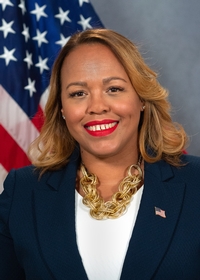
Rep. Johanny Cepeda-Freytiz
Sponsored bills
Maddy summaryThis bill requires law enforcement officers to have a valid judicial warrant before making civil immigration arrests on Pennsylvania state property, which includes state buildings and grounds in Dauphin, Philadelphia, Pittsburgh, and Scranton counties. The legislation mandates that officers must show the warrant to any state employee who asks to see it during such arrests. Violations of these requirements could result in a $10,000 civil penalty for each offense, which would be paid to the Commonwealth and enforced by the Attorney General. The bill does not prevent the investigation or enforcement of criminal immigration laws, and it clarifies that sovereign immunity protections do not apply to lawsuits brought under this new provision.
Maddy summaryThis bill requires juvenile probation officers in Pennsylvania to administer a trauma-informed screening to children involved in delinquency cases to check for human trafficking victimization. The screening is designed to identify whether a child is currently being exploited or is at risk of becoming a victim of sexual servitude. If the screening indicates trafficking involvement or risk, the officer must connect the child with specialized support services for sexually exploited minors. The Department of Human Services and the Juvenile Court Judges' Commission will work together to develop and implement this screening process.
Maddy summaryThis bill establishes rules for law enforcement actions on courthouse grounds in Pennsylvania, primarily restricting civil arrests related to immigration enforcement without a judicial warrant. It directly affects law enforcement officers, courthouse staff, and individuals seeking access to court proceedings. The key provisions prohibit detaining or arresting people on courthouse property for immigration violations unless the officer holds a valid judicial warrant and must show documentation to any court employee who asks. The law also defines who qualifies as a "court companion" to protect individuals accompanying parties to court and includes penalties of up to $10,000 for violations while providing immunity to courthouse employees acting in good faith.
Maddy summaryThis Pennsylvania bill requires law enforcement agencies to conduct additional background checks on applicants who previously worked for U.S. Immigration and Customs Enforcement. The law mandates that these applicants submit detailed employment history forms, including contact information for all supervisors and written statements about any deadly force investigations or disciplinary actions. If an applicant discloses negative information, the hiring agency must request full records from the former employer, and a state commission will review the case to determine fitness for employment. The bill also establishes confidentiality protections for the information gathered and prohibits hiring applicants who fail to provide the required disclosures.
Maddy summaryThis bill requires Pennsylvania county agencies to implement trauma-informed screening for children in their care to identify those who may be victims or at risk of human trafficking involving sexual exploitation. The screening process must be developed by the state department in consultation with county agencies and applied to all children with whom the agencies have contact. If a child is identified as a victim or at risk, the agency must connect them with specialized services designed for sexually exploited children. The law takes effect 90 days after passage.
Maddy summaryHB 2255 amends Pennsylvania's Telemarketer Registration Act to regulate the use of artificial intelligence in telemarketing. The bill defines key terms like "artificial intelligence" and "synthetic content," then prohibits telemarketers from using AI to make calls, mimic human voices, select phone numbers, disguise call origins, or interact with consumers during calls. Violations carry civil penalties of up to $100,000 per offense, with escalating fines for repeat violations. Individuals who receive a prohibited call may also sue the telemarketer in court. This bill directly affects telemarketing companies operating in Pennsylvania that use AI for solicitation calls.
Maddy summaryHB 2253 requires Pennsylvania public high schools to hire school life support coaches to provide daily nonclinical emotional support to students. High-need schools (defined by factors like poverty rates, attendance issues, or dropout risk) must employ one coach for every 300 students, while other schools must have one for every 500 students. Coaches must hold specific educational qualifications (e.g., bachelor's degree with two years of experience), complete training in trauma-informed care and crisis response, and focus on mentorship and resource connection without providing therapy or diagnosis. The Department of Education will guide districts on equitable compensation, and coaches must refer students needing clinical services to licensed staff.
Maddy summaryHB 2250 requires Pennsylvania school districts (second, third, and fourth class) to obtain voter approval via referendum or hold a public hearing before constructing new schools or making substantial additions to existing buildings. It sets specific cost thresholds based on student capacity: $2,800 per elementary student, $4,200 for middle school students, and $5,200 for high school students. If a project exceeds initial cost estimates by 8% or surpasses these per-pupil limits, a second public hearing is mandated before final state approval. This bill directly affects school districts by adding procedural steps for major construction decisions, ensuring community input before significant spending.
Maddy summaryHB 2247 amends Pennsylvania's Public School Code to require school districts spanning multiple counties or municipalities to set uniform tax rates across their entire district. The bill provides four methods for achieving this, including calculating rates based on market values (not exceeding 75% of property value) or using a single tax rate if jurisdictions share consistent assessment standards. This change directly affects multi-jurisdictional school districts, reducing disparities in how property taxes are applied across county or municipal lines. The bill standardizes tax collection without altering overall tax burdens on property owners.