

Maddy summaryHB 323 requires nonprofit corporations (both domestic and foreign with 200+ Pennsylvania employees) to meet specific conditions to receive state contracts, funding, or grants. Key provisions include: prohibiting eligibility if the nonprofit violated federal labor laws in the past five years, was found guilty of unfair labor practices in Pennsylvania within five years, or fails to submit bylaws requiring at least 20% of board members to be current employees elected by staff. Healthcare-related funding (like Medicaid reimbursements) and past violations occurring before the law's effective date are exempt. The law applies to new state contracts, funding, or grants approved on or after its effective date, which is 60 days after enactment.
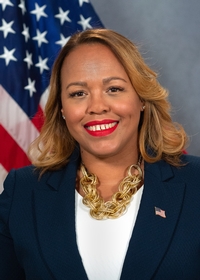
Rep. Johanny Cepeda-Freytiz
Sponsored bills
Maddy summaryHB 356 requires Pennsylvania public and private schools serving grades 6-12 to provide annual, evidence-based training on youth suicide awareness and prevention (at least one hour per school year), along with violence prevention training (also one hour annually). For grades K-12, schools must also offer social inclusion training (one hour yearly) focused on identifying social isolation and building peer connections. The Pennsylvania Department of Education must develop and publish a list of approved, no-cost training materials within one year of the law's effective date. These requirements apply directly to all school entities in the state, mandating specific content for students and staff on mental health, violence prevention, and social inclusion.
Maddy summaryHB 314 amends Pennsylvania law to allow county commissioners to use telecommunications devices (like phones or computers with audio capability) for public meetings and to count remote participants toward quorum requirements. The bill directly affects county commissioners and the public by enabling virtual attendance at county board meetings while maintaining legal validity for decision-making. Key provisions include adding Section 12503(c) to permit audio-based remote participation and amending Section 12504(a) to include teleconferenced commissioners in quorum calculations. The changes take effect 60 days after enactment, standardizing remote meeting procedures for county governance.
Maddy summaryHB 287 establishes the Survivor-Centered, Accessible, Fair and Empowering Housing Trust Fund within Pennsylvania's state treasury. The fund provides emergency, transitional, and permanent housing programs with support services specifically for victims and survivors of domestic violence, sexual assault, dating violence, human trafficking, and stalking, including their immediate family members. It requires housing programs to be accessible regardless of an individual's sex, gender identity, or sexual orientation. The Pennsylvania Housing Finance Agency will manage the fund, and the bill amends the state's Fiscal Code to create this dedicated funding source. This is a direct policy change creating a new state trust fund for targeted housing assistance.
Maddy summaryHB 288 amends Pennsylvania's Tax Reform Code to add new requirements for construction tax credits, affecting taxpayers making capital expenditures over $25,000 for facility construction or renovation. To qualify for these credits, taxpayers must verify good-faith local hiring efforts and confirm that all workers on the project are paid the prevailing wage rate under Pennsylvania's Prevailing Wage Act. The Department of Labor and Industry will enforce these rules, requiring pre-construction wage rate determinations and compliance with prevailing wage standards for all new construction jobs. Violations of these requirements could trigger a 10% refund of the awarded tax credit.
Maddy summaryHouse Resolution 24 designates January 23, 2025, as "Maternal Health Awareness Day" in Pennsylvania to honor women who have died from pregnancy or childbirth complications. The resolution aims to raise public and healthcare awareness about maternal mortality, particularly highlighting racial disparities where Black women in Pennsylvania face a maternal mortality rate of 163 deaths per 100,000 live births - over twice the rate of other groups. It does not create new laws or funding but encourages community and healthcare engagement through designated awareness activities. This symbolic gesture aligns with Pennsylvania’s existing Maternal Mortality Review Committee efforts established under Act 24 of 2018.
Maddy summaryHB 307 amends Pennsylvania's construction code to require that access aisles - marked parking spaces for people with disabilities - be 96 inches wide. New access aisles must meet this width standard, and existing ones narrower than 96 inches must be widened to 96 inches during routine parking lot maintenance, such as when the lot is resurfaced. The requirement applies to all new construction and to existing parking lots during typical maintenance cycles after the effective date. This change standardizes access aisle width to improve accessibility for individuals using mobility devices like wheelchairs.
Maddy summaryHB 303 amends Pennsylvania's sales tax code to exclude construction materials and services purchased by contractors for affordable housing projects from state sales tax. It directly affects construction contractors working on housing defined as "affordable" under existing law (section 1902-A), covering projects involving construction, remodeling, repair, or maintenance. The bill adds a new tax exclusion (section 204(77)) to the 1971 Tax Reform Code, removing sales tax liability for these specific materials and services. This policy change takes effect 60 days after enactment.
Maddy summaryHB 290 prohibits food establishments in Pennsylvania from dispensing prepared food in polystyrene containers (like foam cups, bowls, and plates) or selling polystyrene utensils starting July 1, 2025. It directly affects restaurants, cafes, grocery stores, and other food service businesses, while allowing retailers to still sell polystyrene meat trays, egg cartons, and packing materials. Violations carry civil penalties of $500 for a first offense, increasing to $2,000 for subsequent violations. The bill aims to reduce environmental harm from single-use polystyrene and preempts conflicting local ordinances.
Maddy summaryHB 286 allows Pennsylvania seniors meeting specific criteria to lock their property tax payments at the "base year" amount. To qualify, applicants must be at least 65 years old (or meet widow/widower/disabled criteria), live in their home for 10+ years, and have household income under $45,000 annually. Political subdivisions would implement the program through annual applications requiring proof of ownership, tax payment history, and income eligibility. The Department of Revenue would track participation and submit a legislative report by 2030.