

Maddy summaryHB 233 amends Pennsylvania's Public School Code to change rules for charter school board membership. It prohibits local school board members from serving on charter school boards in their district (Section 1716-A(b)) and bars individuals receiving compensation from local school boards from serving on charter school boards if they were involved in the charter's approval (Section 1716-A(b.1)). The bill also requires local school boards to appoint a member to each charter school board (Section 1716-A(b.4)). These changes directly affect charter school boards, local school board members, and employees involved in charter school oversight. The law takes effect immediately upon passage.
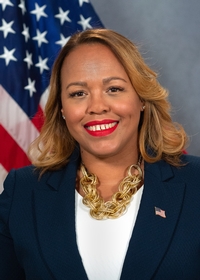
Rep. Johanny Cepeda-Freytiz
Sponsored bills
Maddy summaryHB 226, the Protection of Patients and Medical Personnel from Health Care Facility Retaliation Act, prohibits healthcare facilities from retaliating against patients or medical personnel who file complaints, report issues, or participate in investigations. It creates rebuttable presumptions that negative actions (like discharge or demotion) taken within 120 days of a complaint by medical staff or 180 days for patients are retaliatory unless proven otherwise. Violators face civil penalties up to $25,000 per violation, potential license suspension, and criminal misdemeanor charges for willful violations, with remedies including reinstatement, lost wages, and legal costs for affected individuals. The law directly affects patients, healthcare workers, and facilities operating under Pennsylvania's Health Care Facilities Act.
Maddy summaryHB 275 establishes the Pennsylvania Affordable Homeownership Subsidy Program to help low-to-moderate-income households buy homes. It provides grants (capped at $125,000 per county applicant) for specific projects like homebuyer assistance, property acquisition, and homeownership education, targeting households earning 60%-120% of the area median income (as defined by HUD). The Department of Community and Economic Development will administer the program, set application guidelines, and submit annual reports to the General Assembly on program outcomes. The bill requires sufficient state funding to activate the program, with an effective date 180 days after enactment.
Maddy summaryHB 272 establishes a grant program to help Pennsylvania municipalities and emergency service facilities (like fire stations, police departments, and ambulance services) install solar energy systems. The Department of Environmental Protection will administer the program, awarding competitive grants to cover eligible costs such as solar equipment, installation, permits, and site assessments. Applicants must submit a site assessment and verify contractors meet licensing, safety, and legal requirements through an affidavit. The program also requires the department to provide technical assistance and educational resources about solar energy projects.
Maddy summaryHB 203 amends Pennsylvania's Public School Code to require public schools to close on Veterans' Day, adding it to the list of fixed holidays (alongside Memorial Day, Fourth of July, Thanksgiving, and Christmas) when schools must be closed. It also allows school districts to designate up to five additional local holidays for closures and permits canceling these holidays during weather emergencies. The bill further mandates that schools hold special exercises on Veterans' Day as part of required observances. These changes apply directly to all public schools in Pennsylvania, affecting school calendars and holiday closures.
Maddy summaryHB 202 amends Pennsylvania's Game Commission structure by adjusting the geographic districts for appointing commission members and reducing the required quorum for meetings from six to five members. The bill reorganizes counties into nine districts (e.g., adding Pike County to the seventh district and adjusting the ninth district's county list) to ensure balanced regional representation. These changes directly affect the Pennsylvania Game Commission's operations, making it easier to conduct meetings and maintain committee representation. The bill takes effect 60 days after enactment.
Maddy summaryThis bill strengthens mental health support for emergency responders in Pennsylvania. It creates new confidentiality protections, prohibiting peer support staff, healthcare providers, or helplines from sharing an emergency responder's mental health information without consent (except in clear danger situations). Specifically for 911 dispatchers, it requires employers to provide free mental health evaluations for PTSD symptoms upon the dispatcher's request or a supervisor's recommendation. If symptoms are identified, the employer must cover treatment until a provider determines the dispatcher can return to full duties, with administrative duty assigned during this period.
Maddy summaryHB 244 exempts the sale or use of alternative fuel vehicles and hybrid vehicles from Pennsylvania's sales and use tax during 2026 and 2027. It directly affects consumers purchasing qualifying vehicles during those years, as well as dealers and the state's tax administration. The bill requires the Secretary of Environmental Protection to certify eligible vehicle models, using definitions from Pennsylvania's existing Alternative Fuels Incentive Act (2004). This creates a temporary tax break for specific vehicle types to encourage adoption during the 2026-2027 period. The exemption applies only to vehicles meeting the defined criteria and takes effect 60 days after enactment.
Maddy summaryHB 254 creates a new tax credit for Pennsylvania residents who install electric vehicle charging stations at their primary homes. It allows eligible taxpayers to claim a credit equal to 100% of the installation cost, up to $2,000 per year, which is refundable if it exceeds their state income tax liability. To qualify, residents must have lived in Pennsylvania for over half the previous year, have a valid taxpayer ID, and install the station at their owned primary residence. The credit applies to tax years starting after December 31, 2025, with the Department of Revenue responsible for implementing guidelines.
Maddy summaryHB 250 amends Pennsylvania's Alternative Fuels Incentive Act to update rebates for residents purchasing alternative fuel vehicles. It provides specific rebates: $3,000 for new electric/hydrogen vehicles, $1,500 for plug-in hybrids, and $1,000 for other qualifying new, pre-owned (under 75,000 miles), or demonstration vehicles (500-10,000 miles) priced at $50,000 or less. Low-income residents (at or below 200% of the federal poverty level) receive an additional $2,000 rebate. Applications must be submitted within six months of purchase, with proof of registration and purchase, and rebates are funded based on annual availability. The bill directly affects Pennsylvania residents buying eligible alternative fuel vehicles.