

Maddy summaryHB 387 amends Pennsylvania's Public School Code to require public schools to notify parents, guardians, or custodial parents about specific incidents involving students. It mandates timely notification for incidents that must be reported in school safety reports (Section 1319-B) or serious injuries occurring on school property, buses, or school activities. Schools must maintain updated contact information, use preferred notification methods (email, text, etc.), and train staff on these requirements. Non-compliant schools risk losing state funding, as specified in Section 1314-A(f). This directly affects all Pennsylvania public schools and their students' families.
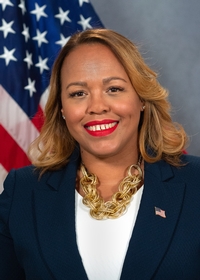
Rep. Johanny Cepeda-Freytiz
Sponsored bills
Maddy summaryHB 358 requires newly constructed apartment buildings and condominiums that are at least two stories above grade to have a minimum of two elevators within one year of the regulations taking effect. Owners must ensure at least one elevator remains operational unless the outage was beyond their control. The law applies only to buildings constructed on or after the effective date of the new regulations, affecting developers and property owners of new multi-story residential projects. The bill defines "apartment building" as a structure housing three or more separate households and references existing condominium definitions in Pennsylvania law.
Maddy summaryHB 357 amends Pennsylvania's 1971 Tax Reform Code to exempt specific property transfers from realty transfer tax. It directly affects surviving spouses and minor children of public safety personnel (police, firefighters, etc.) who died while performing official duties, as defined by the 1976 Emergency and Law Enforcement Personnel Death Benefits Act. The key provision excludes transfers where the property was the deceased's principal residence, and the transfer occurs within five years of death under defined conditions (e.g., the surviving spouse married within one year before the death, or the property was the deceased's residence regardless of the child's current residence). This creates a tax exemption for these specific family transitions without altering the broader tax structure. The bill takes effect 60 days after enactment.
Maddy summaryHB 335, the Child Day-Care Center Protection Act, requires new child day-care centers in Pennsylvania to obtain two certifications before licensure: an indoor contamination assessment (if the building was previously a high-hazard business like a dry cleaner or nail salon) and an environmental quality certification confirming remediation. It directly affects new day-care centers seeking licensure, particularly those operating in older buildings or sites previously used for industrial or high-hazard purposes. The bill establishes a grant program funded by the Hazardous Sites Cleanup Fund to help offset certification costs and imposes fines up to $50,000 for false statements or failure to comply. Existing licensed centers are exempt from these new certification requirements.
Maddy summaryHB 334 creates a $2,500 Pennsylvania Individual Recruitment and Retention Tax Credit for specific new professionals who move to the state after December 2024. It directly affects qualifying taxpayers certified in teaching (e.g., instructional or special education certificates), law enforcement (e.g., police academy graduates), or healthcare (e.g., registered nurses) who become Pennsylvania residents and secure employment in those fields. The credit reduces their state income tax bill for wages earned in qualifying roles, available for three consecutive years (including the first qualifying year), and requires proof of certification to the Department of Revenue. The credit expires December 31, 2030, and applies only to individuals becoming qualifying taxpayers between 2025 and 2027.
Maddy summaryHB 317 requires creators and distributors of AI-generated content in Pennsylvania to watermark at least 30% of images, text, simulations, or videos with 50% opacity and the label "Artificial Intelligence Generated Material." It directly affects individuals and businesses producing AI content, with exceptions for film/TV productions using AI for visual effects without involving specific individuals or with their written consent. Violations carry a $1,000 fine for a first offense and $10,000 for repeat offenses within five years. The law takes effect 60 days after enactment.
Maddy summaryHB 360 requires Pennsylvania colleges and universities to adopt clear written policies addressing sexual harassment and sexual violence. These policies must inform victims of their legal rights, meet or exceed a state model, include specific investigation timelines, and provide protections for victims and witnesses during investigations. The bill directly affects all postsecondary institutions in Pennsylvania by mandating standardized, legally compliant procedures for handling such incidents. It does not change criminal law or provide new victim services, but sets requirements for institutional policy and process. The bill is pending in the Education Committee as introduced in January 2025.
Maddy summaryHB 341 requires Pennsylvania public schools to install certified point-of-use filters on all drinking water outlets by January 1, 2027, and replace older fountains without filters with bottle-filling stations or filtered fountains (at least one per 100 students/staff). It establishes a $10 million annual Safe Schools Drinking Water Fund to provide grants for filter installation and fountain replacement, prioritizing schools built before 2014 and those serving prekindergarten students. The bill also mandates schools to publicly report their compliance plans, filter maintenance schedules, and lead risk information online, while new outlets must meet strict lead-leaching standards (NSF 61). This directly affects all Pennsylvania public school entities, focusing on reducing lead exposure in drinking water.
Maddy summaryHB 329 modifies Pennsylvania's school funding formula to adjust how state funds are distributed to school districts starting in fiscal year 2025-2026. It creates a new "Senior Citizen Tax Freeze" program (Section 504.1), allowing eligible seniors (65+ who own their homes) to freeze school property taxes at their base payment level, preventing increases beyond that amount. Seniors must apply within 45 days of tax due dates, provide proof of ownership and payment, and the state will reimburse school districts for tax increases above the base amount starting April 2025. The program is funded through the existing Property Tax Relief Reserve Fund, with payments made annually from that fund. This directly affects seniors owning homesteads in Pennsylvania school districts.
Maddy summaryHB 365 authorizes Pennsylvania to join the Cosmetology Licensure Compact, a multi-state agreement that allows cosmetologists licensed in one participating state to practice in other member states without obtaining separate licenses. The compact establishes uniform licensing standards and requires member states to share information about disciplinary actions against cosmetologists to protect public safety. This would primarily benefit cosmetologists moving across state lines, including military members and their spouses, by reducing the administrative burden of multiple licenses while maintaining consistent safety oversight.