

Maddy summaryThis bill designates March 9, 2025, as "Charter Day" and Pennsylvania's 344th birthday, commemorating the 1681 charter granted to William Penn by King Charles II. It urges residents, schools, and historical organizations to participate in existing events hosted by the Pennsylvania Historical and Museum Commission and other state heritage institutions. The resolution has no binding legal effect and does not create new policies or obligations; it solely recognizes a historically observed date through ceremonial designation.
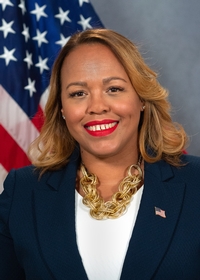
Rep. Johanny Cepeda-Freytiz
Sponsored bills
Maddy summaryThis Pennsylvania House Resolution (HR 39) is a symbolic tribute honoring former President Jimmy Carter following his death on December 29, 2024, at age 100. It commemorates his life, presidency, and humanitarian work - including the Camp David Accords, founding The Carter Center, and efforts to eradicate Guinea worm disease - through a series of historical "whereas" statements. As a commemorative resolution, it does not create new laws, allocate funds, or directly affect any individuals or policies. The resolution serves only to formally extend the Pennsylvania General Assembly's condolences and recognize Carter's legacy. It is purely ceremonial, with no legislative or policy impact.
Maddy summaryHB 524 requires new child-care centers (those starting operations after the law takes effect) that care for seven or more children who are not relatives of the provider to install and maintain video camera surveillance systems meeting Department of Human Services standards. The Department of Human Services will create specific rules for the camera systems and may inspect centers to ensure compliance. This law applies only to newly established centers, not existing ones, and takes effect 60 days after enactment. It directly affects new child-care providers operating larger facilities, mandating camera systems for oversight while defining the department's regulatory role.
Maddy summaryHB 496 requires Pennsylvania prison inmates to complete a voter registration form or a written declination form before release. This applies to all inmates in state correctional facilities who are eligible to vote. The bill mandates that the Department of Corrections, in collaboration with the Department of State, administers the process through specific forms and rules. It does not automatically register inmates but provides a structured method for them to register or decline registration prior to discharge. The law takes effect 60 days after enactment.
Maddy summaryHB 484 amends Pennsylvania's Fiscal Code to update rules for handling abandoned and unclaimed property. It directly affects property finders and recovery services by requiring them to register with the State Treasurer, prohibiting fees exceeding 15% of recovered property, and banning those under investigation for fraud or perjury. Key provisions include mandating online databases for property searches, requiring 3-month claim windows after public notices, and enabling electronic payments for resolved claims. The bill also adds annual reporting requirements and updates fund deposit rules for unclaimed property proceeds. These changes aim to streamline claim processes while increasing transparency for property owners.
Maddy summaryThis resolution designates February 2, 2025, as "Rheumatoid Awareness Day" in Pennsylvania to increase public understanding of rheumatoid arthritis, a chronic condition affecting joints and organs that impacts over 1.3 million Americans. It serves as a symbolic recognition with no legal or funding consequences, aiming to address gaps in awareness about the disease's symptoms and health risks. The resolution has no direct effect on legislation, healthcare policy, or individual residents' rights.
Maddy summaryHB 461, the Commonwealth Funding Safety and Transparency Act, requires nonprofits and their partners receiving state funds for pregnancy-related services (like counseling, testing, and postdelivery support) to provide truthful information and follow specific standards. It mandates compliance with existing transparency laws for funded advertising, adherence to medical safety standards from the AMA and ACOG, and inclusion of all FDA-approved contraceptive options in program materials. Nonprofits failing to meet these requirements lose eligibility for state funding or tax incentives. The law applies directly to organizations administering pregnancy services with Commonwealth funding.
Maddy summaryHB 473 amends Pennsylvania's Election Code to regulate how absentee and mail-in ballot applications are distributed. It prohibits private organizations or individuals from sending these applications to voters, requiring the Secretary of the Commonwealth to provide free, accessible physical and electronic forms at public locations without personal requests. The bill also establishes a "permanent mail-in ballot list," allowing eligible voters to opt in for annual applications mailed by February 1st (or within 48 hours of voter registration), covering all elections until the following February. This directly affects Pennsylvania voters who use absentee or mail-in ballots, ensuring applications come only from official state channels.
Maddy summaryHB 477 requires candidates for school district office in Pennsylvania to undergo background checks before appearing on ballots. Specifically, candidates must submit Pennsylvania criminal history reports (limited to certain offenses), Department of Human Services certification regarding child abuse investigations, and federal criminal history records with fingerprints. Candidates are deemed ineligible if they have recent convictions for violent crimes (like assault or kidnapping), sex offenses (including rape or child sexual abuse), felony drug offenses, or appear on sex offender registries. This bill directly affects individuals running for school board positions in Pennsylvania, applying to all such elections held 180 days after the law takes effect.
Maddy summaryHB 476 amends Pennsylvania's Election Code to establish a public master list of qualified voters who could serve as election clerks and create a process for filling clerk vacancies. The bill requires county election boards to maintain an annual master list of registered voters (with addresses) for random selection to fill vacancies, with specific exemptions like active military service or breastfeeding. It also mandates that election board vacancies be filled by randomly selecting from the master list of qualified voters, while maintaining the existing requirement that judges and majority inspectors must be from the majority party and minority inspectors from the minority party. These changes aim to standardize clerk appointment procedures and ensure fair representation on election boards.