

Maddy summaryThis Pennsylvania House Resolution (HR 65) establishes a task force to study social media platforms and websites that encourage suicide. The task force, chaired by the Attorney General and including health officials, legislative committee leaders, and appointed experts in psychology, cyberbullying, and suicide prevention, will examine how to address such content. It must issue a report within two years with recommendations for legislative or executive actions to prevent suicides linked to these online spaces. The resolution focuses on gathering evidence and advice to inform future policy, without creating new laws or regulations.
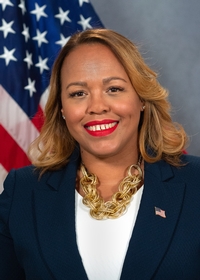
Rep. Johanny Cepeda-Freytiz
Sponsored bills
Maddy summaryHB 534 amends Pennsylvania's Election Code to provide braille absentee ballots for voters who are blind, visually impaired, or disabled. It requires these voters to submit a written request to their county board of elections at least 45 days before an election, including specific details like their address and a request for braille format. The Department of State will handle ballot preparation, distribution, and create accessible voting guides in multiple formats. This change directly affects eligible voters with visual or mobility disabilities, ensuring they can independently access absentee ballots.
Maddy summaryHB 536 amends Pennsylvania law to clarify how adoptees can access noncertified copies of their original birth records. The bill defines a "noncertified copy" as a summary photocopy containing only basic birth details (parent names, birth date/location, and child's birth name) with a disclaimer that it is not certified. Adoptees aged 18 or older, or descendants of deceased adoptees, can request this copy from the Department of Health within 45 days. Additionally, birth parents can now submit a notarized redaction request form to have their name removed from the adoptee's record, with the option to later reverse this decision, and the Department must post clear guidelines about this process online.
Maddy summaryHB 531 establishes Pennsylvania's Older Adult Cable TV Rebate Program, providing annual rebates of up to $300 to eligible seniors (65+ with household income ≤150% of federal poverty guidelines) for basic tier cable TV service. The program requires applicants to submit proof of service, residency, and that basic cable is the only available service in their municipality. The Department of Community and Economic Development administers applications, verifies eligibility within 30 days, and disburses rebates directly to cover cable service costs. This policy specifically excludes streaming services and caps rebates at $300 per year for qualifying low-income older adults.
Maddy summaryHB 324 amends Pennsylvania's 1956 Poultry Technician Licensure Law to modernize requirements for professionals collecting poultry samples and conducting disease surveillance. It expands technicians' duties to include "regulatory sampling and testing procedures" for poultry diseases (beyond just pullorum testing), requires applicants to prove legal work authorization in the U.S. (replacing citizenship requirements), increases the license fee from $5 to $10, and allows Spanish-language training via quarantine orders. The bill directly affects poultry technicians seeking or renewing licenses to legally collect samples or conduct on-site disease monitoring. Key provisions update eligibility, fees, and the Secretary of Agriculture's authority to oversee licensing and enforce standards.
Maddy summaryHB 495 amends Pennsylvania's Public School Code to change enrollment rules for charter schools and cyber charter schools. It prohibits school boards from imposing enrollment caps on these schools, except as explicitly agreed upon in the school's written charter. For charter schools located in a specific district, the bill allows a limited cap on students residing within that district, but only with approval from the local school board. This cap does not prevent charter schools from enrolling students from outside their district.
Maddy summaryHB 512 amends Pennsylvania law to set a clear maximum for veterans' temporary financial assistance. The bill specifies that payments cannot exceed $2,500 or the veteran's documented need, whichever is less. This change directly affects Pennsylvania veterans eligible for temporary financial aid under Title 51. The key provision simplifies the existing rule by removing outdated language and establishing a fixed cap, ensuring assistance aligns with actual documented need.
Maddy summaryHB 511 proposes a constitutional amendment to expand Pennsylvania's real estate tax exemption for veterans who served in a war or armed conflict, were honorably discharged, and have a disability rated at 100% by the U.S. Veterans Administration. It would exempt their primary residence from real property taxes if the State Veterans' Commission determines they need the exemption, and extend this benefit to the unmarried surviving spouse of an eligible veteran under the same conditions. This amendment requires approval by the General Assembly and a vote by Pennsylvania voters in a statewide election. The change would directly affect veterans with qualifying disabilities and their surviving spouses who own homes in Pennsylvania.
Maddy summaryHR 12 is a ceremonial resolution recognizing February 2025 as "Black History Month" in Pennsylvania. It does not create new laws or policies but formally acknowledges the month through the House of Representatives. The resolution highlights the historical origins of Black History Month, including Dr. Carter Godwin Woodson's founding of the Association for the Study of African American Life and History, and notes the 2025 theme focused on African Americans and labor. This resolution directly affects Pennsylvania residents by designating the month for commemoration, without altering any legal rights or obligations.
Maddy summaryHB 489 establishes Pennsylvania's Public Arts Grant Program and Public Arts Fund, administered by the Department of Community and Economic Development. The bill provides grants to community organizations and artists (based in Pennsylvania) to create free, publicly accessible public art - such as murals or sculptures - that depicts or benefits historically marginalized communities. Grants are capped at $100,000 per recipient, require a three-year completion timeline, and mandate that applications include details on accessibility, community impact, and required permits. The bill also transfers $10 million from the General Fund to the Public Arts Fund upon enactment.