

Maddy summaryHB 485 creates a new Office of Information Technology within Pennsylvania's state government to establish and enforce digital accessibility standards. It requires all public entities (like counties, cities, and state agencies) to make their online services accessible to people with disabilities by developing implementation plans by July 2026 and fully complying by July 2028. Key provisions include adopting Web Content Accessibility Guidelines (WCAG), mandating procurement standards for adaptive technologies, and requiring compatibility with accessibility tools. The law aligns with the federal Americans with Disabilities Act and applies to digital content, websites, and information systems used by the public.
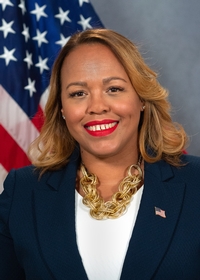
Rep. Johanny Cepeda-Freytiz
Sponsored bills
Maddy summaryHB 471 allocates $1,000,000 from the General Fund to fund veterans' service officer programs in Pennsylvania. This bill directly affects veterans' service organizations that assist military veterans in accessing benefits and services. The key provision transfers the specified funds to the relevant department to support these programs under Title 51 of Pennsylvania law. The bill takes effect 60 days after enactment.
Maddy summaryHB 478 proposes a constitutional amendment to disqualify individuals who recently held government positions (within two months) from serving as election officers in Pennsylvania. It expands existing rules by adding recent officeholders to the list of disqualified candidates, while maintaining exceptions for notaries public and National Guard members. The bill does not change election procedures but modifies constitutional eligibility standards for election workers. As a procedural resolution, it requires General Assembly passage and voter approval per Pennsylvania's constitutional amendment process.
Maddy summaryHB 201 amends Pennsylvania's Public School Code to update how intermediate units (regional education agencies) manage facilities and receive state funding. It expands boards' authority to acquire land/buildings through purchase, lease, or gift (Section 914-A(11)), and requires pre-approval from the Secretary of Education for lease/loan agreements involving office, classroom, or warehouse space (Section 919.1-A(a)). The bill revises the capital subsidy calculation: the state will allocate funds based on each intermediate unit's student enrollment multiplied by the median per-student instructional cost across all districts, then applying a 0.03% rate. This directly affects intermediate units and school districts using their facilities, changing both facility management rules and state funding distribution.
Maddy summaryHB 487 amends Pennsylvania's procurement law to prioritize contracts for supplies manufactured and services performed by organizations employing people with disabilities, directly affecting Commonwealth agencies and disability service providers. The bill requires these contracts to be entered without competitive bidding if people with disabilities make a meaningful contribution to the work, mandates annual reviews for contracts over $300,000 to verify compliance, and phases out the use of federal subminimum wage certificates (14(c)) over two years. It also requires integrated work environments where employees with disabilities interact with non-disabled coworkers in state-contracted workplaces, with annual site visits to monitor compliance. The law aims to strengthen economic opportunities for people with disabilities through state procurement while ensuring fair pricing and accountability.
Maddy summaryThis bill is a symbolic resolution (not a law) designating February 27, 2025, as "Dominican Republic Independence Day" within Pennsylvania. It directly affects Pennsylvania residents by formally recognizing this date to honor the Dominican Republic's independence from Haiti in 1844 and the cultural contributions of the state's Dominican-American community. The resolution includes historical context about the Dominican Republic's founding and highlights the community's economic and cultural ties to Pennsylvania. It has no financial, regulatory, or policy impact - it is purely commemorative.
Maddy summaryHB 456, the Restroom Access Act, requires Pennsylvania retail establishments with employee restrooms to allow customers with specific medical conditions to use them during business hours under defined conditions. It directly affects customers who use ostomy devices or have inflammatory bowel diseases (like Crohn's or ulcerative colitis) and cannot access a public restroom nearby. To qualify, customers must provide written physician documentation or a nonprofit-issued ID card verifying their condition. Retail businesses violating the law face a civil penalty of up to $500, but the law does not require physical changes to restrooms. The bill takes effect immediately upon passage.
Maddy summaryHB 455 establishes Pennsylvania's "Building a Better Future Grant Program" to fund organizations providing education and workforce training to young adults aged 16-24 who are disconnected from education. The program targets organizations serving youth from low-income backgrounds with specific vulnerabilities (e.g., foster care, disability, homelessness, or school dropout) and requires grantees to offer at least two services like job training, career counseling, or high school equivalency support. The Department of Labor and Industry will administer $5 million in state funding (from the General Fund) to award grants of up to $1 million per organization, with 5% reserved for statewide technical assistance. This directly affects eligible young adults and qualifying local organizations focused on construction, healthcare, and other in-demand vocational fields.
Maddy summaryHB 443 modifies Pennsylvania's sentencing for second-degree murder convictions, including murder of an unborn child or a law enforcement officer. It reduces maximum sentences: for adults, from life imprisonment to 50 years; for offenders under 18, it sets a maximum of 40 years for those 15+ at the time of crime and 30 years for those under 15. The bill also establishes new parole timelines - 25 years for standard life sentences under this section, 20 years for those under 18 aged 15+, and 15 years for those under 15 - requiring the parole board to prioritize public safety, victim safety, and consider the offender's culpability before granting parole. Additionally, it mandates that victims be notified and given a chance to be heard before parole decisions for these cases.
Maddy summaryHB 423 establishes Pennsylvania's Future Voter Program, allowing high school students aged 16-17 to preregister to vote before turning 18. The bill requires schools to hold voter registration events during Constitution and Citizenship Day (September 17), providing applications and online registration opportunities for eligible students. Students who preregister will not be added to the voter registry until they reach age 18. The program mandates school entities to coordinate these events, with the Secretary of Education and Secretary of the Commonwealth overseeing implementation. This directly affects all high school students in Pennsylvania who are 16 or 17 years old.