

Maddy summaryThis bill updates Pennsylvania laws to clarify how medical records can be obtained and the fees associated with them. It directly affects patients, their attorneys, and healthcare providers by setting specific prices for copying and retrieving medical charts. Under the new rules, patients and their representatives can access their own records without needing a subpoena, while other parties must pay a set fee for search, retrieval, and copying services. The act also establishes different rates for paper copies versus electronic records and requires these fees to be adjusted annually based on inflation.
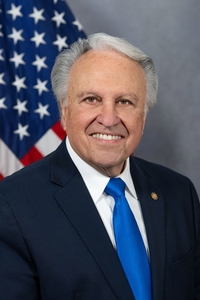
Rep. Eddie Pashinski
Sponsored bills
Maddy summaryThis bill updates Pennsylvania's existing law to strengthen legal protections for individuals who donate food to charitable or religious organizations. It clarifies that donors are immune from civil or criminal liability if they donate food in good faith after a reasonable inspection confirms it is safe to eat. However, this immunity does not apply if the donor was negligent, reckless, intentionally harmful, or knew the food was contaminated. The legislation also explicitly covers donations of food that is not easily sold due to appearance, age, or expiration dates, while maintaining the government's right to regulate such food.
Maddy summaryThis bill creates the Keystone Fresh Program to increase the amount of locally grown food served in Pennsylvania school meals. It establishes a grant system administered by the Departments of Education and Agriculture to reimburse school districts for purchasing local fruits, vegetables, grains, and other minimally processed foods. The program prioritizes funding for schools that source from veteran farmers, socially disadvantaged groups, new farmers, or those using sustainable agriculture techniques. A separate fund is also created to support the administration of these initiatives, aiming to improve child nutrition and provide economic benefits to local producers.
Maddy summaryThis bill establishes the Agriculture Innovation Grant Program within the Pennsylvania Department of Agriculture to provide financial reimbursement grants to eligible farms and agribusinesses. The program specifically targets projects that utilize new technologies or methods to improve energy efficiency, water quality, production processes, biosecurity, and farm management systems. To oversee the initiative, the legislation creates a new Agriculture Innovation Board composed of representatives from government agencies, higher education, cooperatives, financial institutions, and the legislative branches. Eligible applicants include individuals with anticipated agricultural sales over $2,000 annually or processors with sales exceeding $10,000, as well as service providers and entities utilizing agricultural commodities for product creation.
Maddy summaryThis Pennsylvania House Resolution designates the week of June 17 through 23, 2024, as "Sanitation Workers Week" to honor the state's waste and recycling employees. The measure does not alter laws or budgets but serves as a formal gesture of appreciation from the legislature to the approximately 6,000 residents employed in the sanitation industry. It highlights the physically demanding nature of the job, which involves collecting and disposing of refuse, and acknowledges the workers' essential role in keeping communities clean, particularly during the COVID-19 pandemic.
Maddy summaryThis bill authorizes the Pennsylvania Department of General Services to grant specific land easements to the Bear Creek Township Volunteer Hose Company. With the approval of the Governor and the Department of Transportation, the state will transfer an access easement covering half of a shared driveway and two storm water discharge points located in Luzerne County. The Volunteer Hose Company will receive these rights for a nominal fee of one dollar, while they are responsible for paying all associated costs and fees. The agreement will be subject to existing legal rights held by others, such as utility companies or third-party property owners.
Maddy summaryThis House Resolution designates June 2024 as "Dairy Month" in Pennsylvania to recognize the state's dairy industry. The measure highlights the economic importance of dairy farming, noting that it supports over 47,000 jobs and generates billions in annual activity. While the resolution does not create new laws or regulations, it aims to raise awareness about the industry and encourage the purchase of locally produced dairy products.
Maddy summaryThis bill amends Pennsylvania's Vital Statistics Law to establish fee waivers for obtaining certified copies of birth and death records. It directly affects active duty military personnel, veterans, their spouses, dependents, funeral homes, and legal representatives of deceased service members. The key provision allows these specific groups to receive their first ten certified copies of a record for free each year, while also clarifying definitions for terms like "veteran" and outlining specific conditions for who qualifies for the waiver.
Maddy summaryThis bill modifies the Pennsylvania Food Bucks Program to require grantees to verify the residency of every SNAP recipient receiving benefits. It specifically prohibits providing benefit incentives to individuals who are not residents of Pennsylvania or who are not lawful residents of the United States. Additionally, the legislation mandates that program evaluators conduct biennial reviews and publish detailed reports on funding usage, geographic distribution, and participating retailers. The bill also grants the department authority to refer suspected immigration law violations to enforcement agencies. These changes directly affect the administration of the food incentive program and the eligibility criteria for participating SNAP recipients.
Maddy summaryThis Pennsylvania resolution designates the week of May 12 through 18, 2024, as "Food Allergy Awareness Week" to highlight the prevalence and risks of food allergies. The bill does not alter laws or allocate funding but serves to draw public attention to the nine major food allergens and the challenges faced by millions of Americans. It was referred to the Agriculture and Rural Affairs committee but was subsequently laid on the table, meaning it did not proceed to a vote.