

Maddy summaryThis Pennsylvania House Resolution designates November 2024 as "Veterans and Military Families Month" to honor the state's large veteran population and their families. The measure serves as a symbolic gesture to acknowledge the sacrifices made by service members and to highlight the support provided by the Department of Military and Veterans Affairs. It does not create new laws or funding but directs a copy of the resolution to the relevant state department for record-keeping.
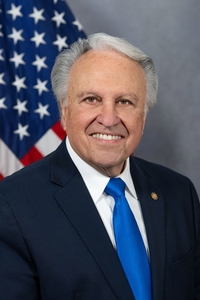
Rep. Eddie Pashinski
Sponsored bills
Maddy summaryThis bill establishes the Municipal and Emergency Responder Solar Grant Program to provide financial assistance for solar energy projects at government facilities and emergency service locations such as fire stations and police departments. The Department of Environmental Protection will administer the program on a competitive basis, offering grants to cover costs like equipment purchase, installation, and energy storage. To receive funding, applicants must submit a detailed proposal that includes a site assessment and an affidavit confirming that all construction contractors meet specific licensing, insurance, and safety training requirements. The Department is also tasked with developing application guidelines, providing technical assistance, and creating educational materials to help eligible entities navigate the process.
Maddy summaryThis bill updates the membership rules for Pennsylvania's State Veterans' Commission to ensure broader representation of different veteran groups. It mandates that the commission include representatives from sixteen specific national veterans' organizations, such as the American Legion and VFW, along with four members appointed by the Governor who must be female or Vietnam-era veterans. The legislation also clarifies the roles of state-level leaders from the American Legion, Disabled American Veterans, and Veterans of Foreign Wars as nonvoting members. These changes aim to modernize the commission's composition while maintaining its existing structure under Pennsylvania law.
Maddy summaryHB 2353 establishes civil liability for entities that use artificial intelligence or other automated systems to create deceptive campaign advertisements featuring current or former candidates. The bill defines "covered persons" as firms, political committees, foreign governments, and individuals acting on their behalf, while also clarifying that generative AI and synthetic content like deepfakes fall under these regulations. To avoid liability, covered persons must provide clear and conspicuous disclosures stating that an advertisement contains manipulated or generated content, with specific formatting requirements for text, video, and audio formats. If a covered person fails to provide such a disclosure and is found liable, the law requires the immediate removal of the advertisement and imposes financial penalties based on the jurisdiction where the candidate filed with election officials.
Maddy summaryThis bill allows teachers in Pennsylvania who have voluntarily placed their teaching certificates on inactive status for at least seven years to take college courses for free or at a 50% discount. The State Board of Education will create and update a list of approved colleges offering these specific tuition-reduced credits every three years. To fund this program, the state will reimburse colleges annually for the waived tuition costs, with reports on enrollment numbers submitted to the General Assembly each June.
Maddy summaryThis bill establishes the Health Insurance Core Benefits Coverage Act to require all individual and group health insurance policies in Pennsylvania to cover a specific set of essential services. These mandatory benefits include emergency care, hospitalization, prescription drugs, mental health treatment, and preventive services, ensuring that plans are at least as comprehensive as those first offered in the state in 2020. The Insurance Department is authorized to adjust these requirements through regulations by considering factors such as population health needs, potential discrimination, and medical advancements. Insurers that fail to comply with these coverage standards face penalties, while the law explicitly excludes limited policies like dental-only or accident-only plans from these mandates.
Maddy summaryThis bill establishes the Commission for Agricultural Education Excellence to oversee and improve agricultural education programs in Pennsylvania schools. It creates a new governing body with specific membership requirements, initially including representatives from farming, industry, and education, with the composition changing after September 30, 2024. Under the new structure, members will be appointed by state officials and legislative leaders, including the Education and Agriculture Secretaries, as well as the Senate and House leadership. The commission will operate with staggered three-year terms to ensure continuity, and its members must have relevant backgrounds in agriculture, teaching, or business.
Maddy summaryThis Pennsylvania law requires fuel delivery trucks to use meters that generate printed receipts for all domestic customers receiving light fuel oils. The bill mandates that each receipt must have a unique serial number and allows customers to choose between a physical ticket or an electronic version if the delivery company has the technology. Sellers are prohibited from charging extra fees for providing receipts in any format, and they must keep all records for two years. The regulation applies specifically to the delivery of light fuel oils to individual consumers within the state.
Maddy summaryThis bill amends Pennsylvania's Housing Authorities Law to expand relocation protections for tenants experiencing domestic or sexual violence. It allows tenants to request emergency transfers if they were victimized on or near their premises within the last 180 days or if they reasonably fear imminent harm. The legislation establishes specific documentation requirements, such as police reports or third-party certifications, to verify abuse while also permitting a simple tenant statement if no conflicting information exists. Additionally, the bill mandates that housing authorities assist victims in connecting with local support organizations and may release tenants from their leases upon qualification.
Maddy summaryThis bill updates Pennsylvania's Public School Code to strengthen policies against bullying and cyberbullying for all public, private, and parochial schools. It requires school districts to adopt or revise their anti-bullying rules by January 1, 2009, to include clear definitions of bullying and cyberbullying, specific disciplinary consequences, and procedures for notifying parents within five days of an incident. The law defines bullying as severe or persistent acts that disrupt a student's education or school environment, while cyberbullying specifically involves these acts committed through computers or mobile devices during school hours. Additionally, the bill mandates that schools designate a staff member to receive bullying reports and ensures parent notifications comply with federal privacy laws.